Ahearne Cycles

Thinking With Your Ass

ThoughtsJoseph Ahearne1 Comment
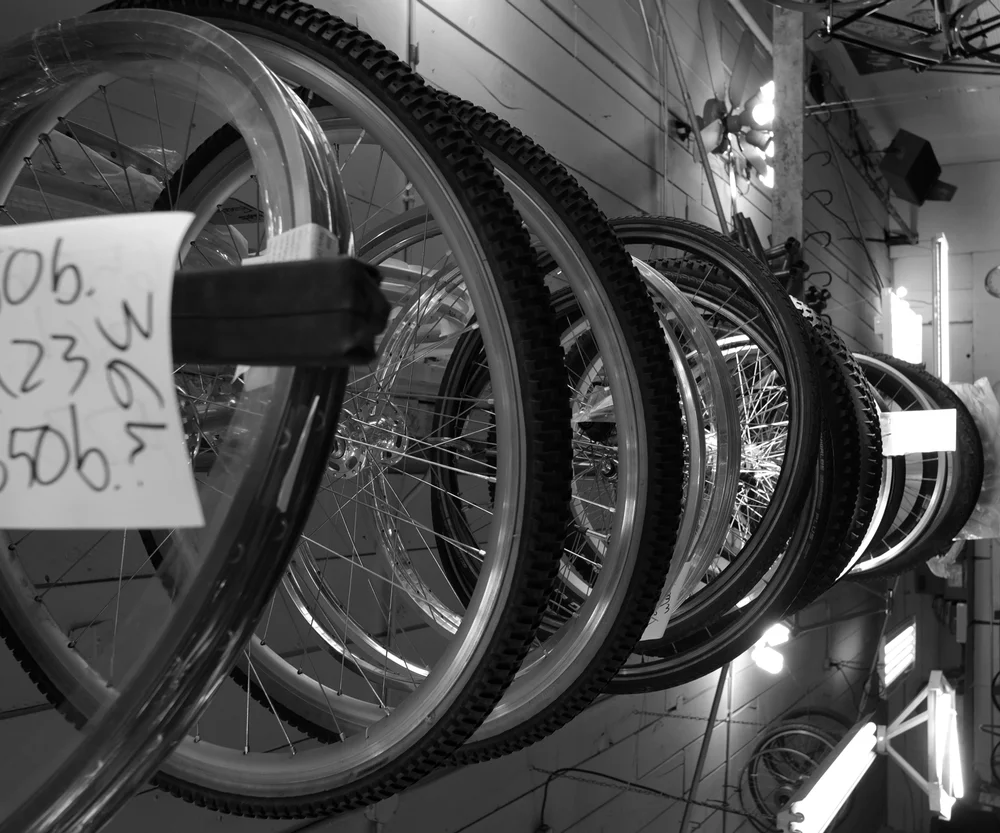
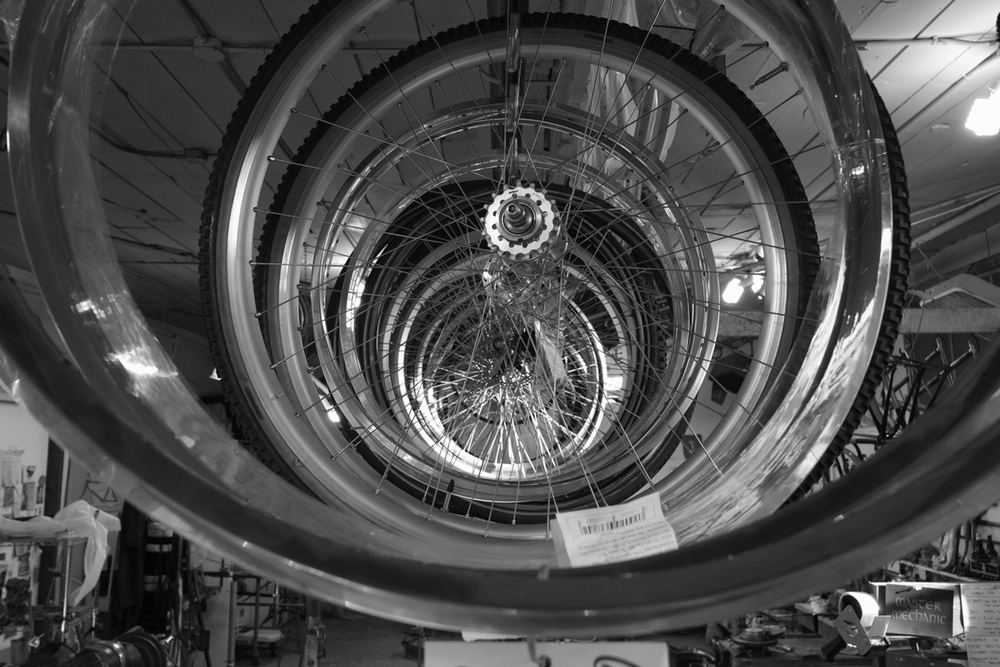
There are different wheel sizes out there

There are different wheel sizes out there

I don’t spend a lot of time in bike shops these days. When I do go, it’s usually to buy a part I forgot to order or to say hello to a friend. 

It happened the other day that I was in a bike shop actually shopping for bikes. The last time I did that was so long ago I can hardly remember, back in a different era of human history. A good friend of mine has a soon-to-be eleven year old son, Ethan, and I was at the shop to pick out a bike for him for his birthday. Ethan and his family are moving to Bend, Oregon this coming summer. When talking to anyone who’s spent time in Bend, there are mainly two things they talk about; cycling and skiing. I don’t know how it is for the skiers, but when people talk about their experiences mountain biking around Bend, their eyes get this far off look and they perceptibly begin salivating. They talk about it like it’s something out of a dream. Anyway, my friend William plans to introduce his son to trail riding, and to do so he needs a bike. The criteria for the bike were pretty simple: Suspension, knobby tires, good brakes, room to grow. 

William and I had talked about my building a bike for Ethan, but he’s just getting to the age where he (Ethan) is growing an inch or so every couple of months. Shoes come and go faster than the seasons change. We thought it might be smarter to wait on the custom bike until he’s gets to whatever height he’s going to stay at for a while. 

William’s wife, Natacha, met me at the shop. She, too, will be riding some trails in Bend with the family, and so would be looking for a bike. Nothing fancy or high end for either of them. We chose an extra small adult bike for Ethan. It’s basic, satisfies the needs, colors and graphics not too offensive, ready to ride at under $400. 

When looking at bikes for Natacha, who is about five-foot-eight, we looked at the “entry level” mountain bikes, i.e.. inexpensive. It still blows my mind that you can buy a perfectly good new bike for under $500. If you consider the price mark-ups at each point from the factory in Asia where the bike was made to the port and then distribution center(s) in the USA, including the paint, shipping costs, any tariffs, parts and assembly, and then there’s the mark up at the shop where the bike is being sold to the consumer — if you work backwards to the beginning of all those costs, all the way back to the factory, it means that the bike, complete and ready to ride originally cost under $50. Probably more like $20. That’s for the whole bike. For $20 I can afford one mid-quality top tube. I don’t want to bitch about the economics of bicycles, and cheap imports in general, but when I’m faced with the truth of it it’s somewhat mystifying. 
But anyway, while shopping for bikes we were helped by a very friendly salesperson, I’ll call him Stephen. When picking out Natacha’s bike, one of the first things that Stephen told us was this: “All the bike companies are transitioning over to the 650b wheel size. 26 inch wheels are going to be obsolete.” I did a sort of auditory double-take. “What?” I thought. “Are you serious?”

Looking around, it seemed that he was. Serious, I mean. All the newest adult mountain bikes on the floor of the shop had 650b, or 27.5 inch wheels. I don’t read the magazines, I don’t follow market trends. I’m around bike people enough, and have plenty of friends working at shops, so I’ve heard talk about the rise in popularity of the 650b wheel size. But not on this scale, or maybe I wasn’t listening very well. We’ve been talking about this wheel for several years now. Coming to find out that this once very niche market has gone totally mainstream and now in fact has supplanted both the 29er and the 26er wheel sizes seemed a little crazy. Like, if you’ve got a friend who’s always turned up his nose at grape Kool Aid, ever since you can remember he went for either cherry or lemon-lime, ever since you were little kids. And now, suddenly he’s got the tell-tale grape mustache, and all he ever talks about anymore is how grape Kool Aid is the shit, it’s the only beverage worth drinking, he won’t let his mom buy anything else, there’s nothing else like it, etc., etc.. It makes you shake your head because there’s something kind of sad about it. And in fact it might hint at some sort of, I don’t know, instability in your friend. 

There’s absolutely nothing wrong with 650b as a wheel size. I personally really like it for the applications that I use it for. To my mind, and in my opinion, for most people who ride bikes as commuters, go on light tours, or for whom a bike is very part time recreation, for anyone buying “entry level,” or even “mid level” bikes, and even many versions of the “high end” bikes, wheel size ought to be proportionate to the frame size. Smaller bikes, smaller wheels; larger, larger. That’s a general rule of thumb, not a law set in stone. In this way, you can nail the frame geometry and get the best ride quality and most desirable handling characteristics. There’s some room to play in bike design, of course, and the way a bike feels is very subjective. To my mind, again, the way a bike handles is way more important than the way a distant factory is tooled, and the consequent pushing and shoving of marketers. 

When the entire market shifts in this way, and broad claims are made, such as the one that “twenty-six inch wheels are on their way to obsolescence,” I immediately become suspicious. Was that just a blanket statement by a salesperson who was more concerned with selling his shop’s products? Or was his statement an example of the voice of the industry? 

These industry-wide re-inventions seems to happen in regular enough cycles that it might be possible to name it. There’s a sort of herd-induced excitement whenever anything “new” catches on in the bike world. In very loose historic terms, in the 1970’s and 80’s it was BMX; in the 90’s, mountain bikes and a little later downhill bikes; in the early 2000’s, 29ers were all the rage (before hitting the main stream, that was most of what I built); mid-to-late 2000’s hand made custom bikes became very popular; and somewhere in there plastic bikes started to really take off; in the early 2010’s it was fat bikes, commuter bikes, and especially in Europe and Asia, electric bikes. And now, here we are in 2015 and our wheel size has settled into the era of the 650b. That’s great. A new trend has arrived. No judgement, I’m just noticing. 
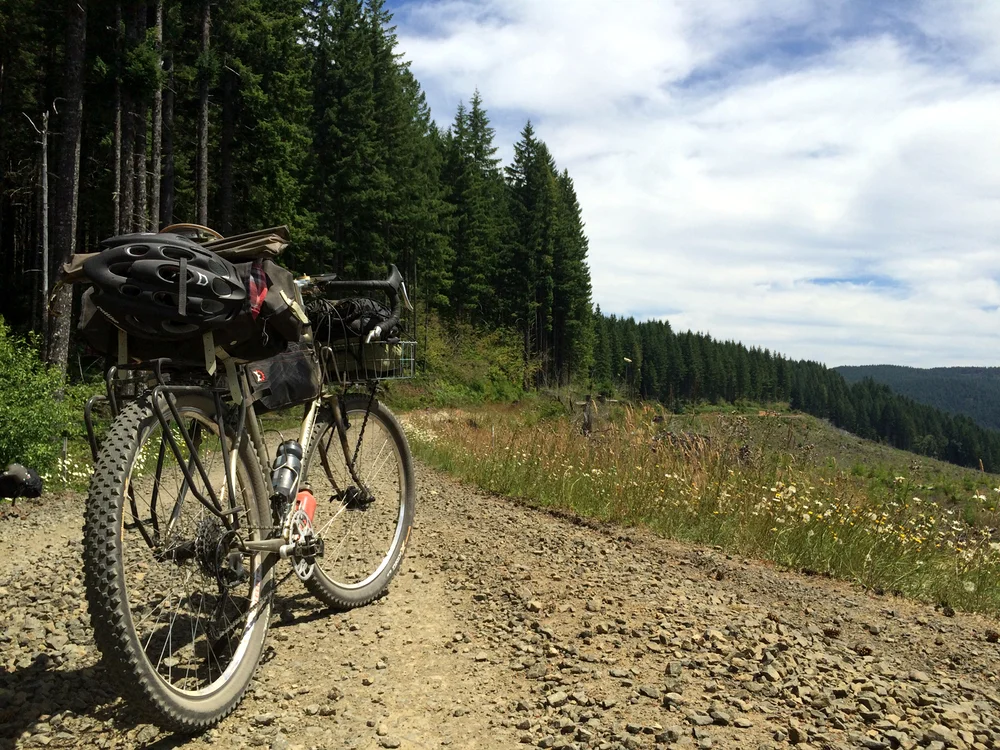
In all these words I’ve written about this I don’t offer much in the way of specific guidance. I really am just taking note. I think maybe my only real message is to keep your eyes open and think for yourself. When the market tries to push anything on you, take it with a grain of salt. Educate yourself and formulate your own conclusions. Which, in this case, is another way to say, get on a bike with 650b wheels and ride it. Your ass will tell you what it thinks. 
Engraved Flasks for Christmas!

For Sale, MerchandiseJoseph AhearneComment

Last call for Custom Engraved Flasks for Christmas is November 25!

That's right! In order to guarantee delivery before Christmas, all orders need to be in by the 25th. That's just a few days from now. 


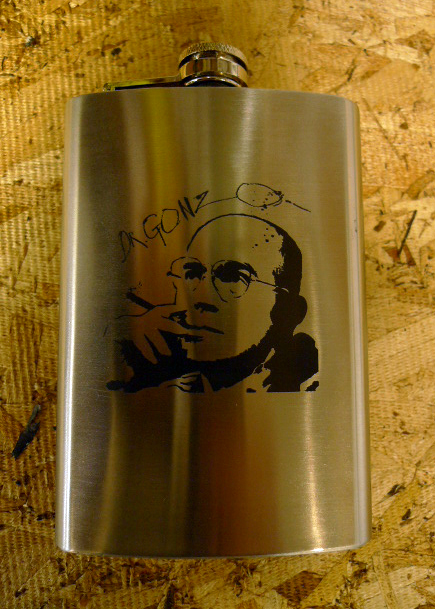
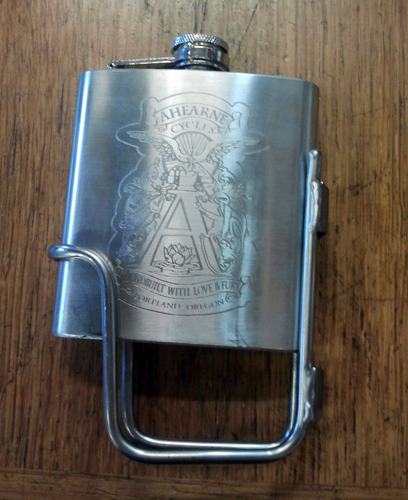
Check out a few of the awesome logos we've put onto flask.


Get your orders in soon!

Custom Engraved 6 oz. or 8 oz. Flasks

Custom Engraved 6 oz. or 8 oz. Flasks

The best method of ordering is Directly Through the Website

When ordering, you'll have your choice of either a 6 oz. flask, or the larger 8 oz. Either size will fit the Spaceman Bicycle Flask Holster and the Mud Flask Seat Mounted Flask Holder. You'll have the option of order a flask only, or you can order with the flask holder of your choice. 

Once you've placed your order for a Custom Engraved Flask you'll receive a follow up e-mail asking for your logo. Please respond to this e-mail and attach your .jpeg or .pdf file, or for text only logos, you can send a Word Document.

Please remember, we are not graphic designers, we're bike builders! So for best results send the logo exactly as you want it on the flask. Because of the curvature of the face of the flask, the logo will be sized appropriately, and may not look exactly like the logo you send. But it will be close. 

Prepare for Anything, Go Everywhere

Joseph Ahearne2 Comments

The Outback

A 650b Off Road Touring Bike

Outback 650b

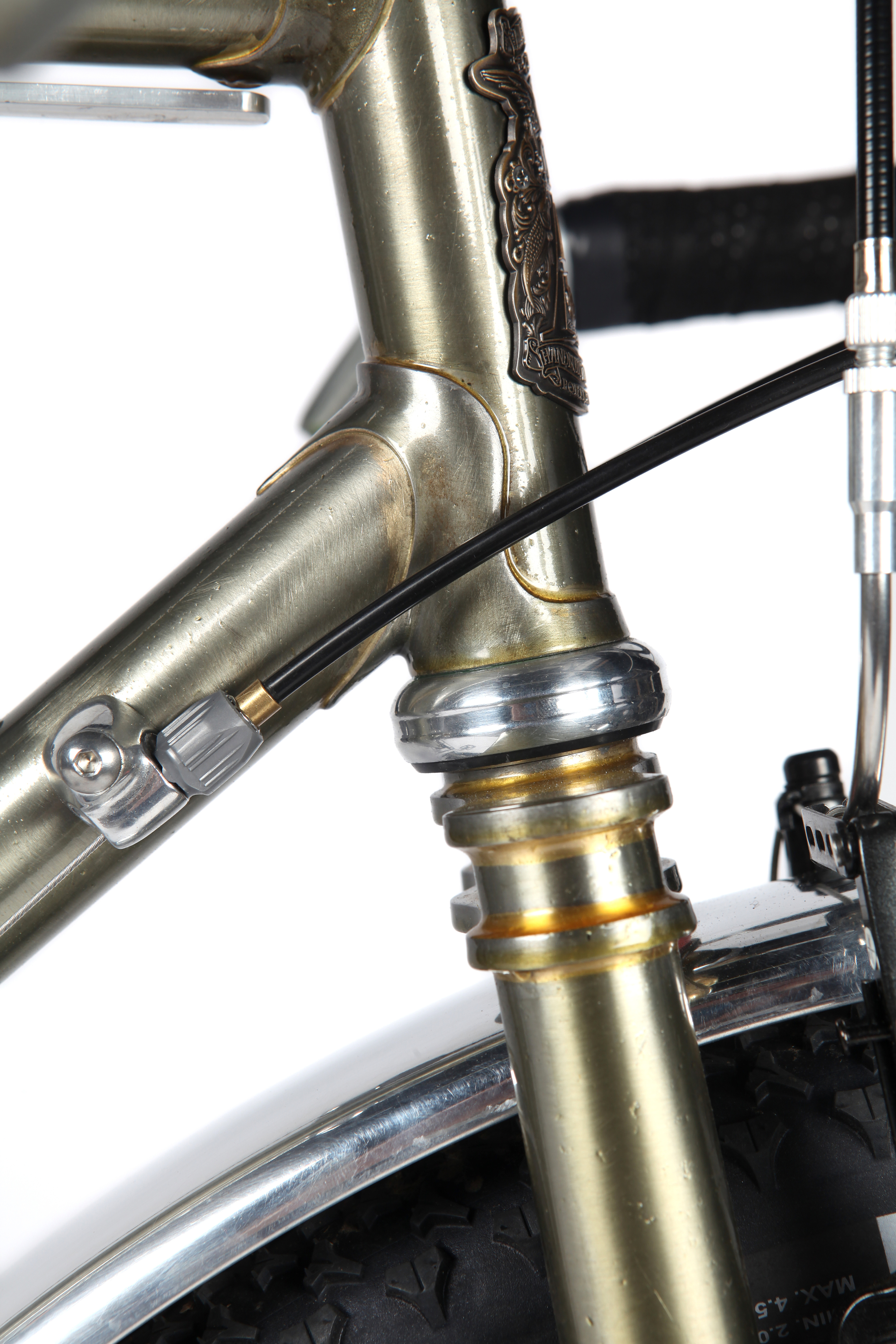
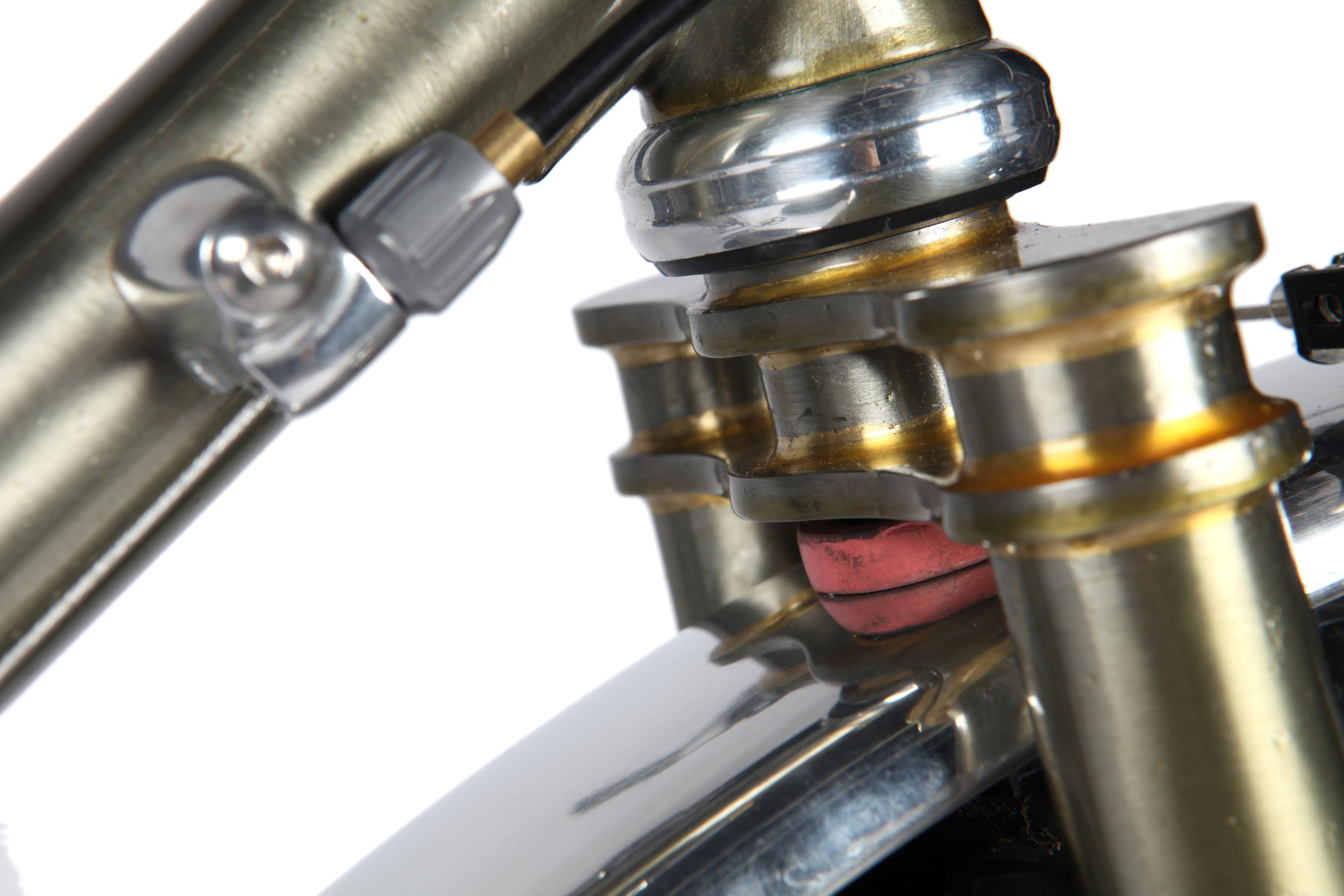
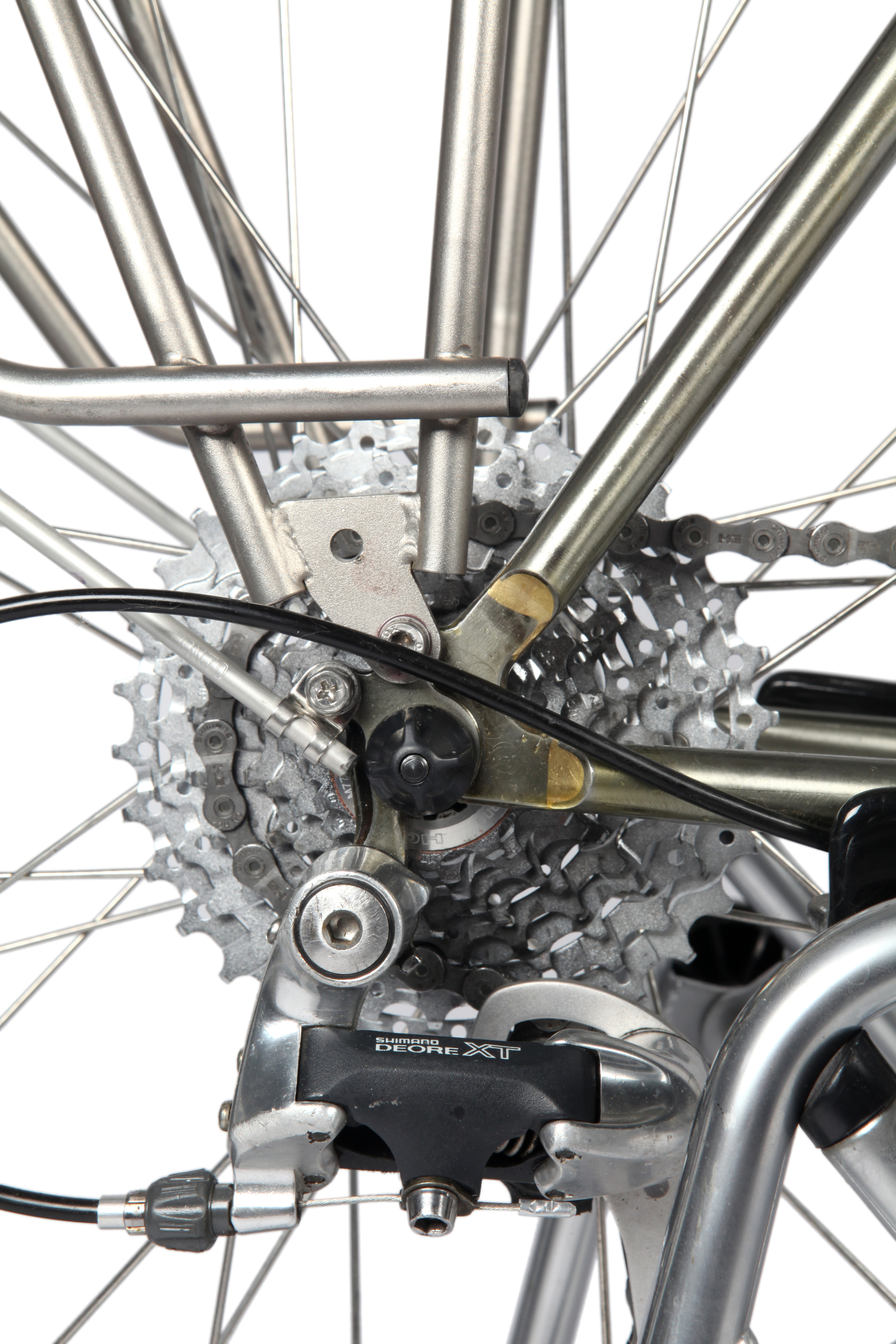
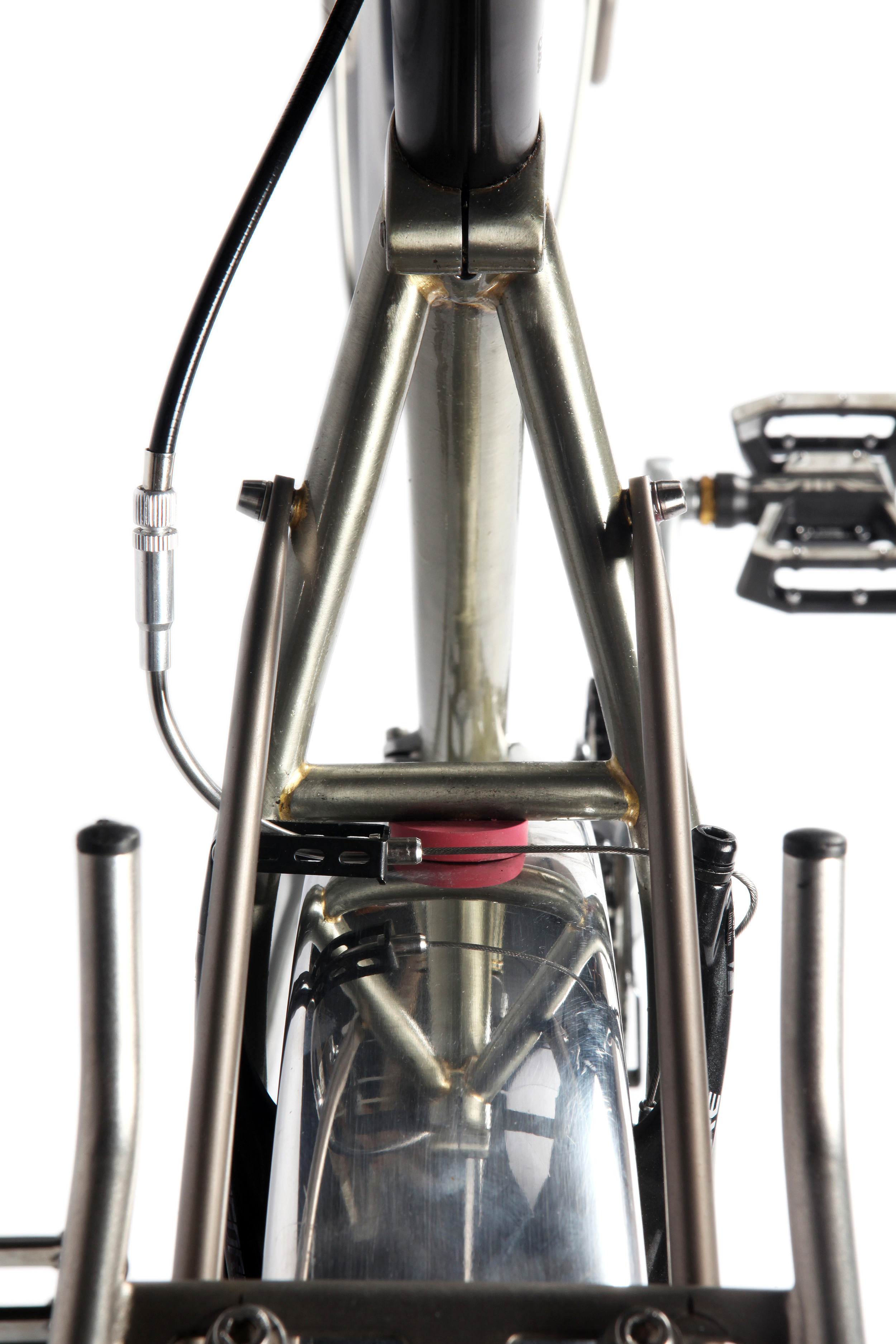
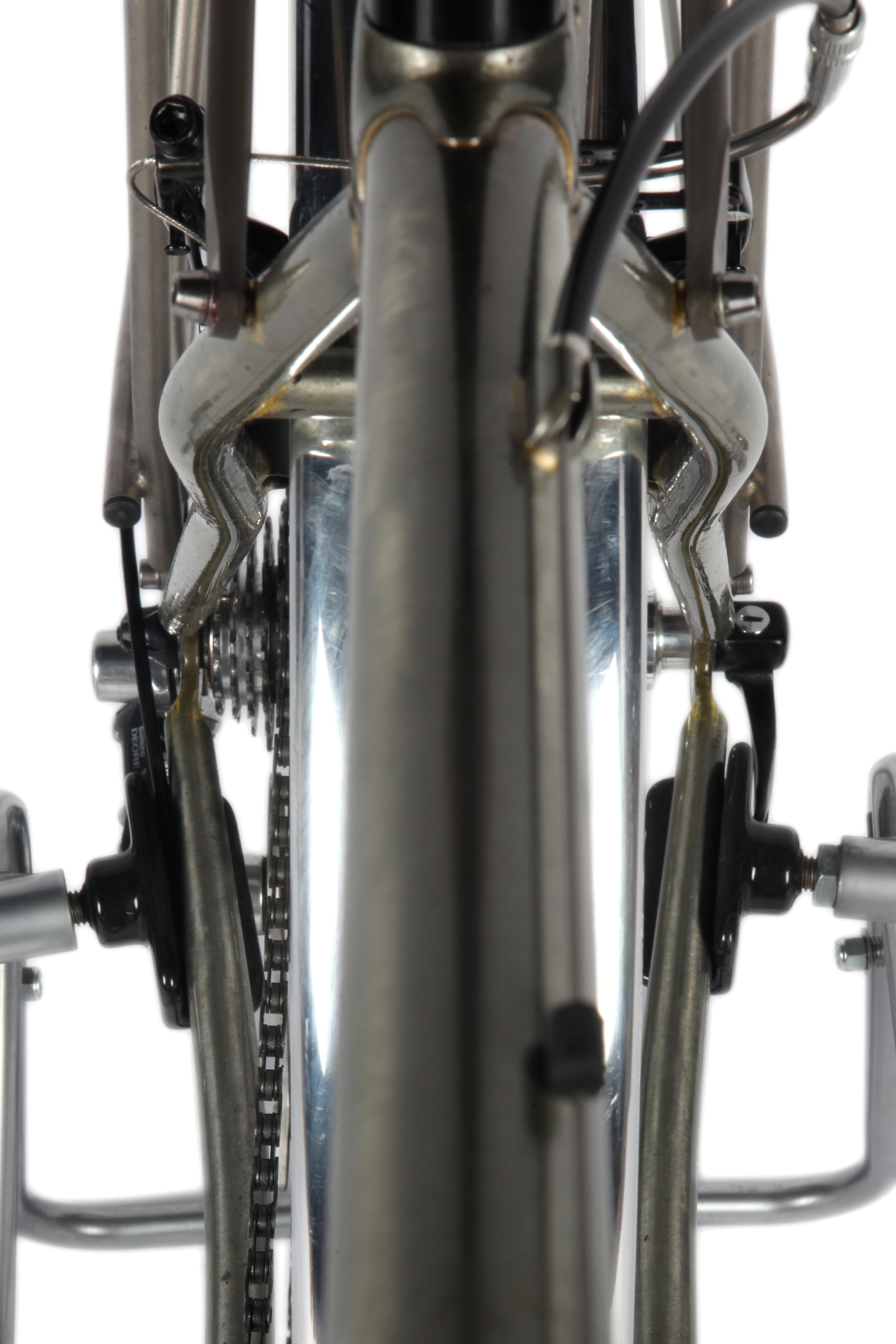
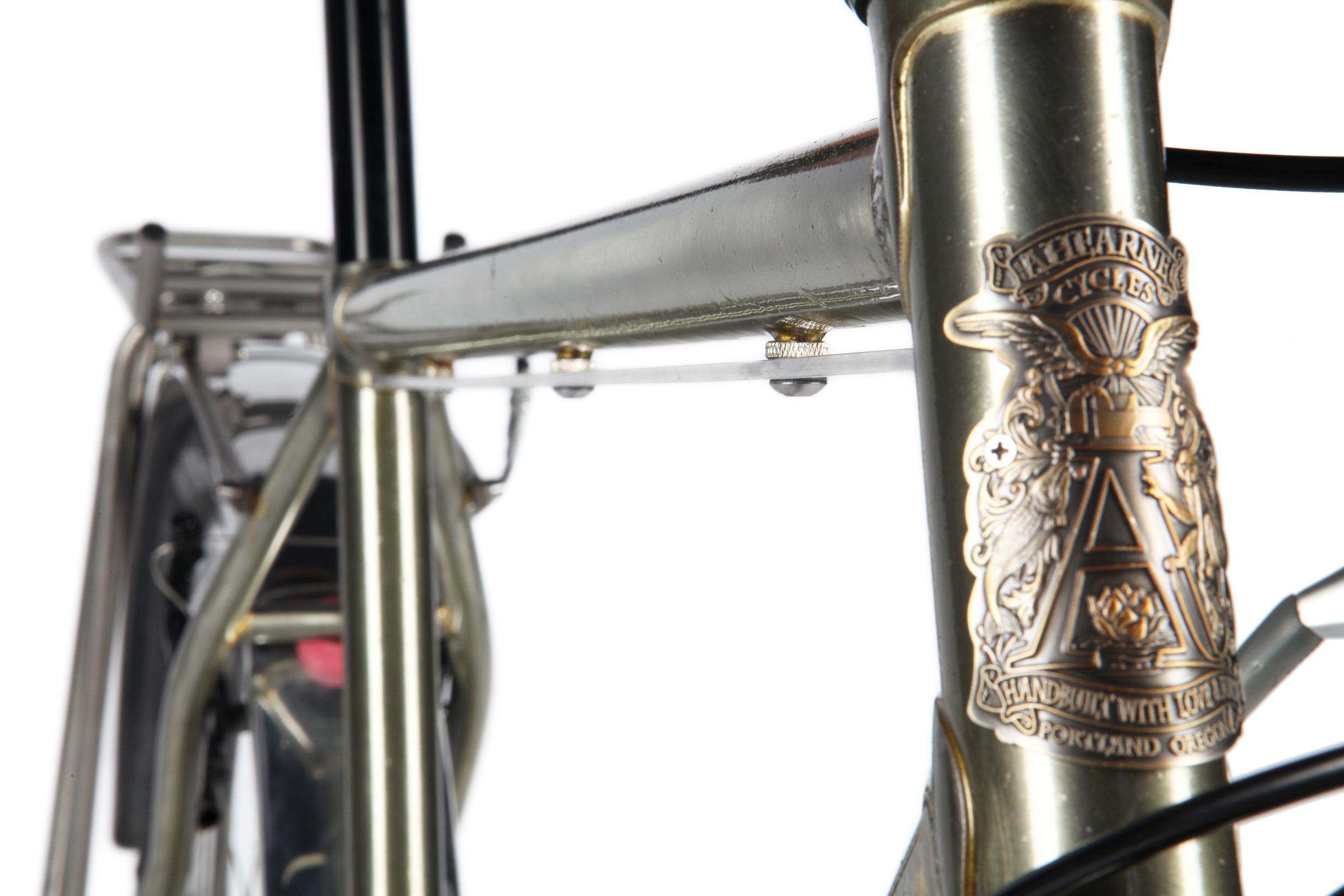
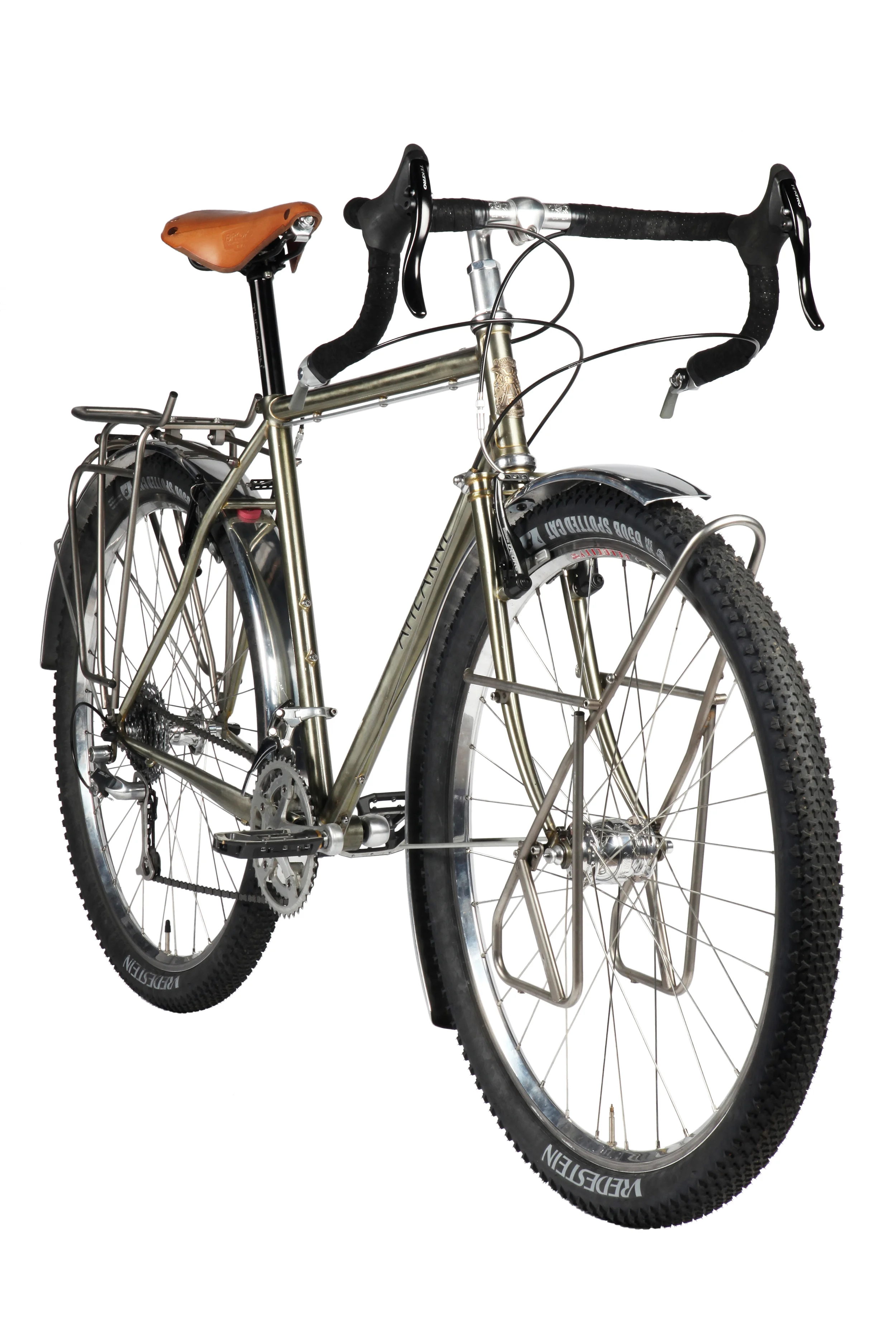
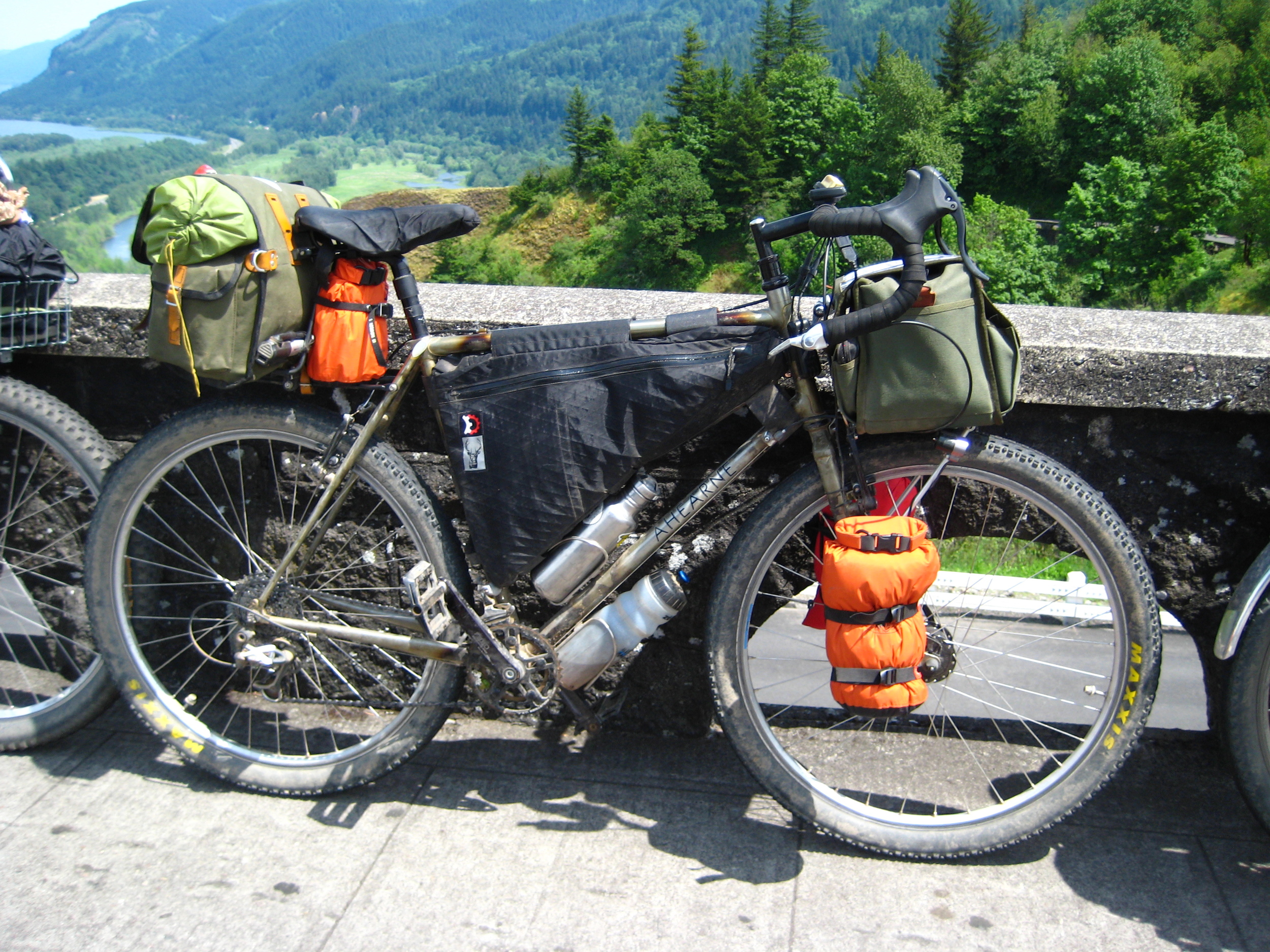
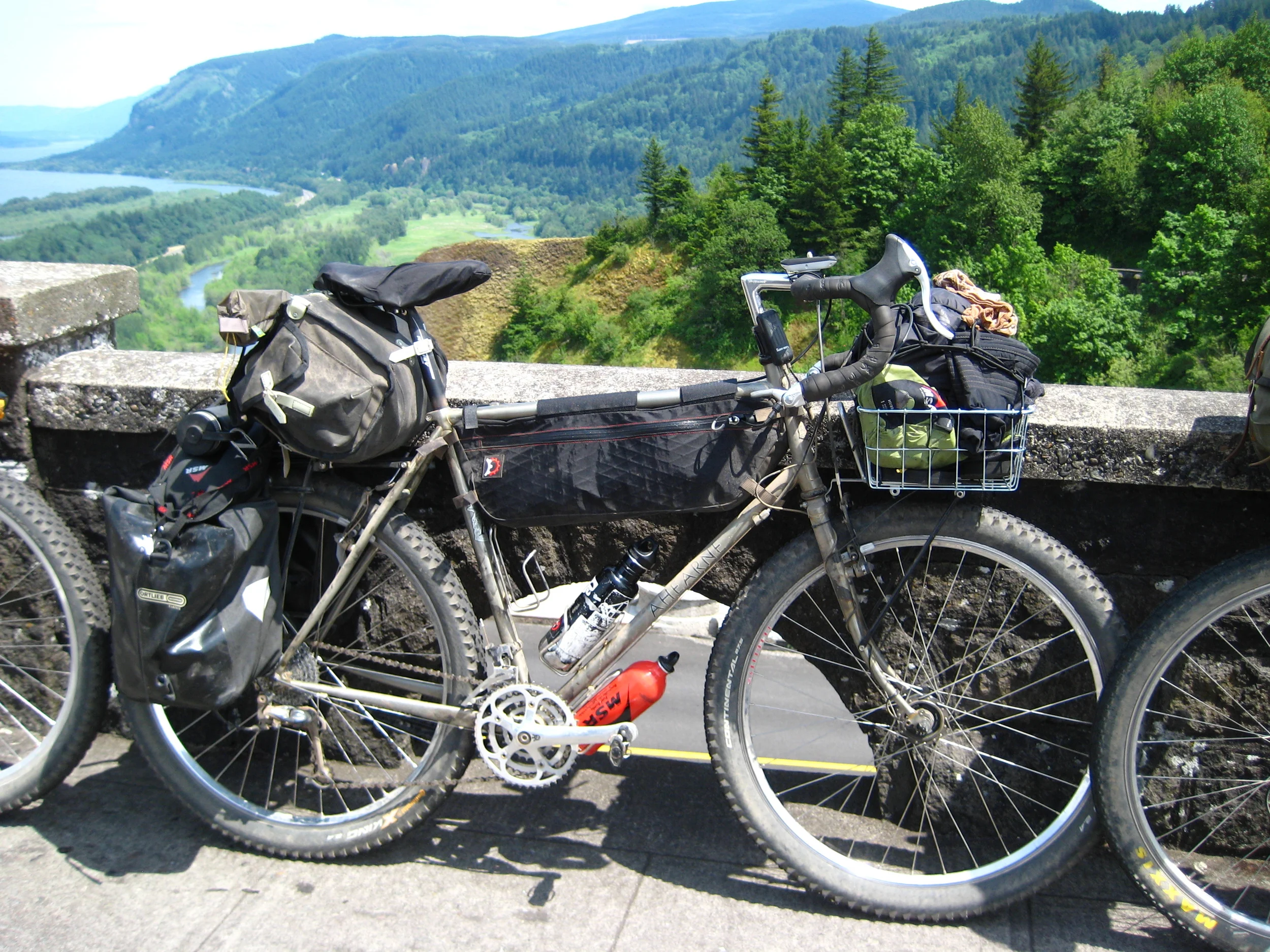
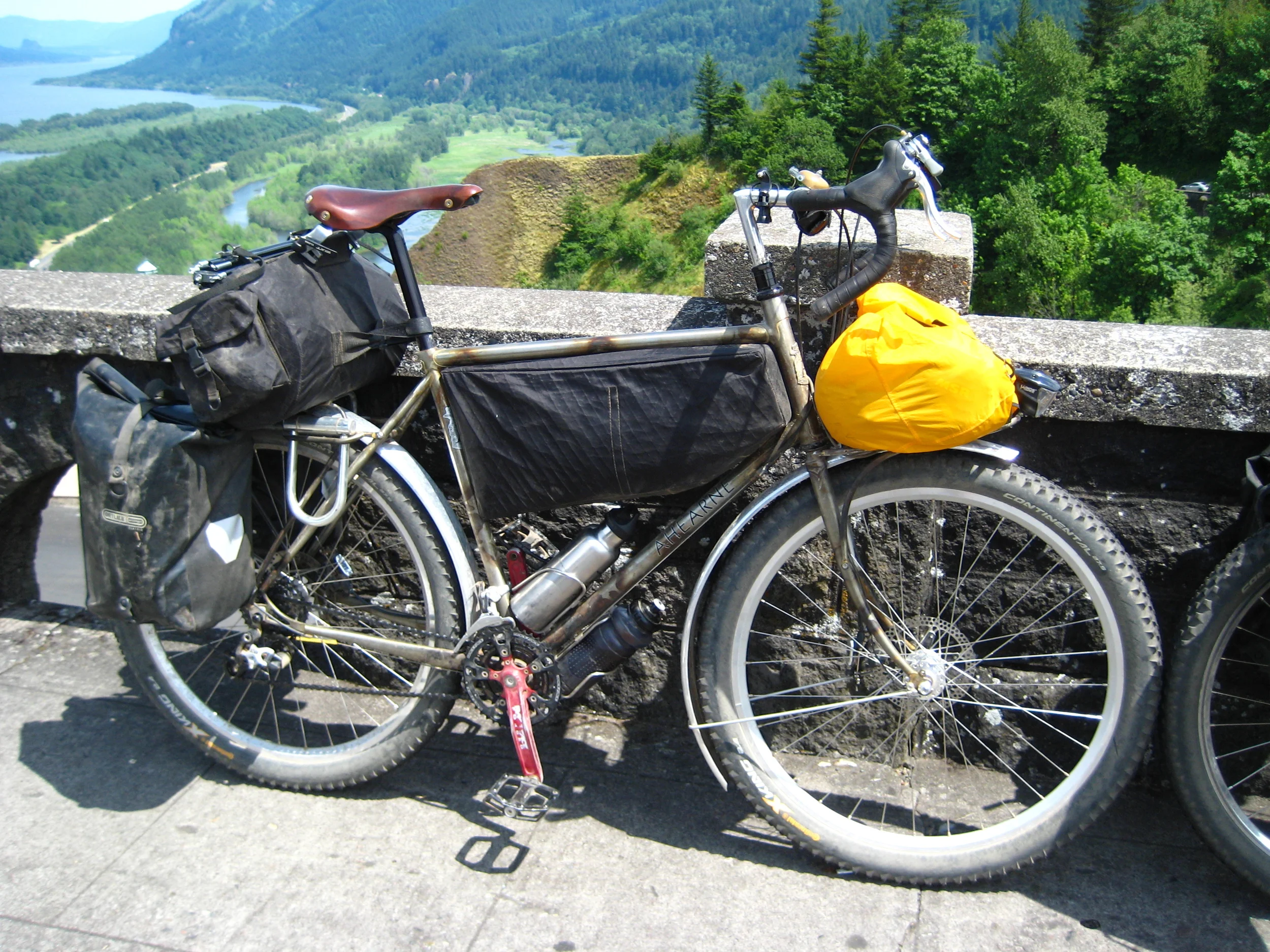
This bike is an all-round work horse for touring where the roads are broken, or where there are no roads. It was tested on this years' Oregon Outback ride, 360 miles of fully self-supported touring through the back roads and rail beds of rural Oregon. The bike performed just like it ought to: Stable handling while loaded with gear, even on gravel roads at higher speeds. Comfortable riding position. Clearance for fat tires & fenders. A classic steel lugged bike that hearkens back to the early days of mountain biking. Compliant, stable, comfortable, sure handling, and most importantly, Fun. 
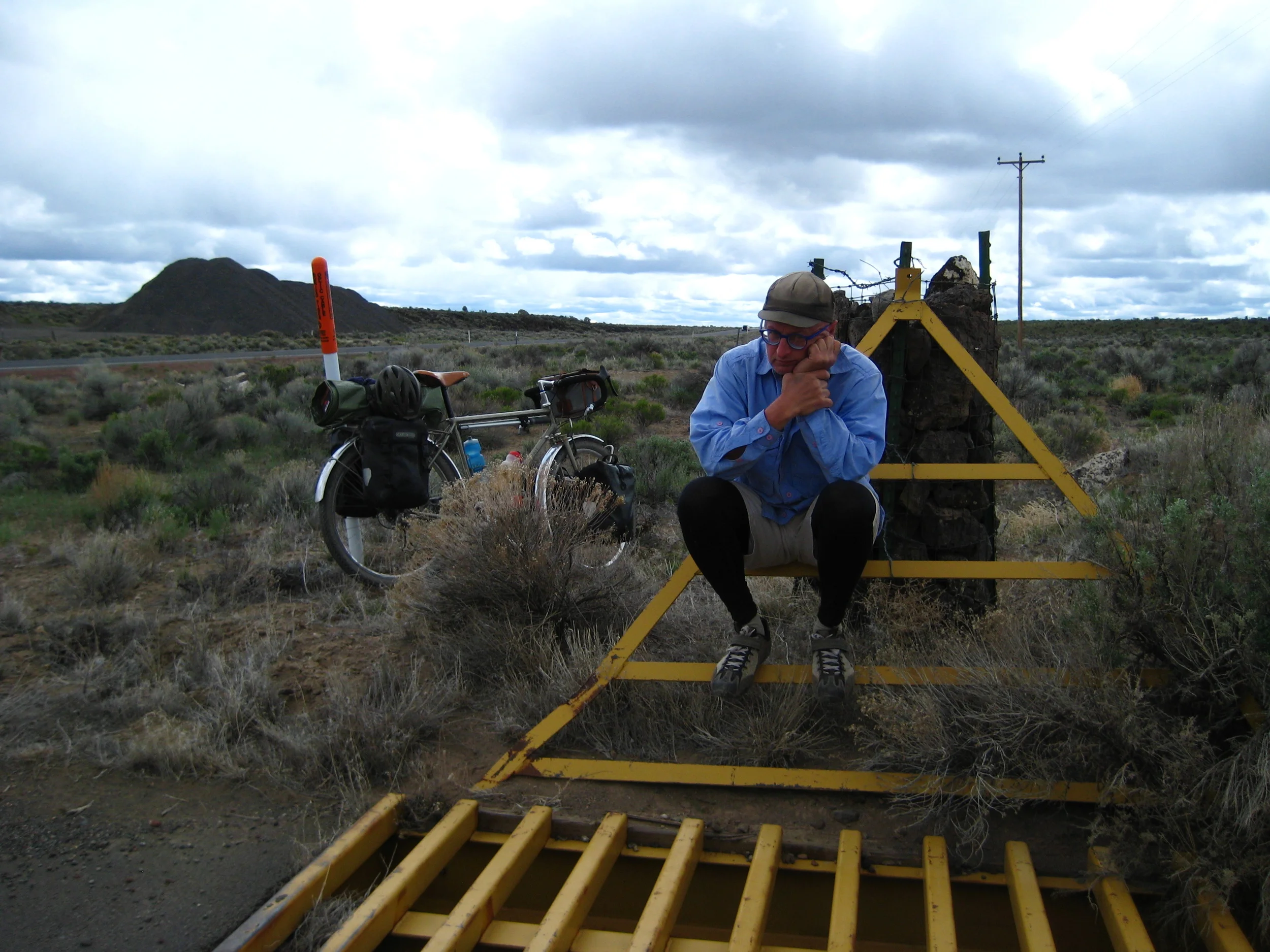
There are a couple of versions of this bike available, the most notable difference being in the brakes; either disc brakes or linear pull (or cantilevers) are possible. A generator hub powering front and rear lights is also recommended for those considering using this bike as a year round commuter and tourer. If a person could only have one bike -- or I should say, if I could only have one bike -- this would be it.  

Prepared & Going

Prepared & Going

I think I say this about just about every bike I build, but this time I really mean it: I'm very excited about this bike. I've been refining my ideas of what makes a great touring rig, and more often than not, when I'm out for longer multi-day rides I come across lesser traveled roads, and these are the roads that draw me out, that interest and excite me. When it comes to exploring new places, I don't want to be limited by what my bike can do. Let spontaneity be my guide. Rides like the Oregon Outback show that some of the most beautiful and untouched countryside is out where cars mostly won't go. It's amazing how much less stress there is when you're not constantly watching your back. The air is fresh, the scenery rolls on by, and when you stop there is silence, the sounds of birds, bugs, rustling leaves. There's nothing wrong with that.

Prepare for anything, go everywhere. 

Oregon Outback Bike Tour

Touring, Travel, ThoughtsJoseph Ahearne2 Comments

Oregon Outback GPS Map

The final tally for the ride was 450 miles, give or take. Klamath Falls (Oregon-California border) to the Deschutes Recreation Area (Oregon-Washington border), and then down the Historic Columbia River highway to return to Portland.

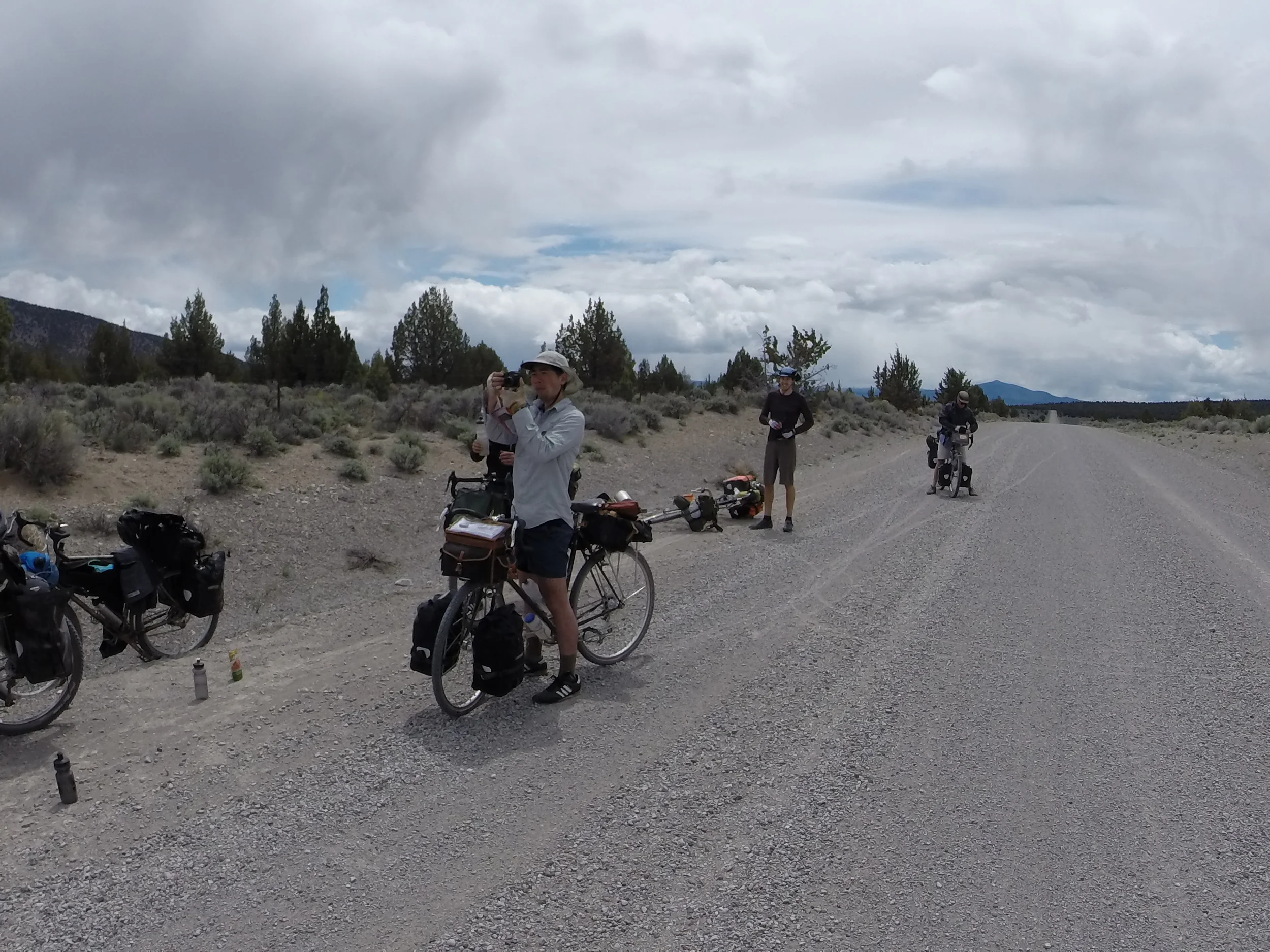
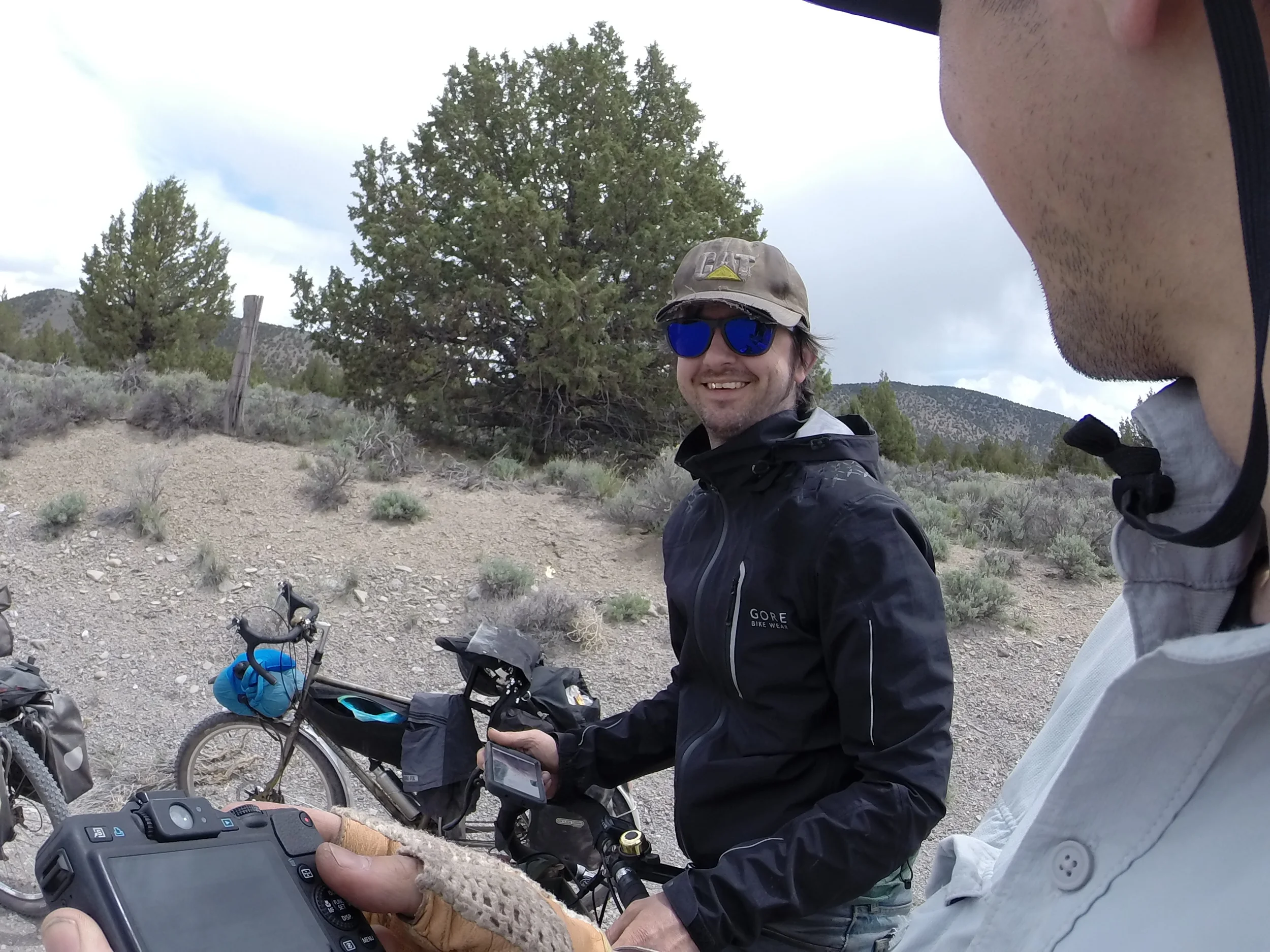
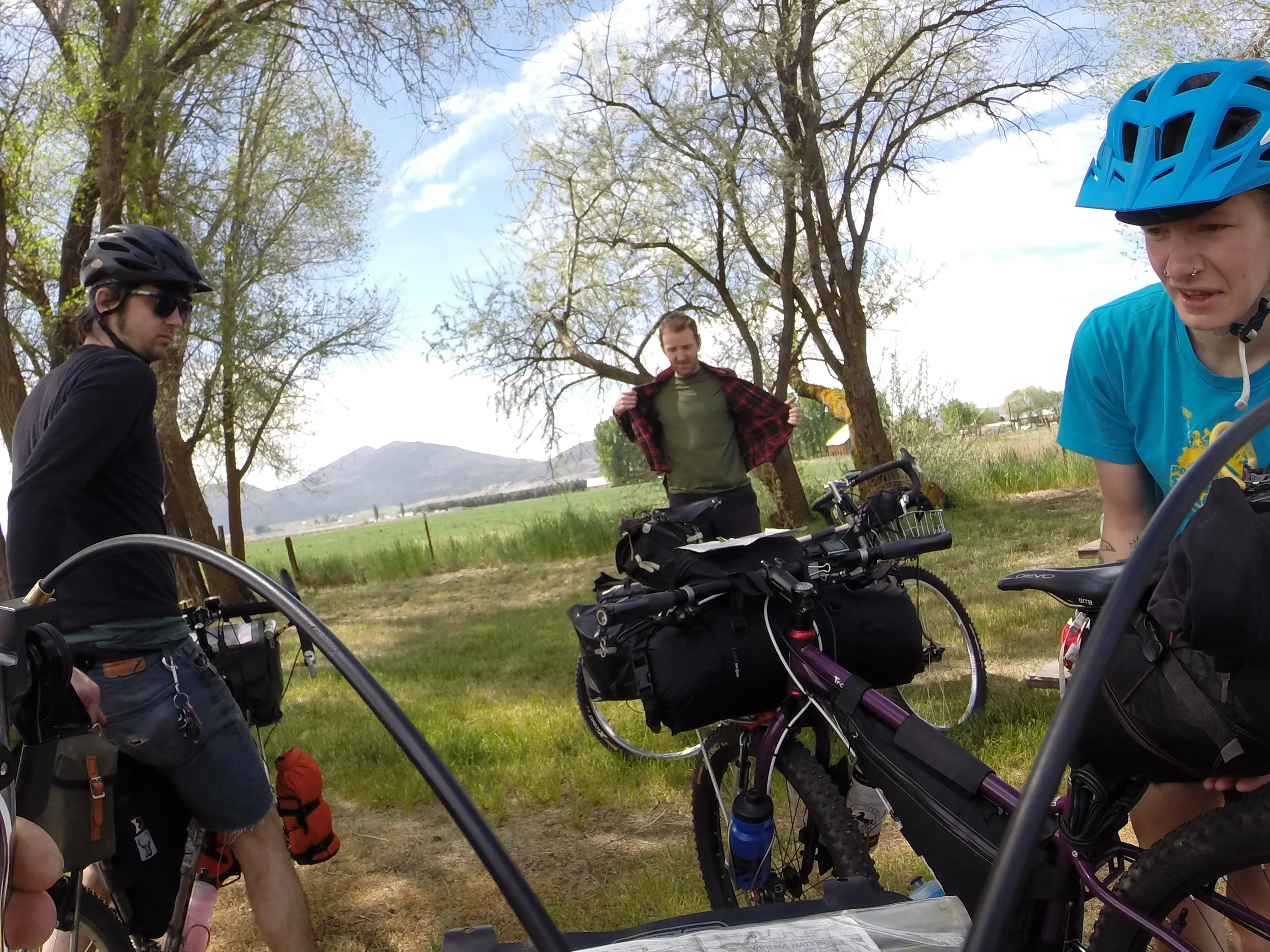
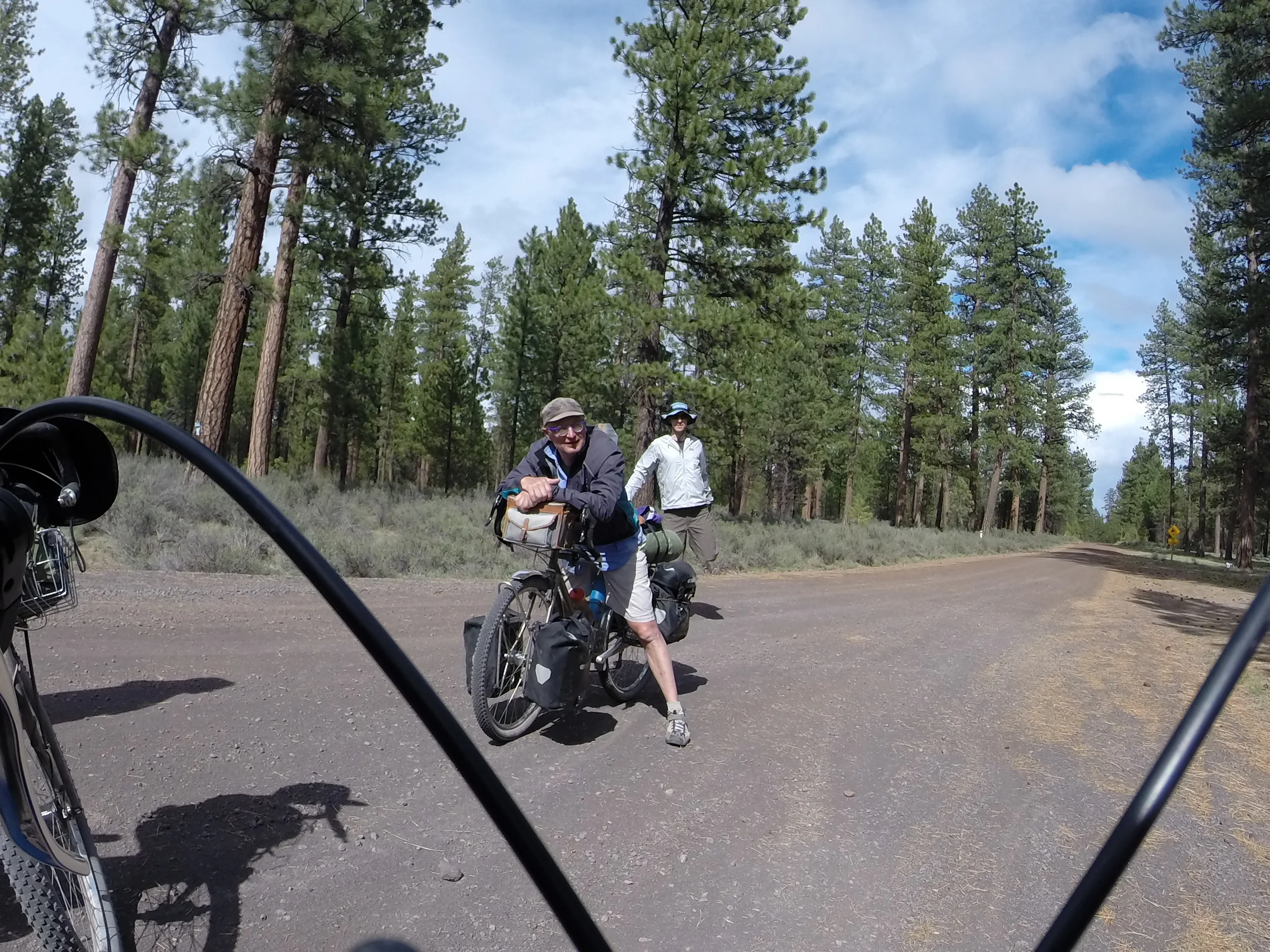
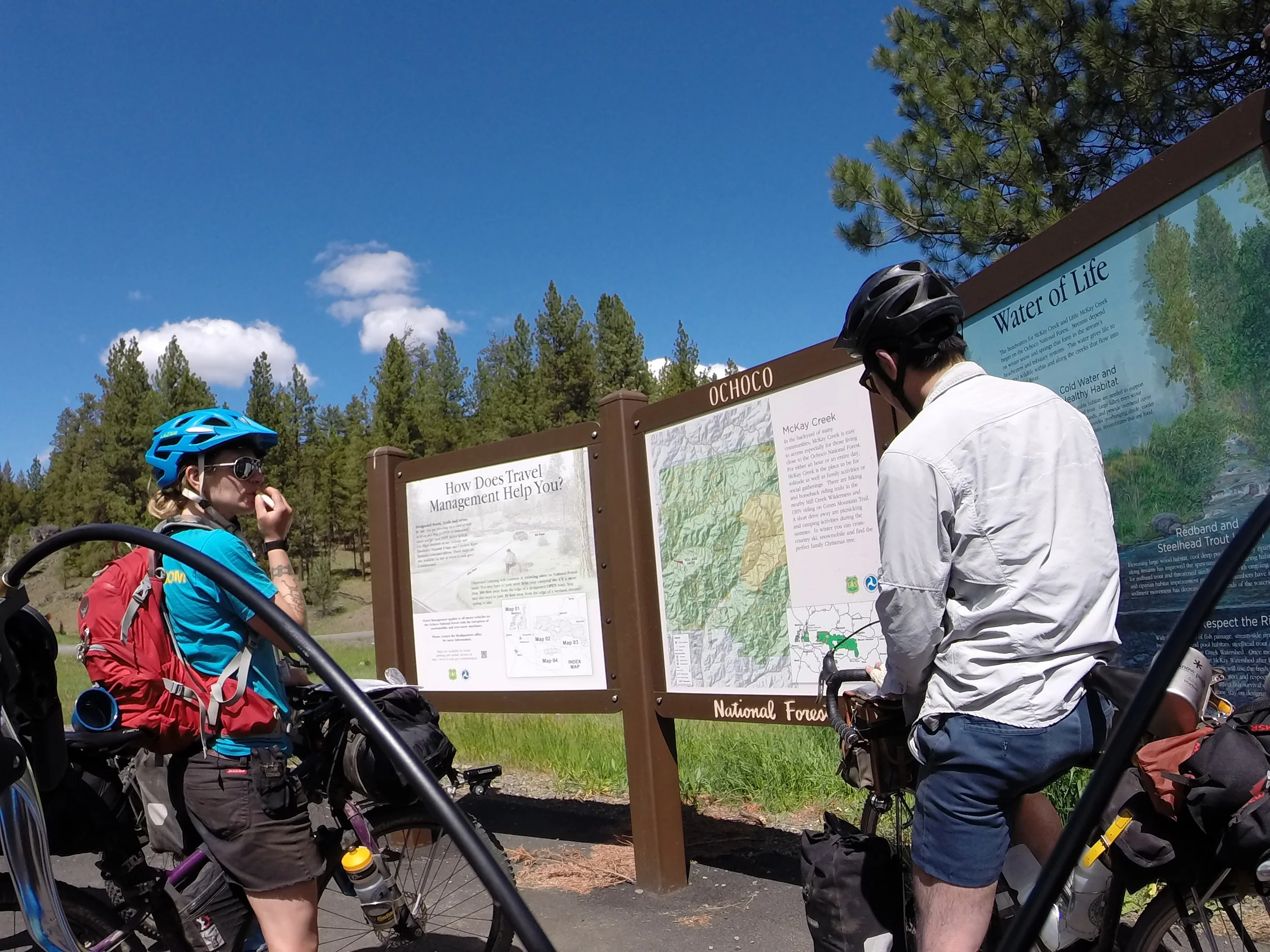
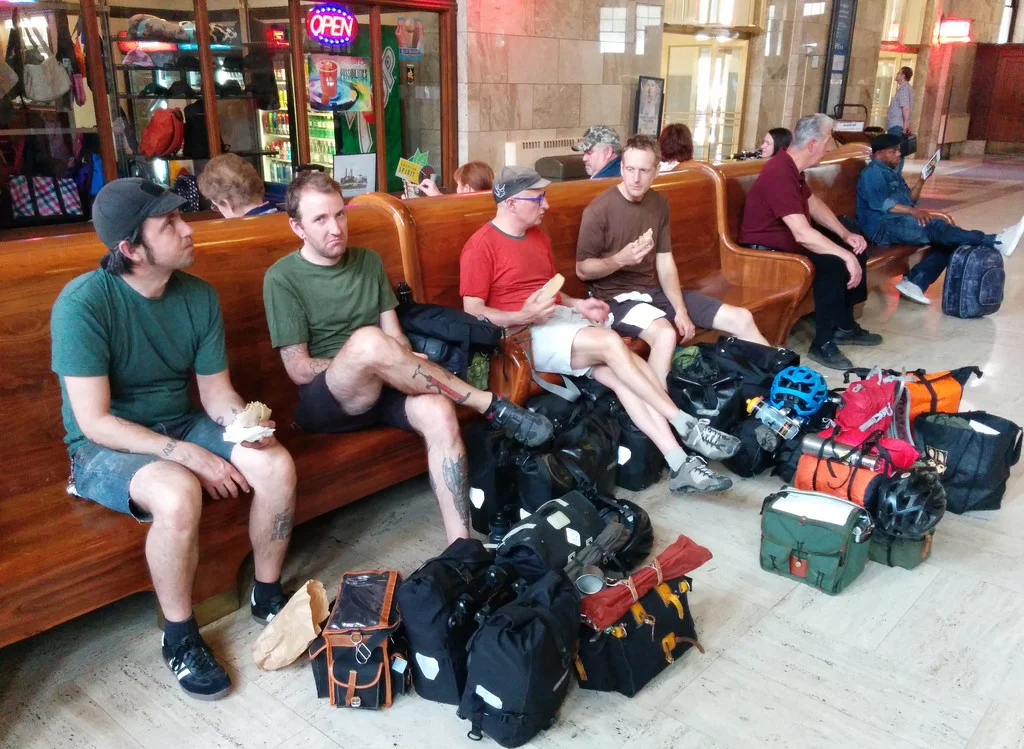
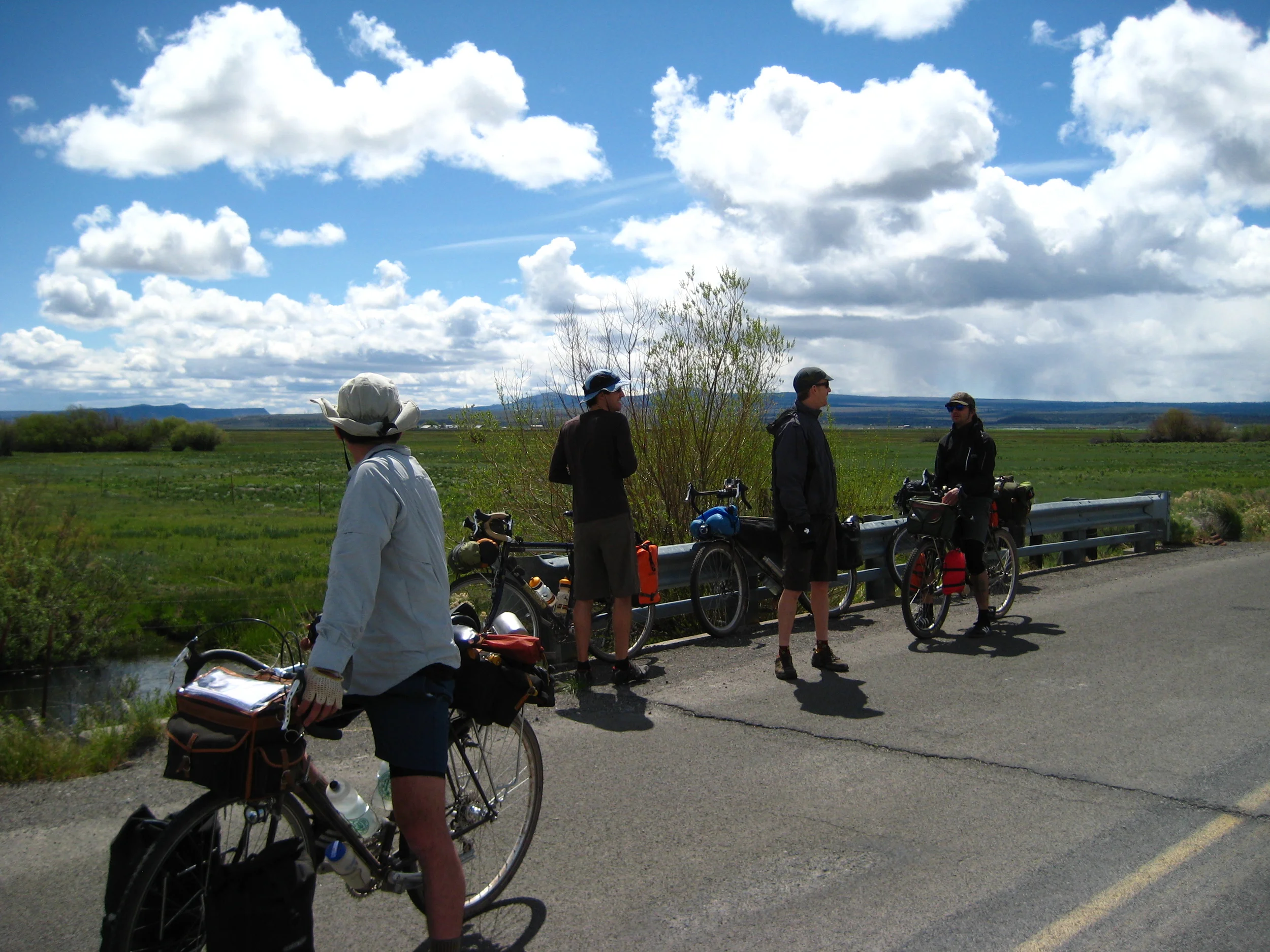
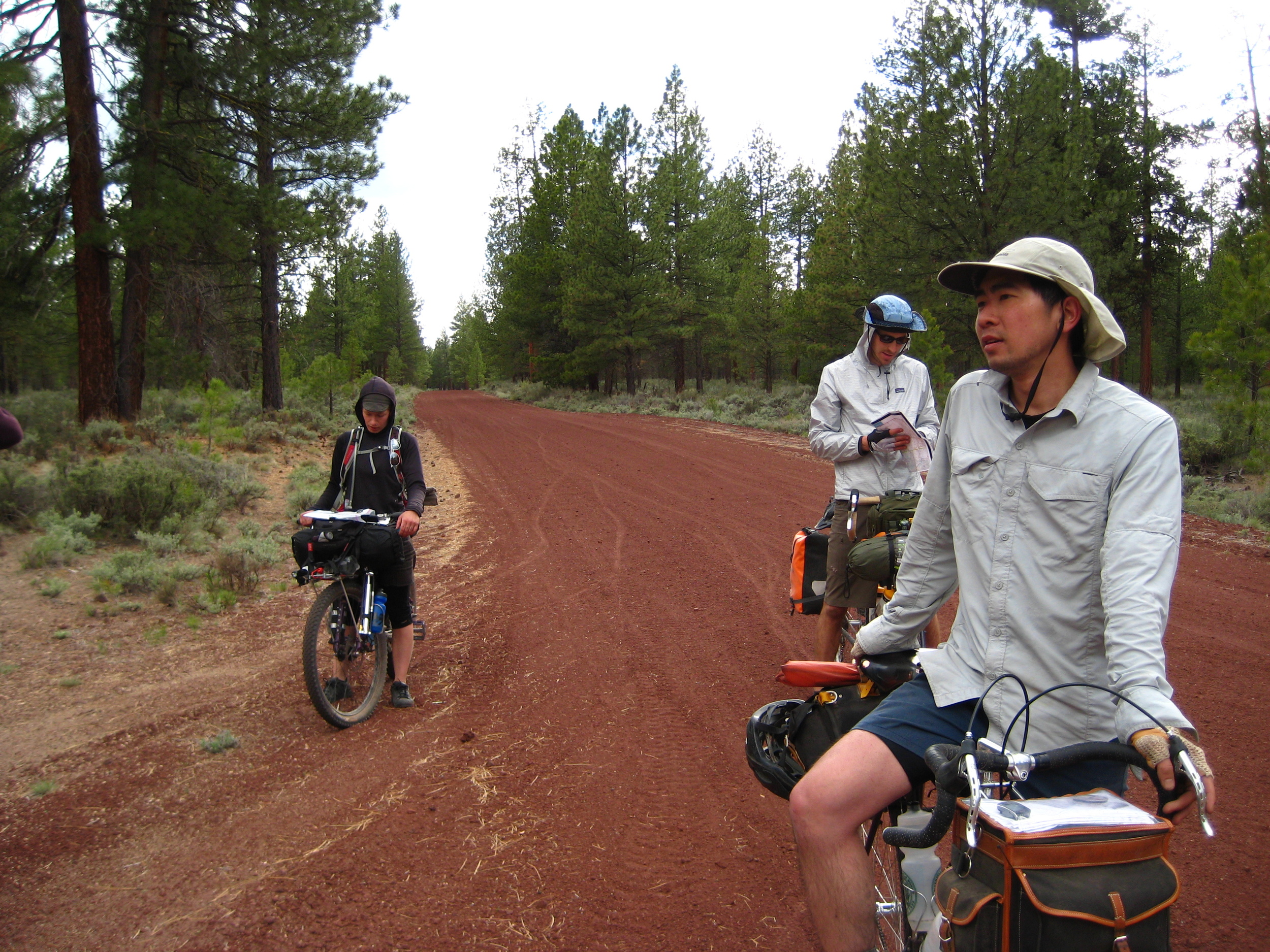
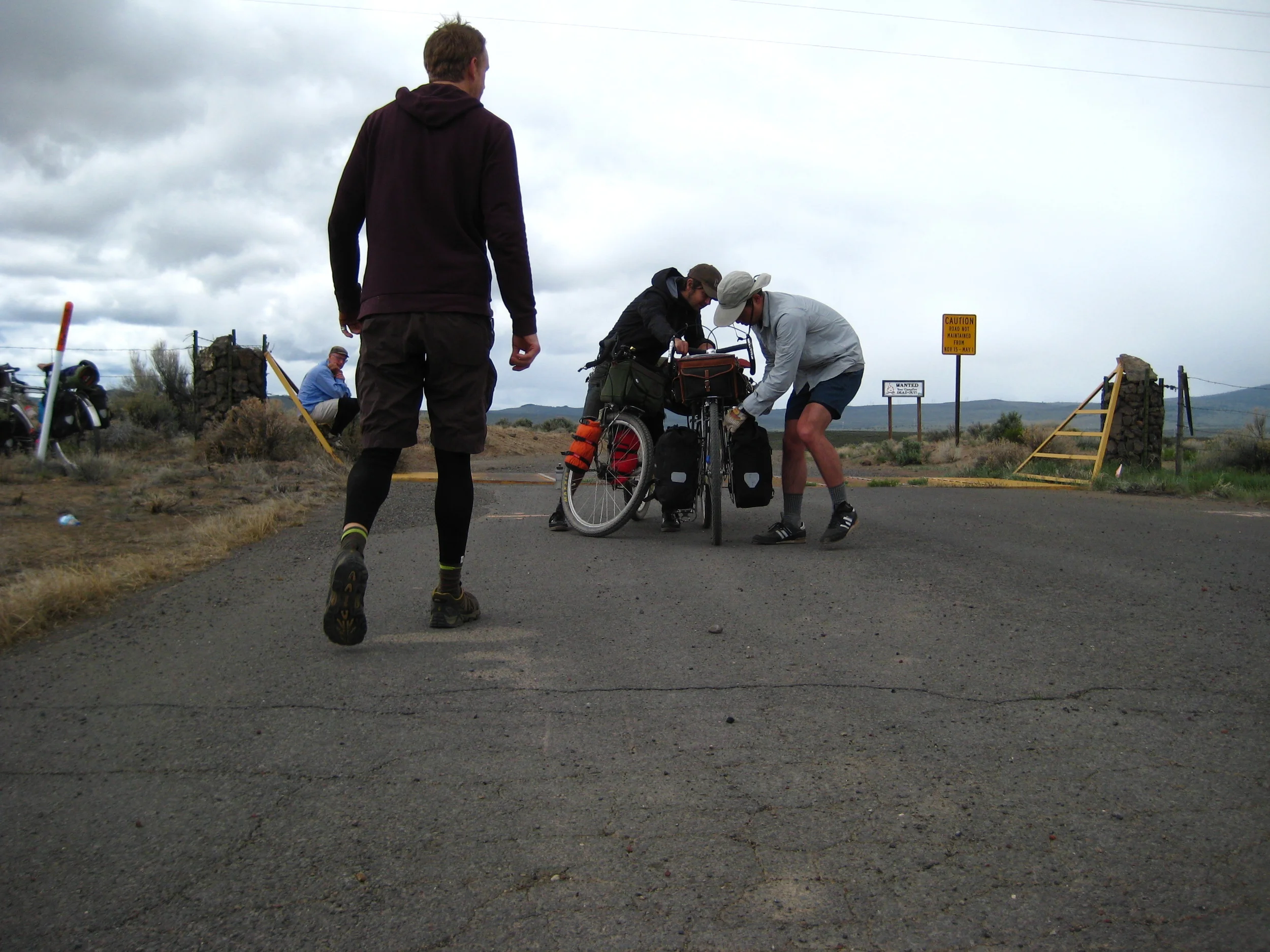
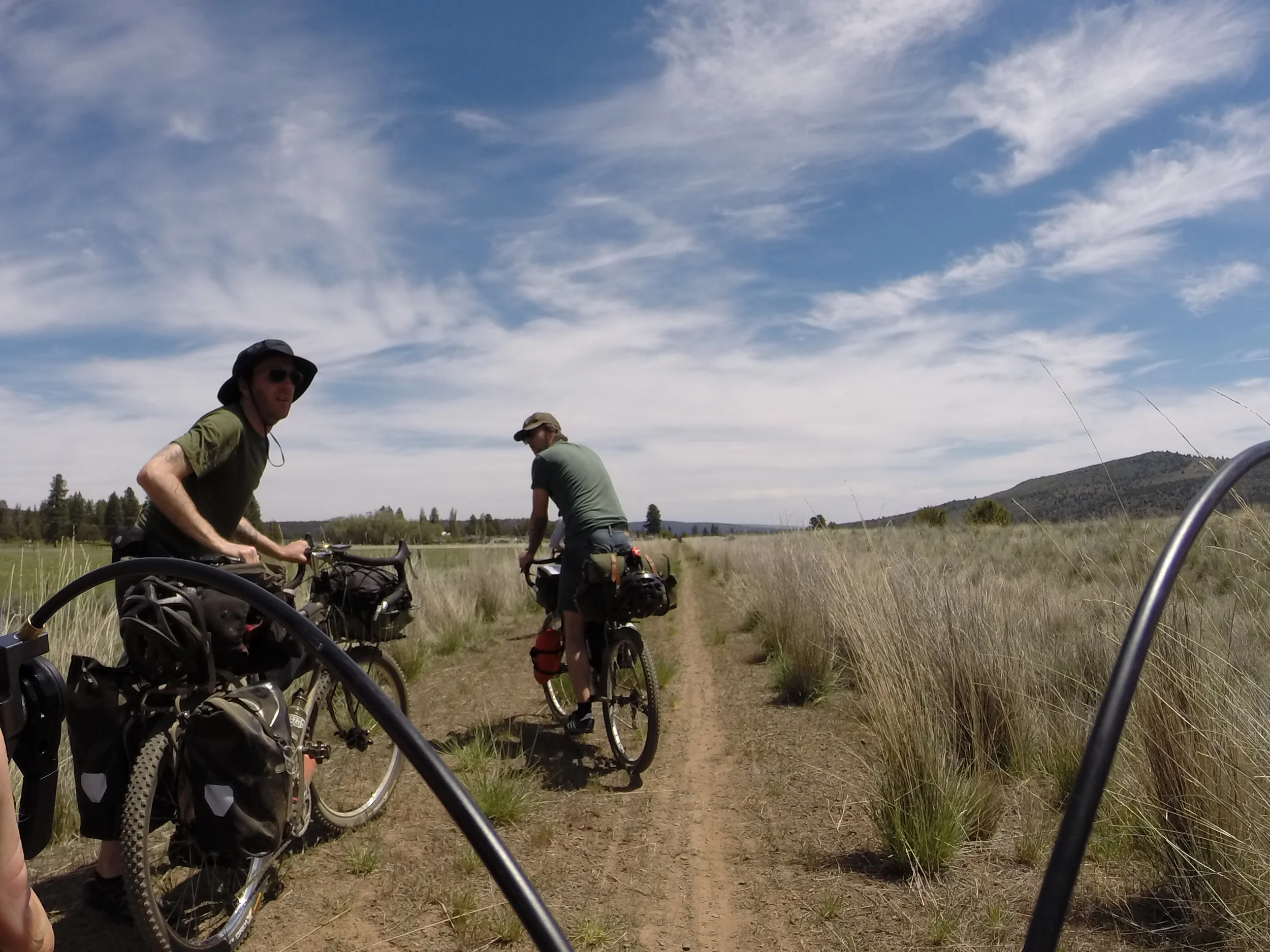
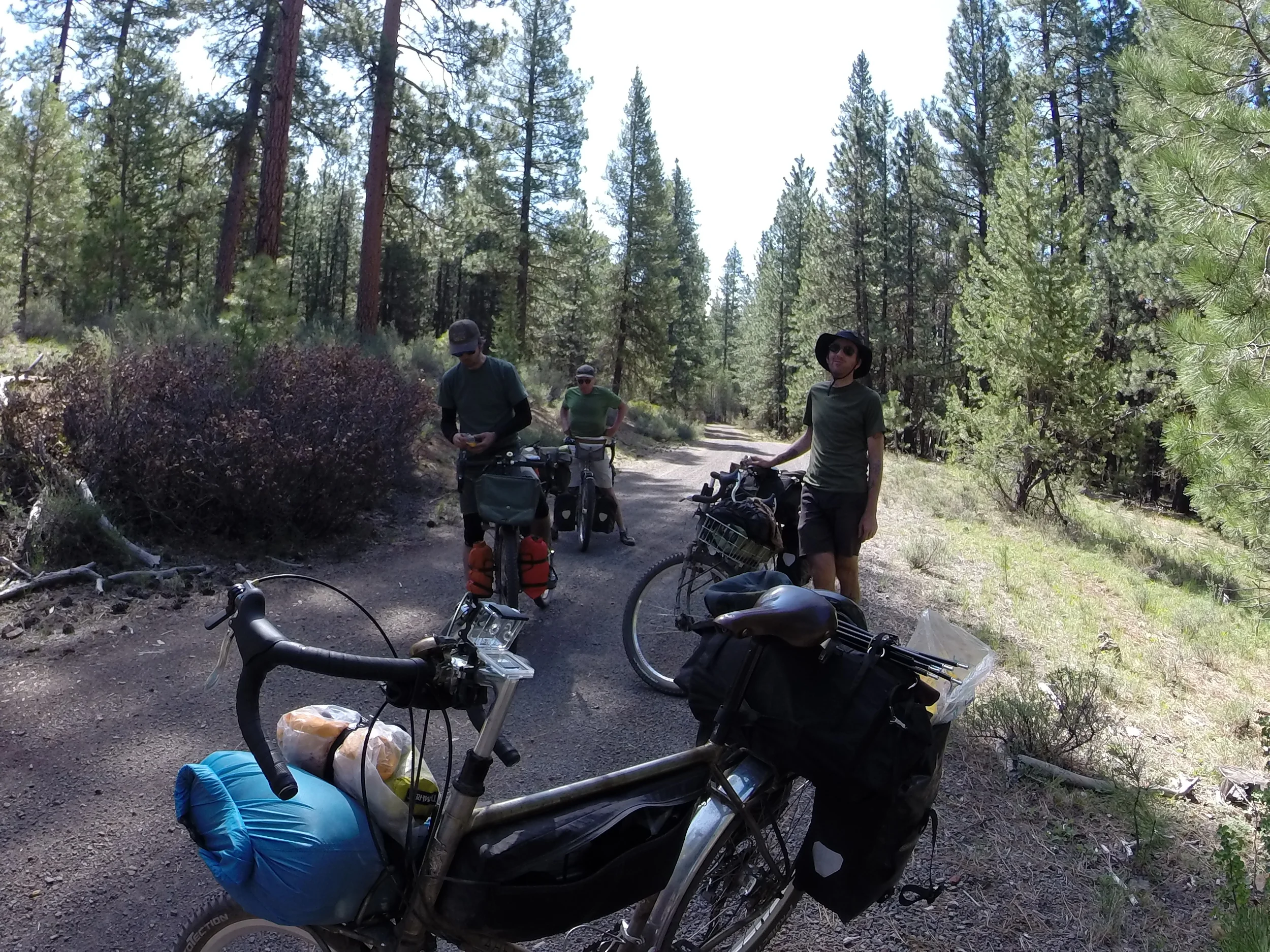
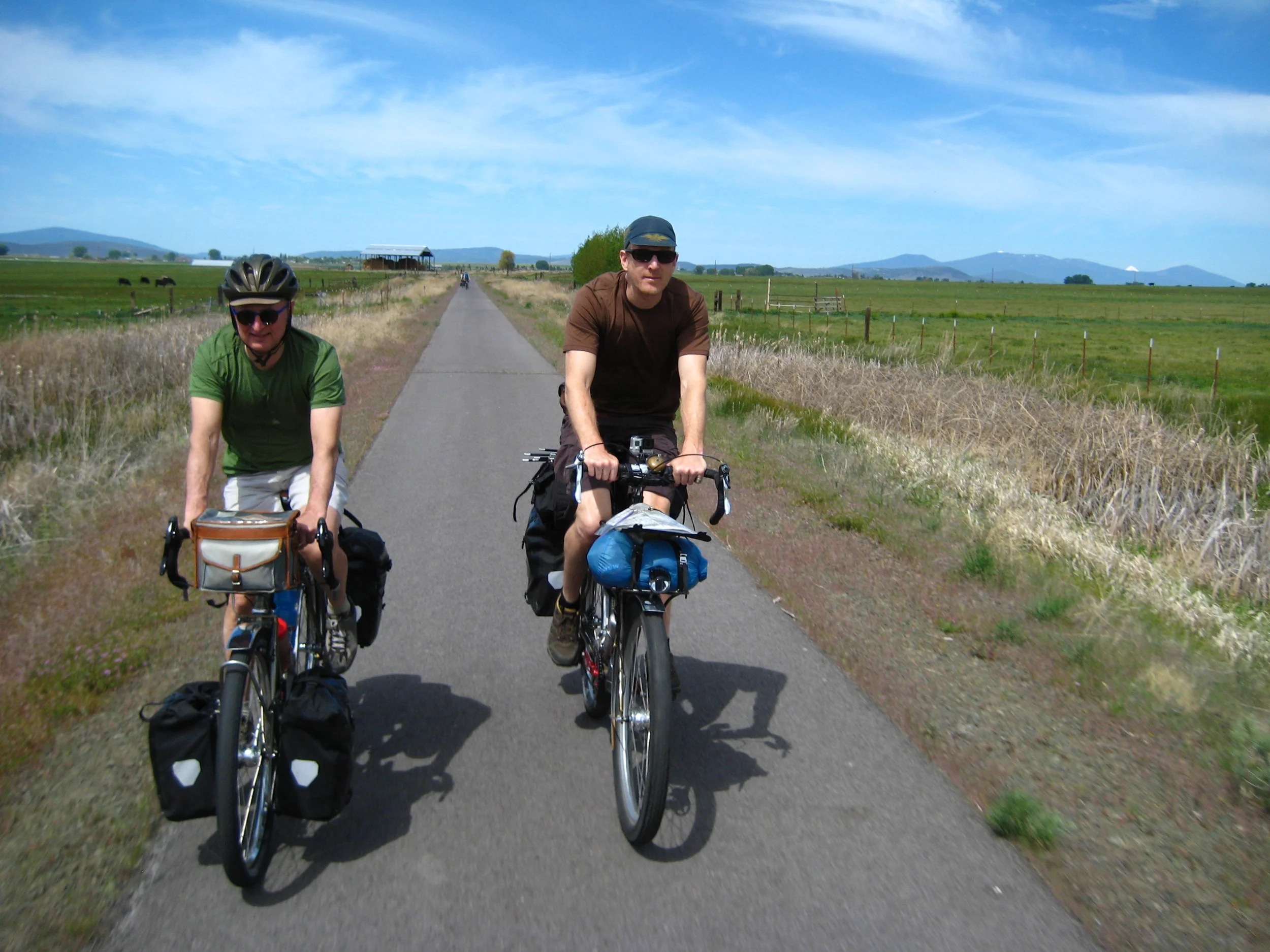
There were seven of us riding together, which on a bike ride over several days can feel a little like herding cats. But all of us got along really well — no fist fights broke out — and, thankfully, we had no major bike mechanical problems, nobody crashed, all and all we made it through smiling, even if exhausted, sore, dirty and overheated.

Kristina: Tough as Nails

Kristina did partially tear her achilles tendon during the ride, and now, after having gone to the doctor, she’s wearing “the boot.” She’s tougher than I am, I think, because she was clearly in some serious pain while riding, but we were so far out into the middle of nowhere, that, as she said, “What choice did I have but to ride?”

Seven in Shaniko


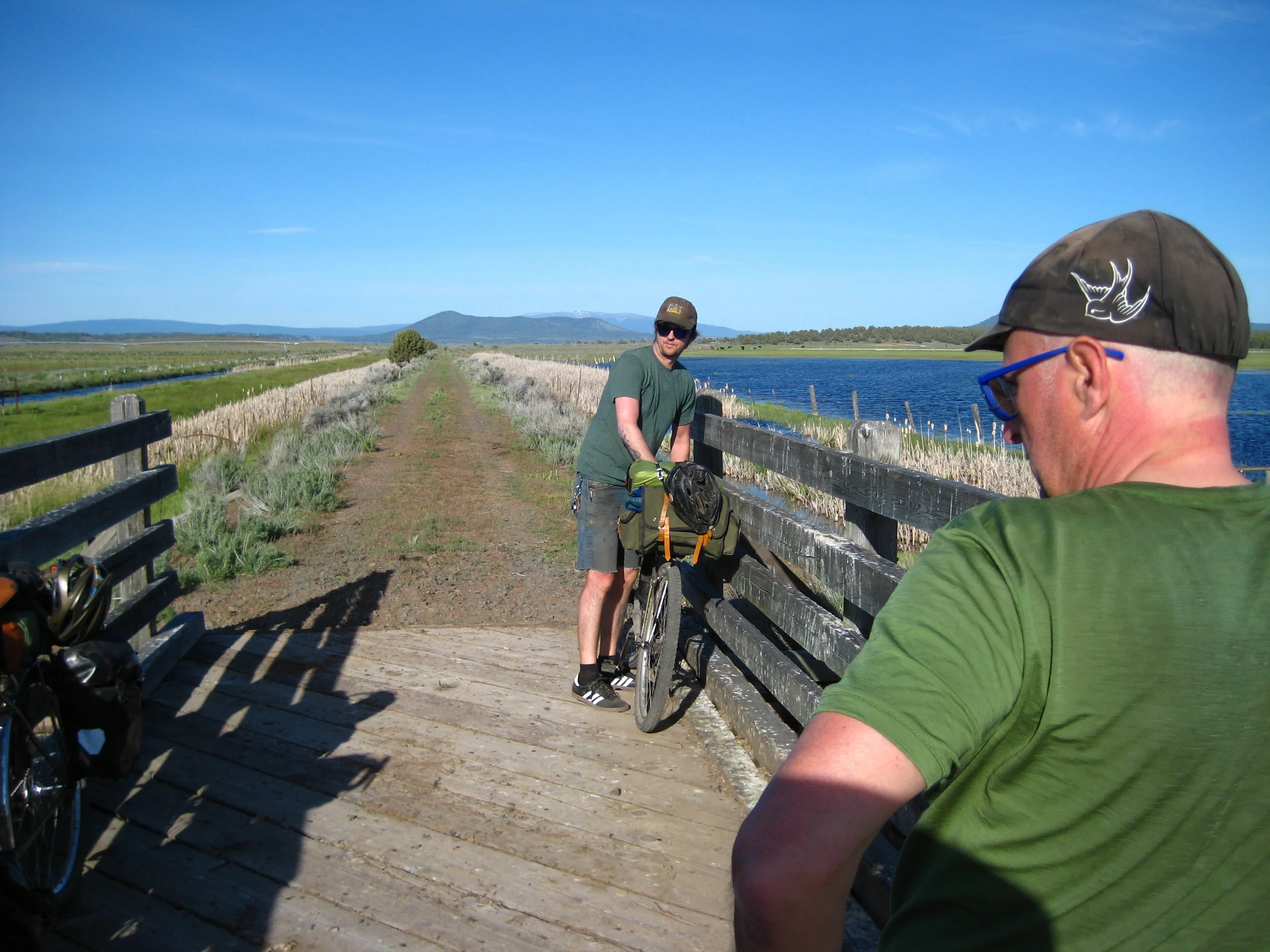
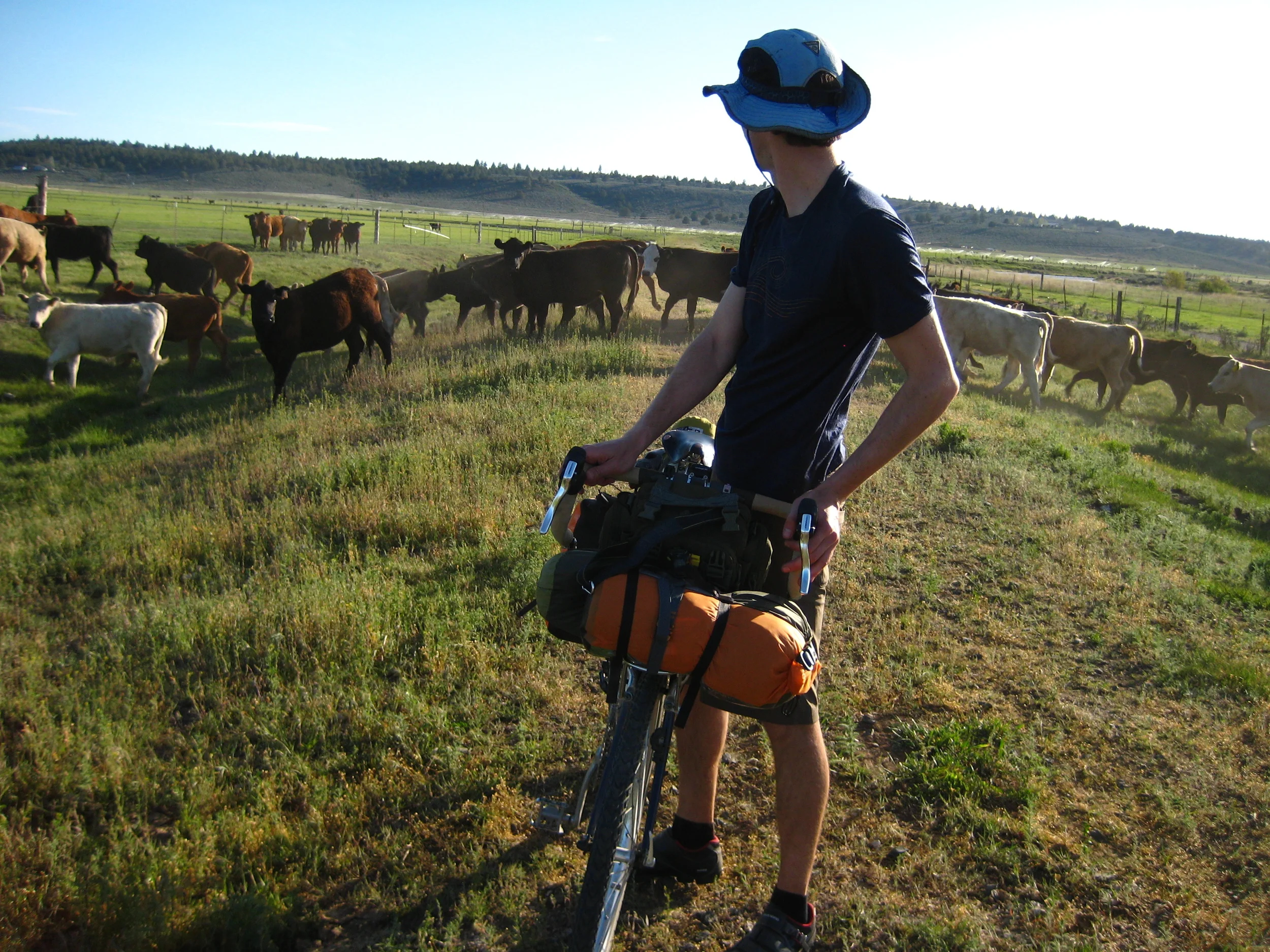
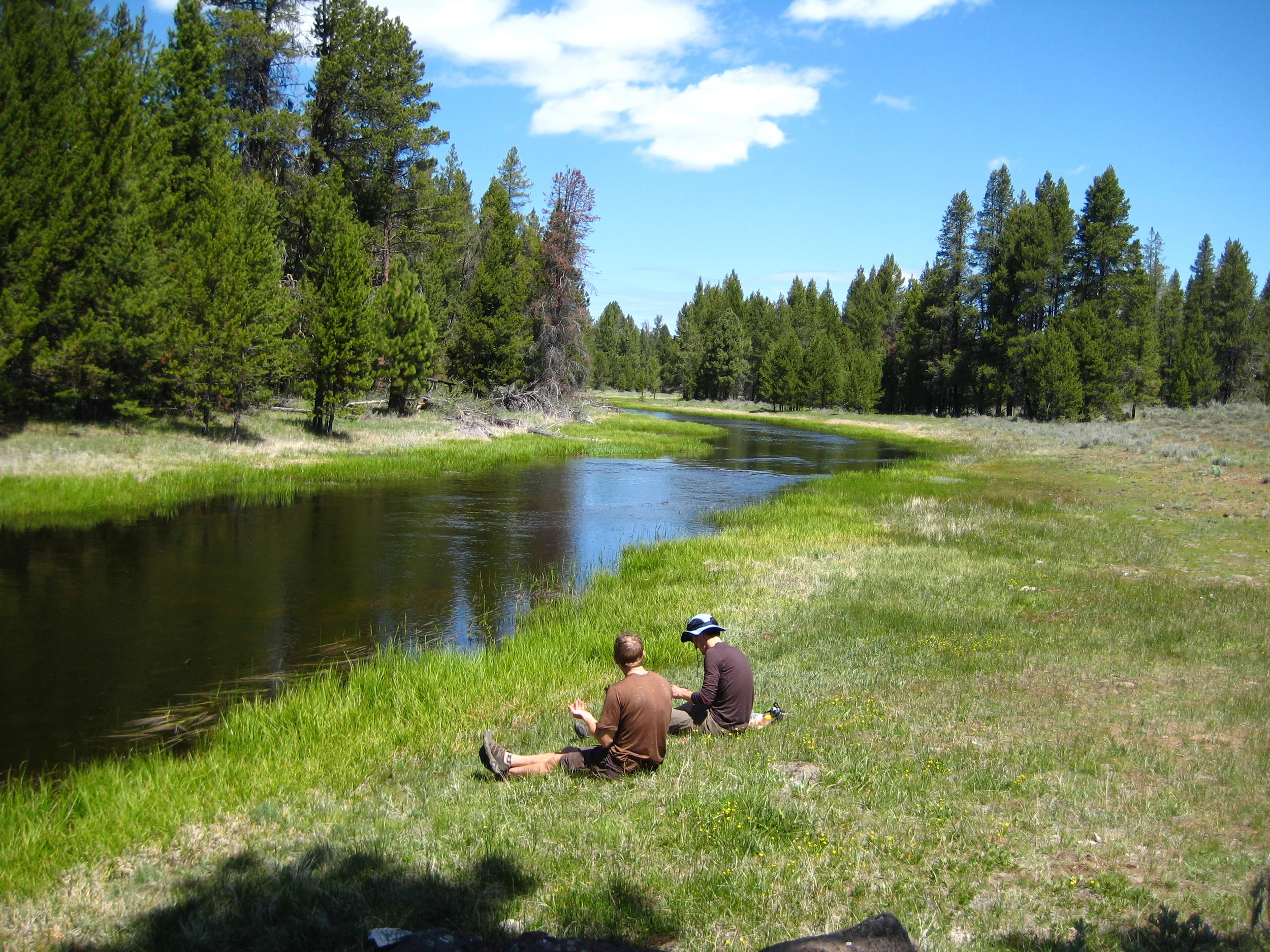
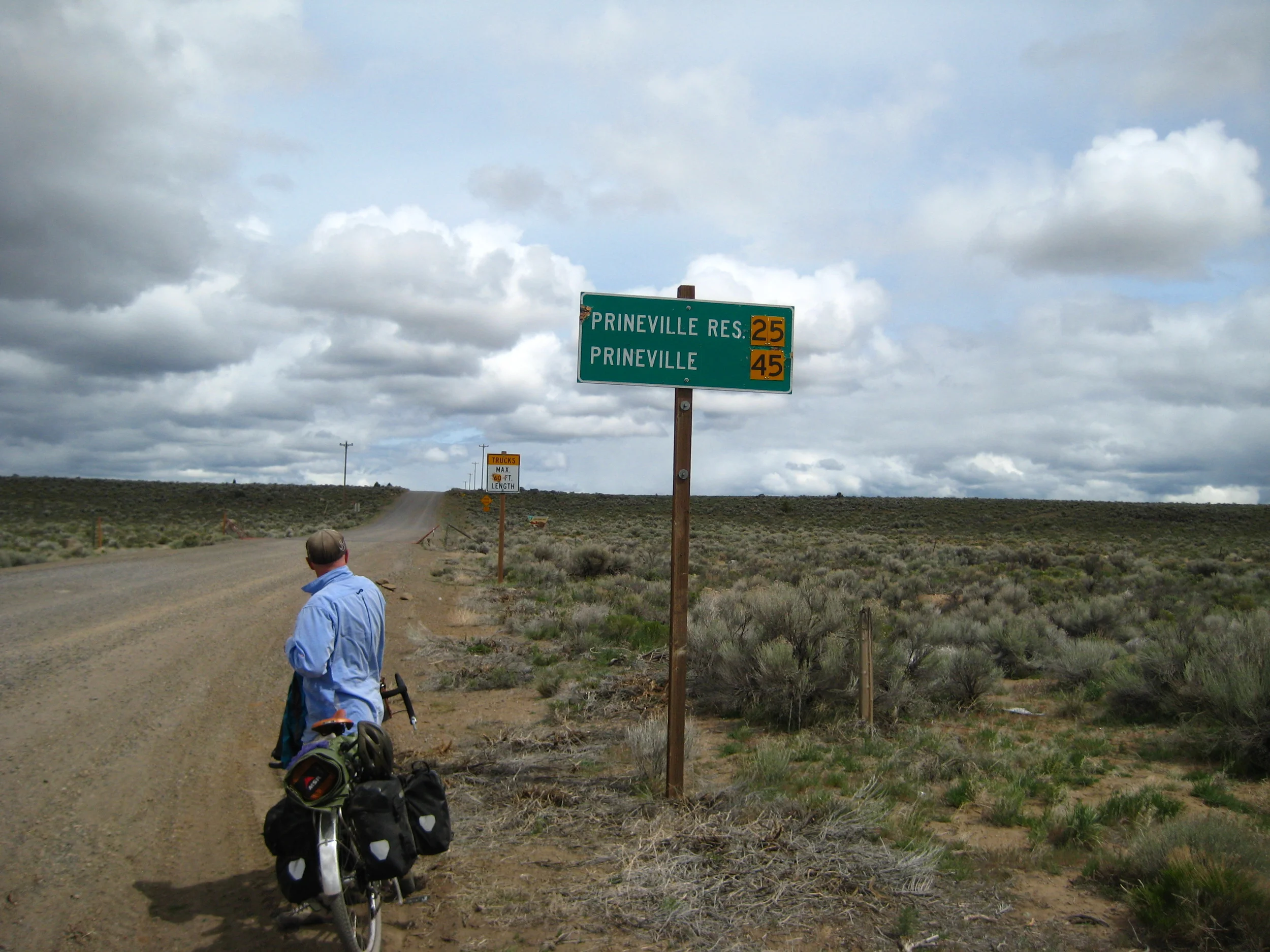
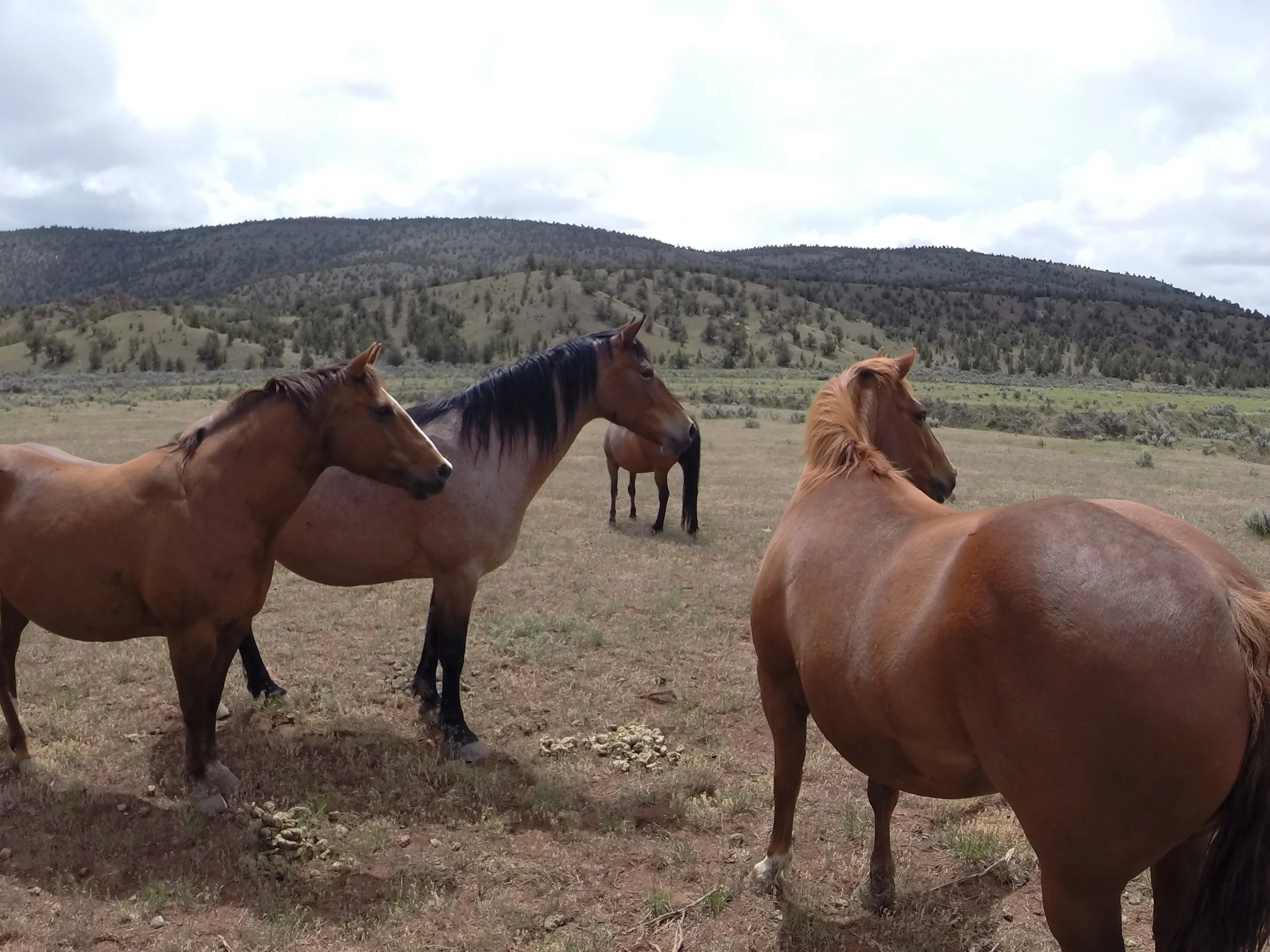
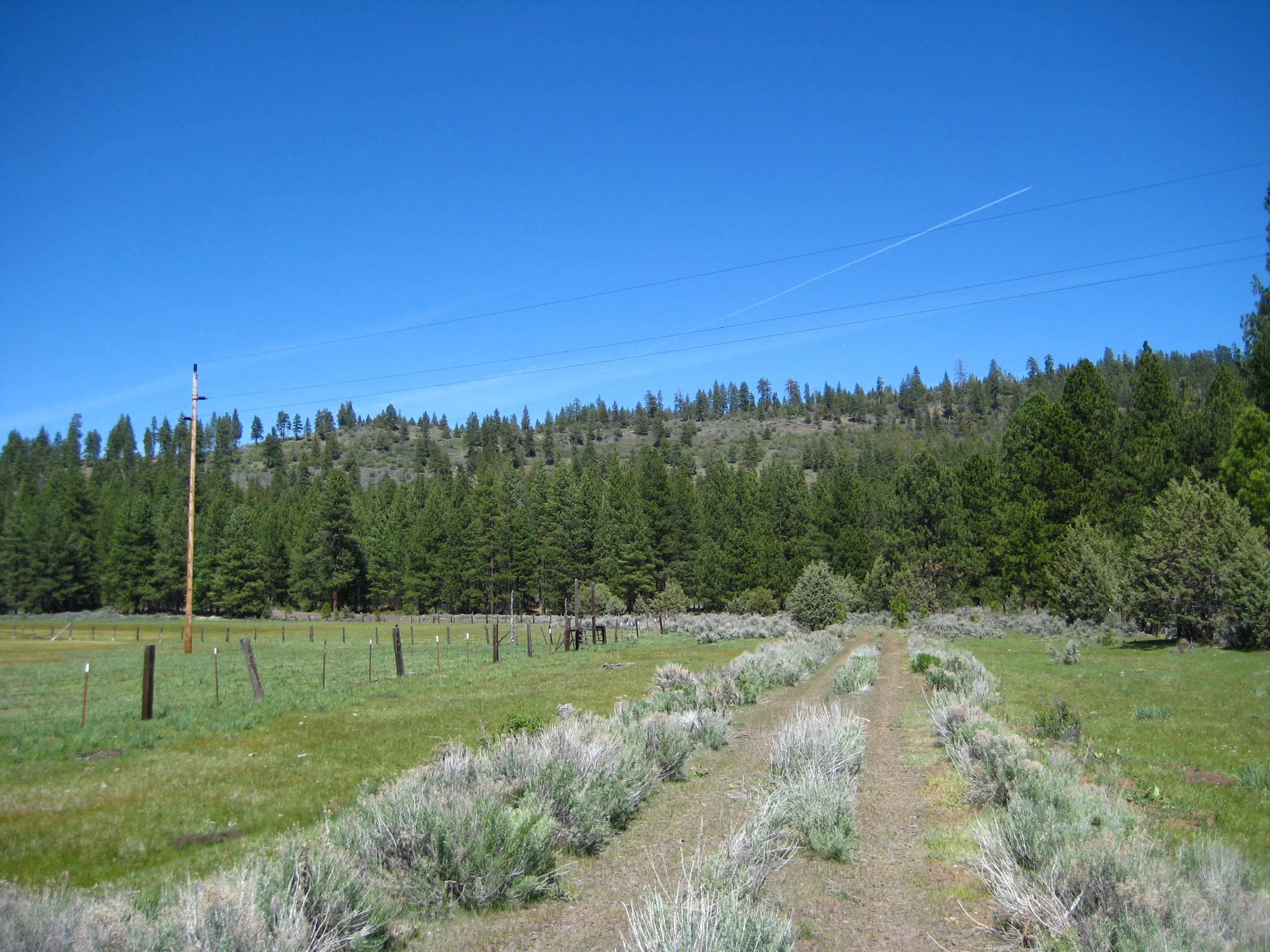
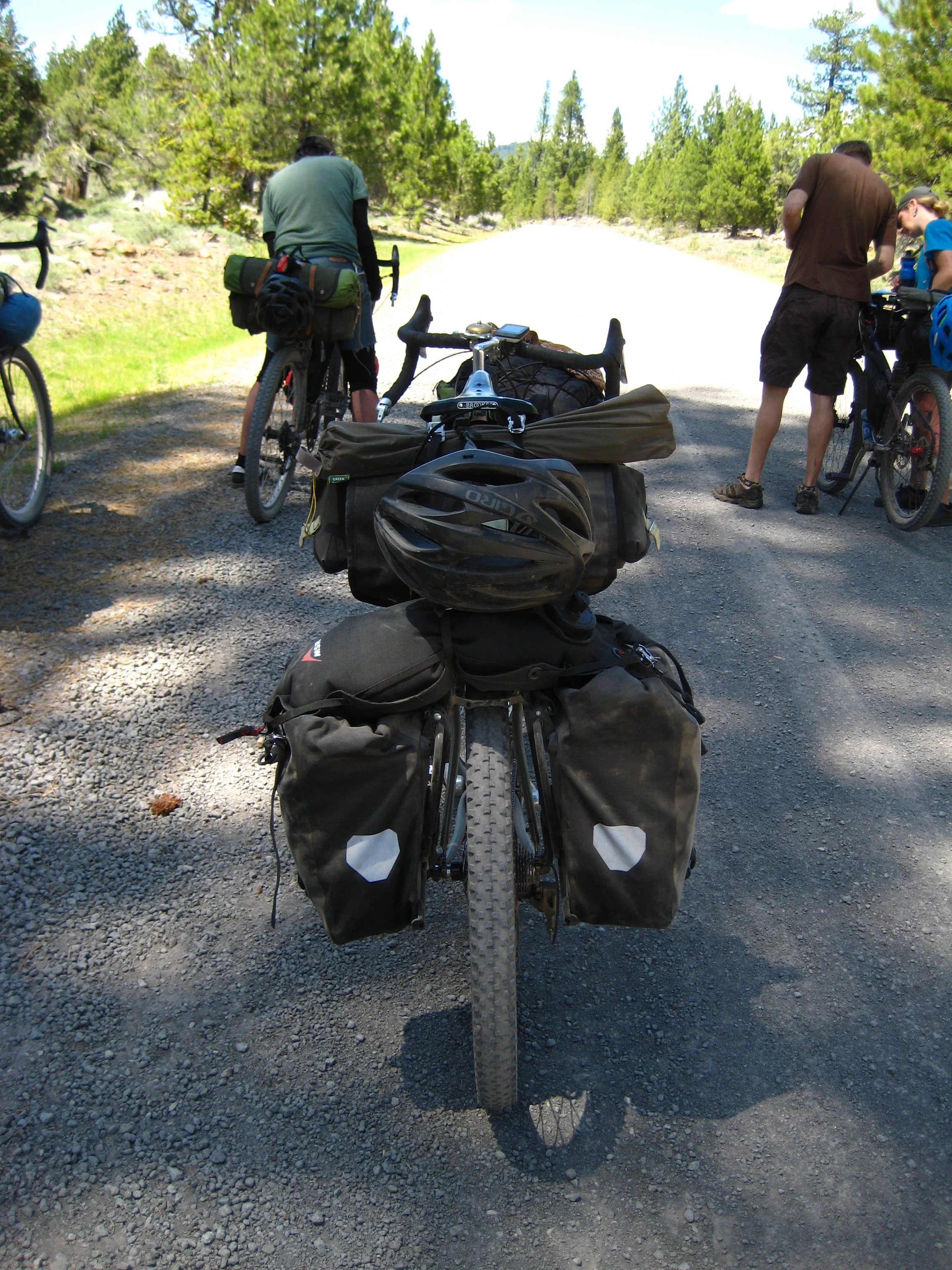
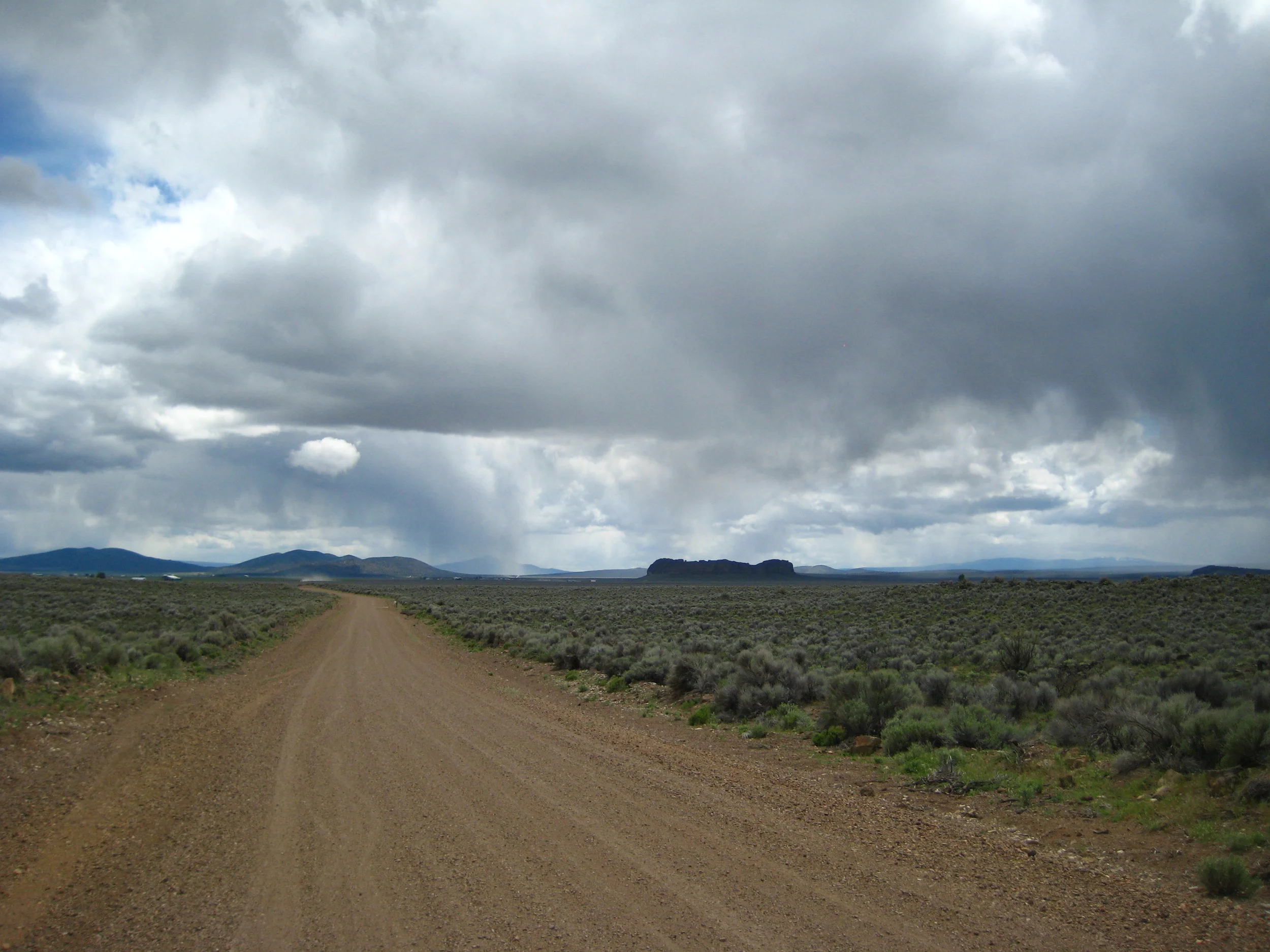
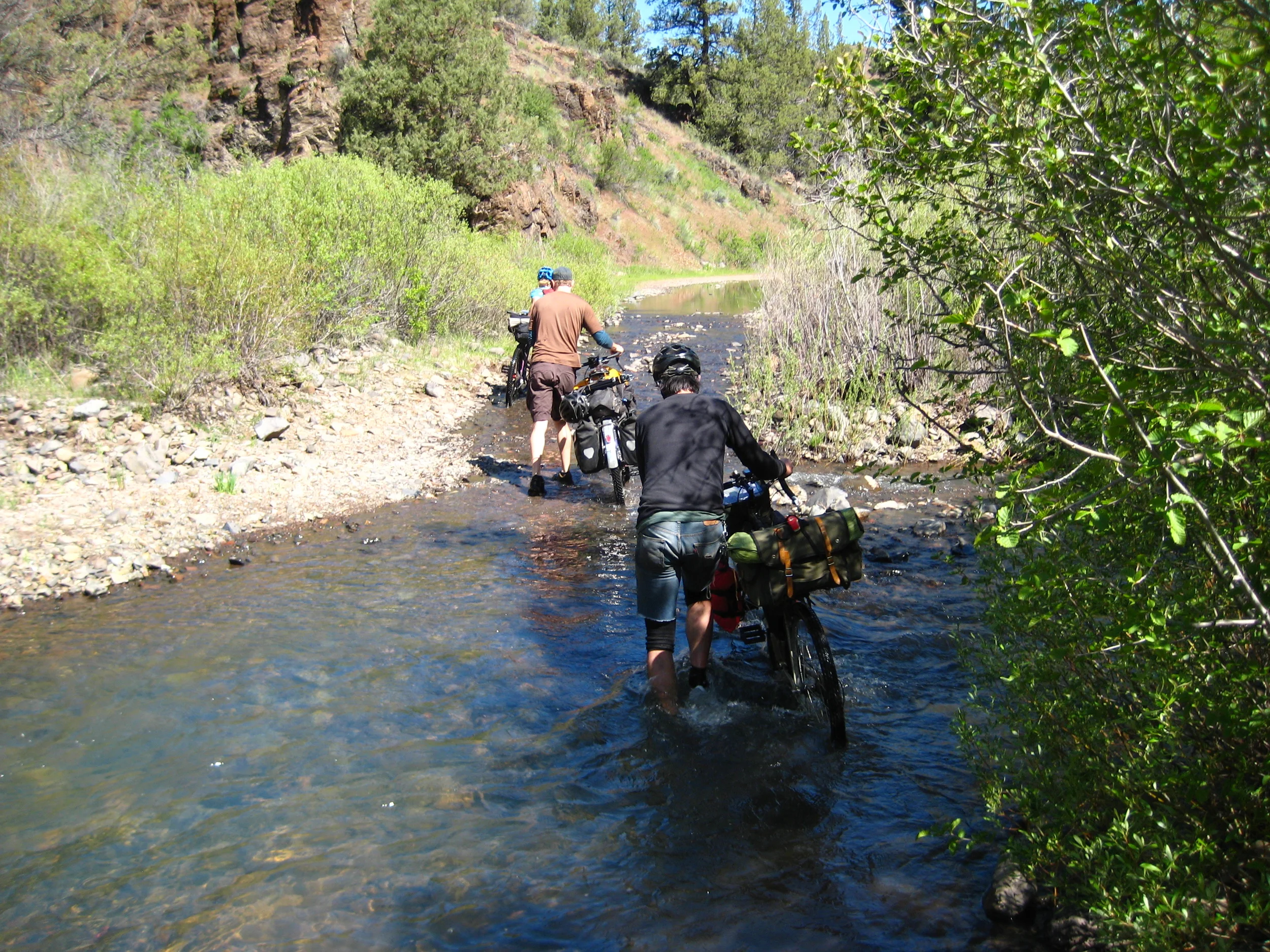
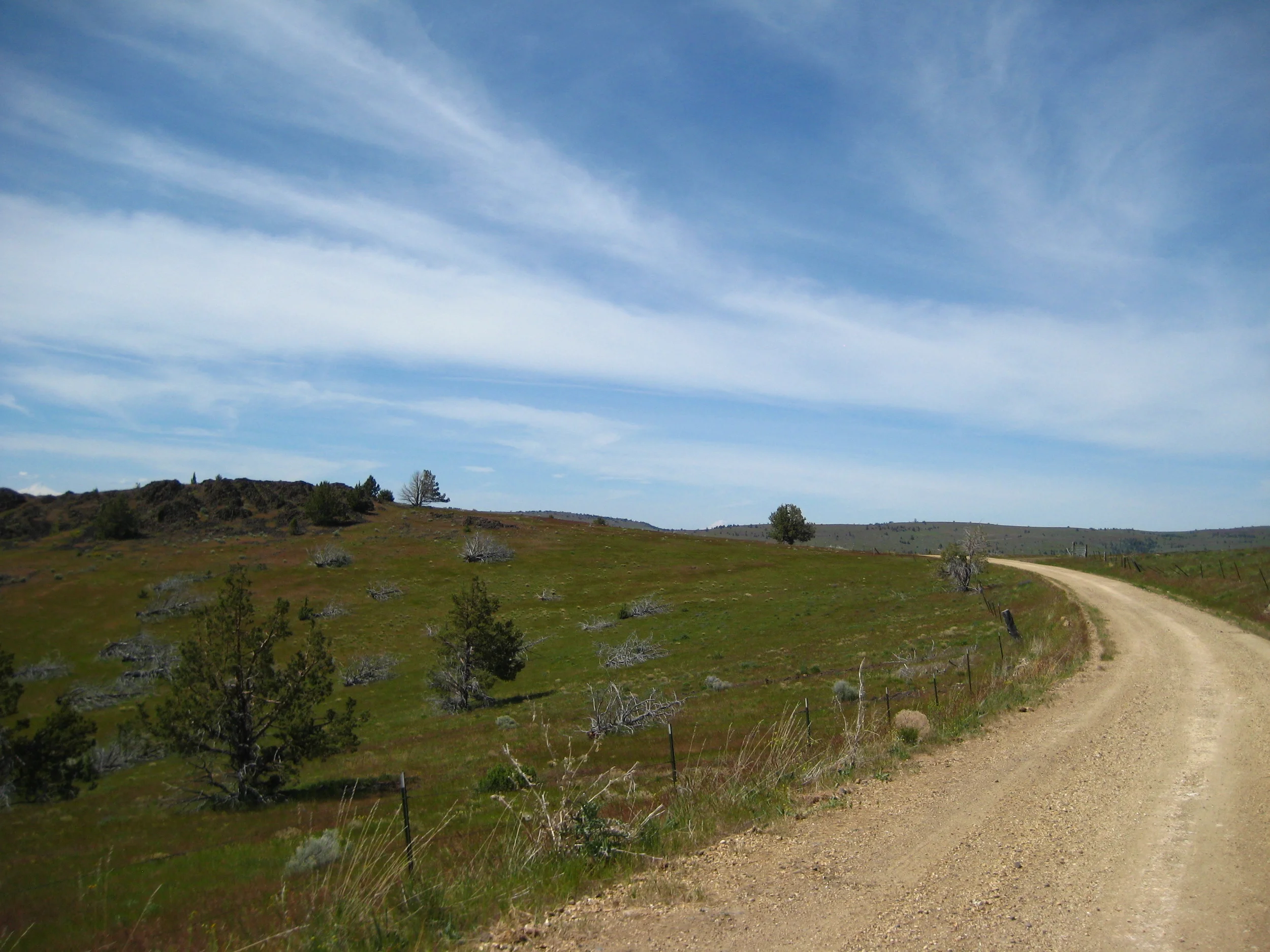
The route was definitely remote. I don’t think we saw a car for the first three days. Lots of cows, hawks, some deer and elk, many different kinds of rodents, several snakes and lizards, a million types of birds, all kinds of carcasses in varying poses and levels of decay. The trails and gravel roads were relatively smooth, but over hours in a day the vibration was tiring. My sore ass and sore hands. I lowered my tire pressure, which helped, but I didn’t go too low because with the but with the weight on my bike I didn't go too low for fear of getting a pinch flat.

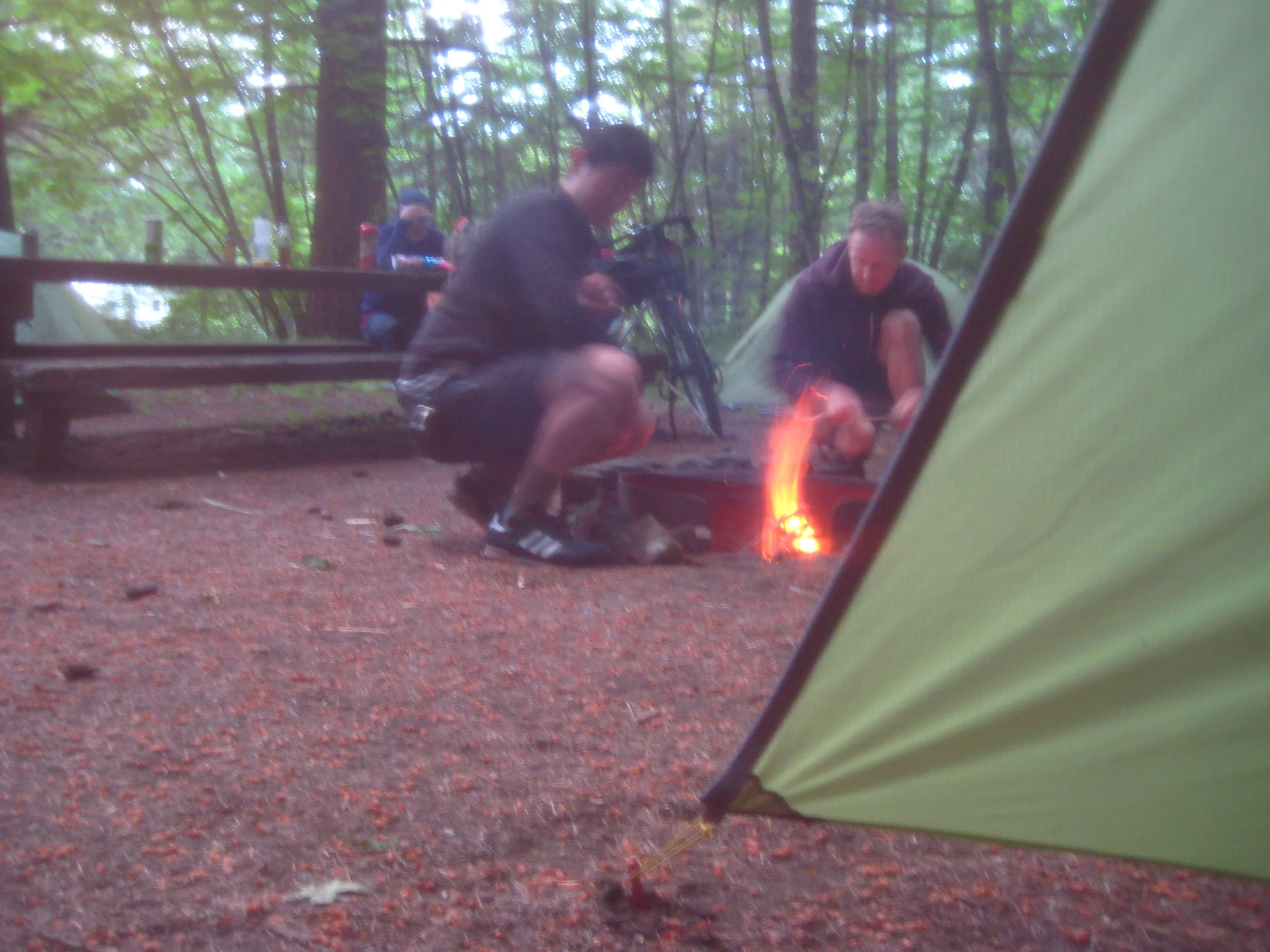
Campfire Dinner

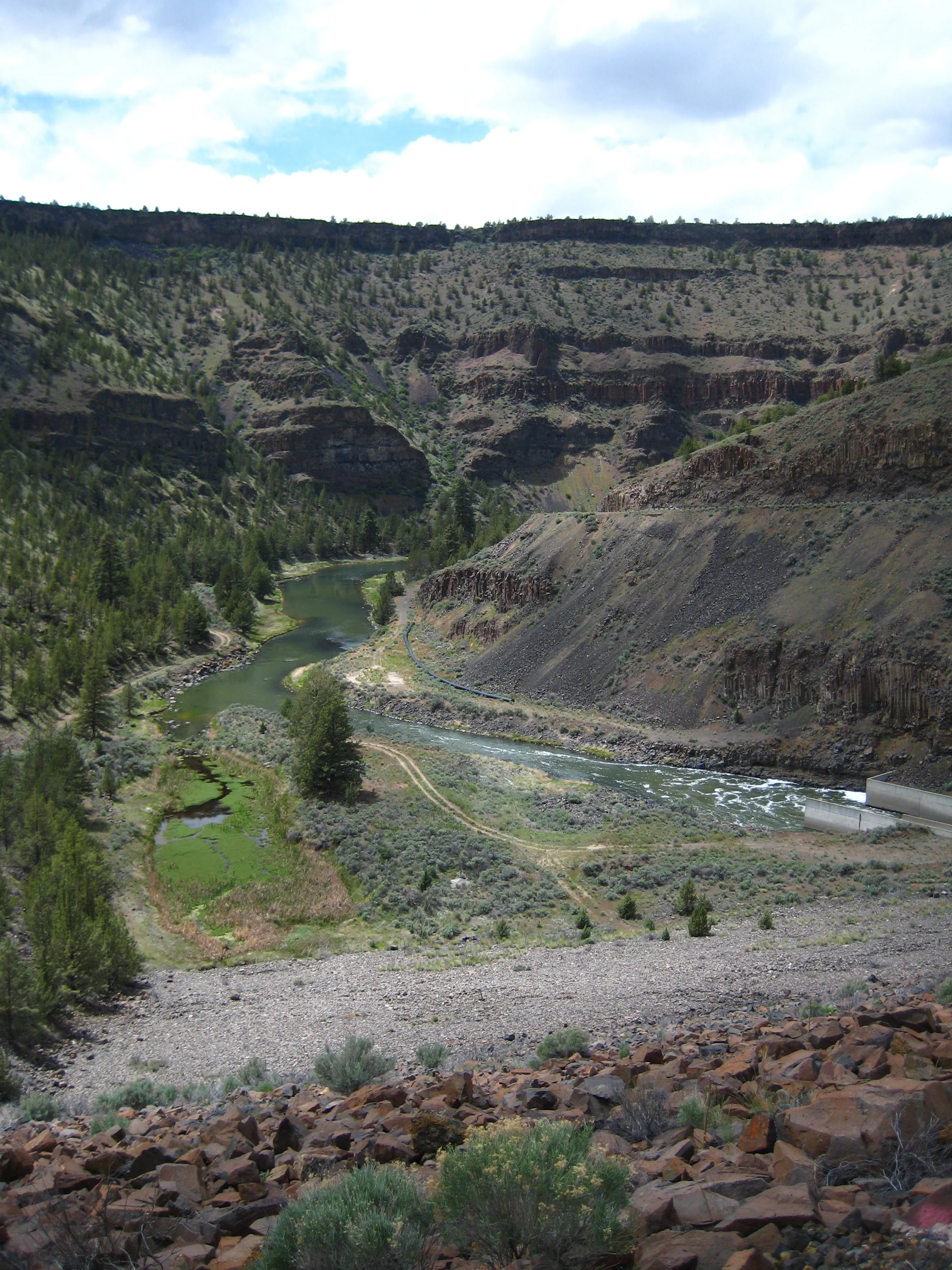
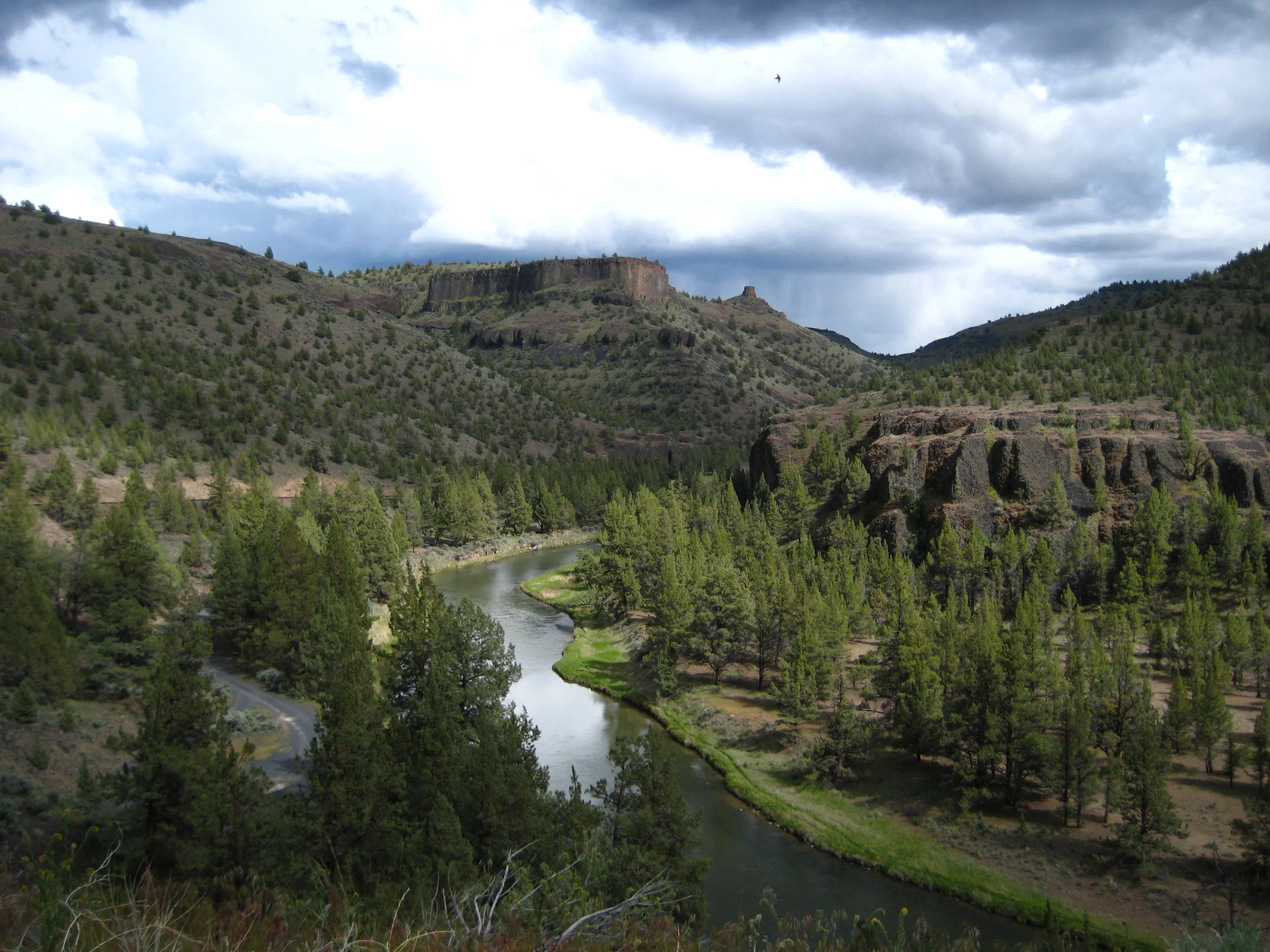
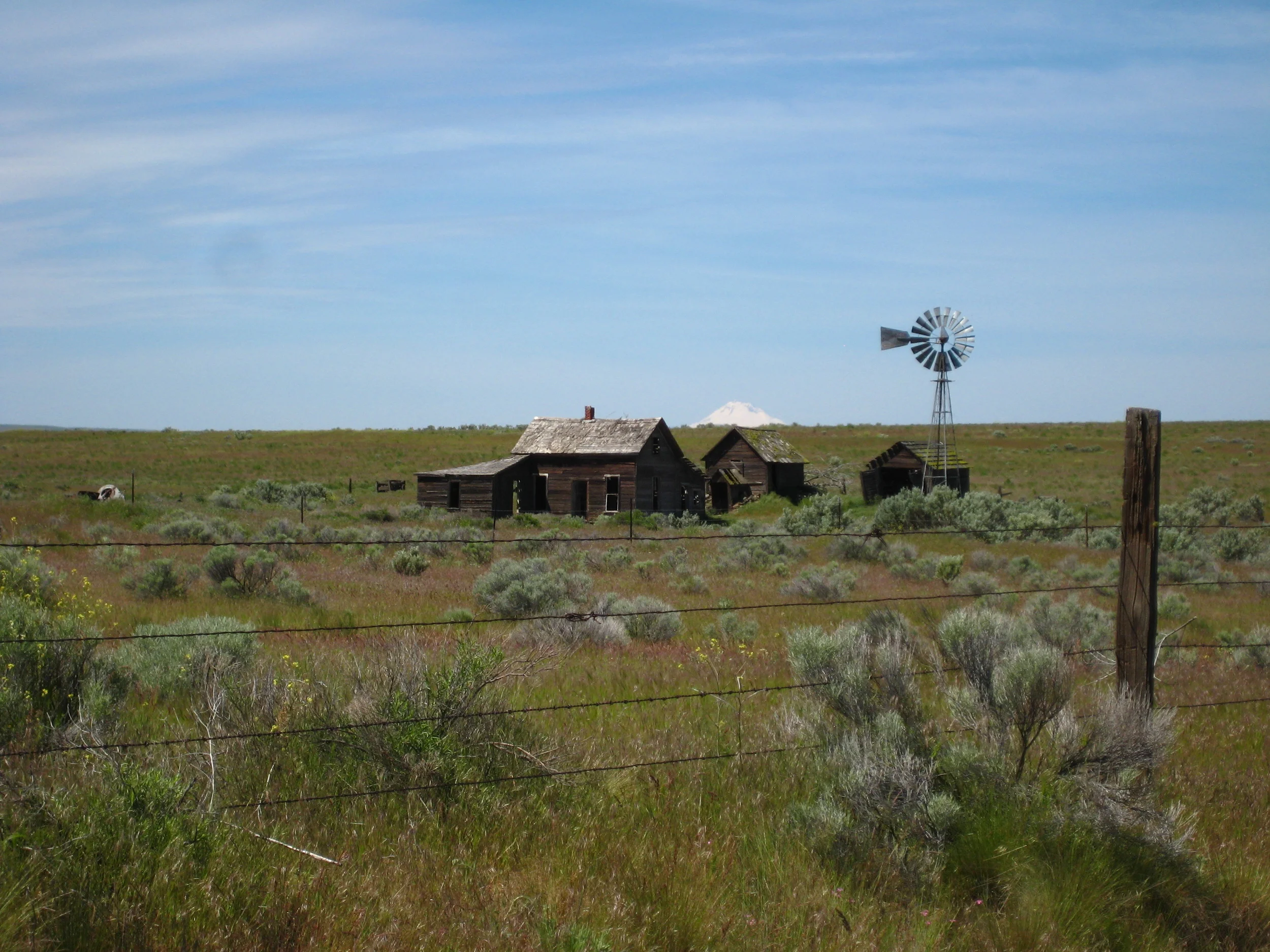
I don’t even know what to say about the ride in general except that it was pretty awesome. Pretty and awesome. I saw parts of Oregon that I’ve never seen, and from a perspective in which I could smell it, feel it, taste it, my body had to push over it. The sky was so massive dynamic. The nights were cold, the days mostly hot. The wind was intense. It was an adventure, and every day presented a new challenge; big gravel climbs, stream crossings, unbroken heat, water scarcity, threatening storms, physical & mental exhaustion, new aches & pains, the existentialism that comes with being in big empty places. It’s interesting watching the internal dialogue that goes on while pedaling on a long, hard ride, and how the tone of optimism or negativity of what’s streaming through your head is directly linked to how your physical body feels in any given moment. When you’re tired, hungry, or in any sort of discomfort or pain, the volume of the negativity may turn up. Or, if you’re well rested, well fed, cruising with a tail wind, the voices in your head may sing with joy. You can’t listen to either voice too closely because as sure as the road rolls under you the voice will pass away and some new thread of thought will arise. Letting it go (pedal-pedal-pedal), and letting it go again. This is the meditation of cycling, watching your breathing, your body taking over where your mind leaves off.

Barn & Sky

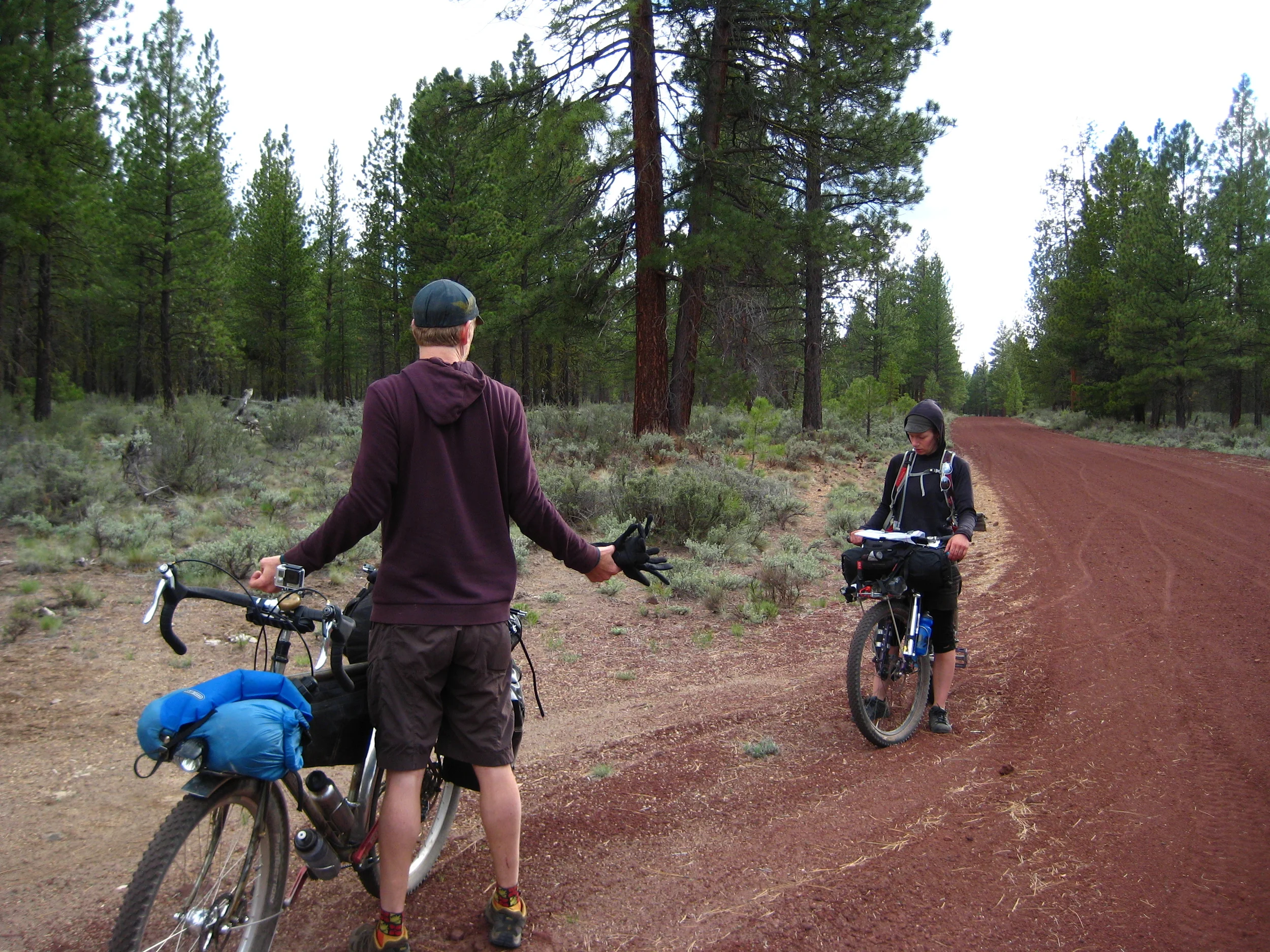
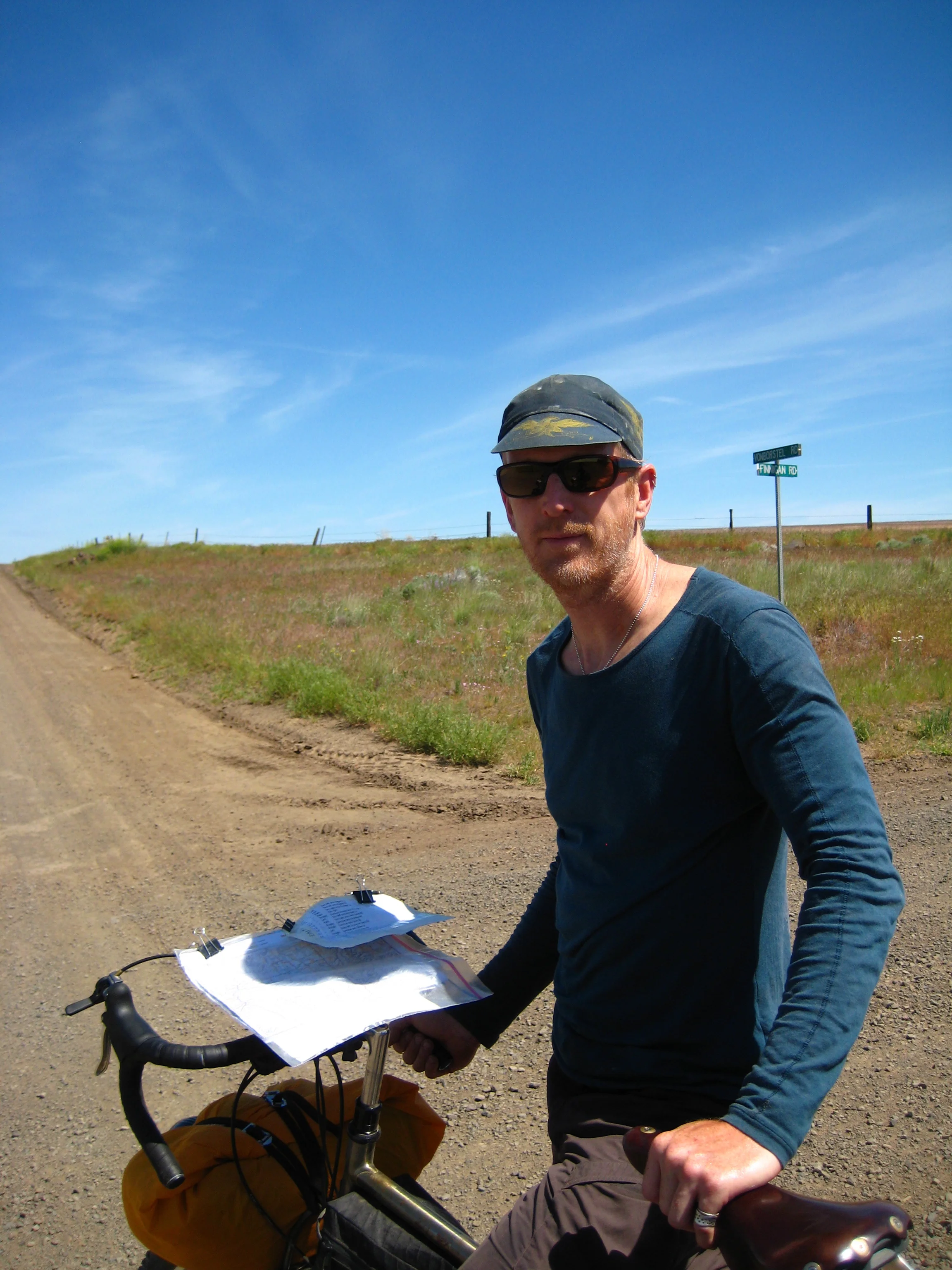
This ride was challenging, for sure, but I felt like the route was well chosen, the maps were close enough to accurate that we didn’t have much trouble finding our way. We stopped at a few intersections, consulted each other about which route was the “right” route. There was no back-tracking, except for the time when Jrdn took us up the massive hill that he wanted to climb, the one that came to a dead end. But that was all in fun, and we’re still thanking him for that.

Jrdn's favorite climb led past this sign

Climb out of the Columbia River Valley

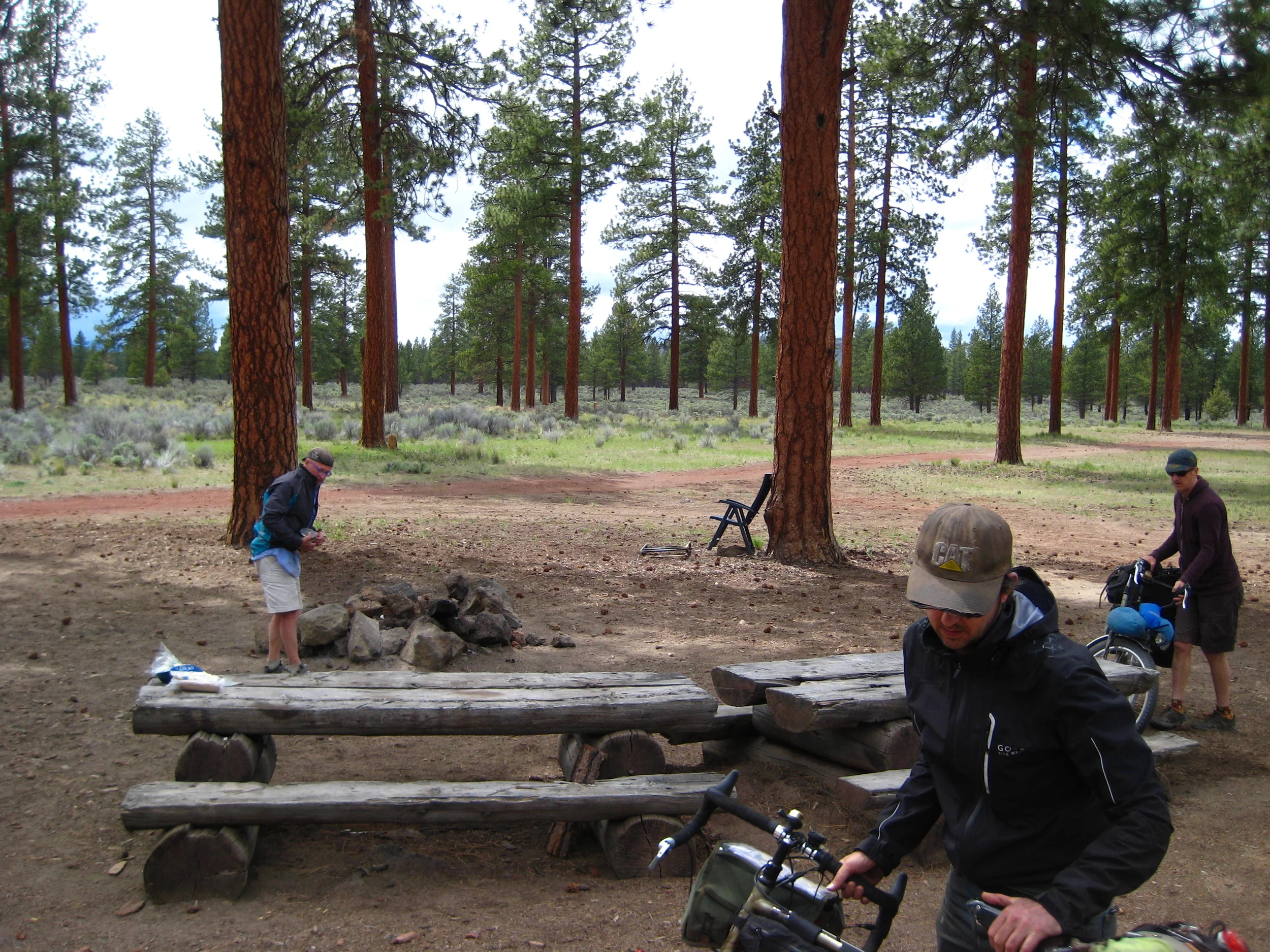
Donnie of Velodirt really did his homework when putting together this ride. The days where water was scarce were well noted on the cue sheet, and as a group we made sure to come prepared with plenty of water carrying capacity, and filtration systems. Whenever we came across a stream and knew that it might be our only source for some miles to come, we loaded up. And for food, each of us carried enough to feed ourselves for several days, and resupplied when the opportunity presented itself. We didn’t pack light. We had tools and patches and spare tubes, extra fasteners, first aid and gorilla tape, bug repellant and some whiskey. We didn’t have to use a lot of the extra things we brought, but what we did need we were glad we had.  I don’t think this was a very good bike tour for someone with no experience — not a good learning trip because the stakes were too high, and there was not really any good way to bail out of you lacked something crucial. But, if prepared, and prepared to rough it, there’s no better way to tour than away from traffic.

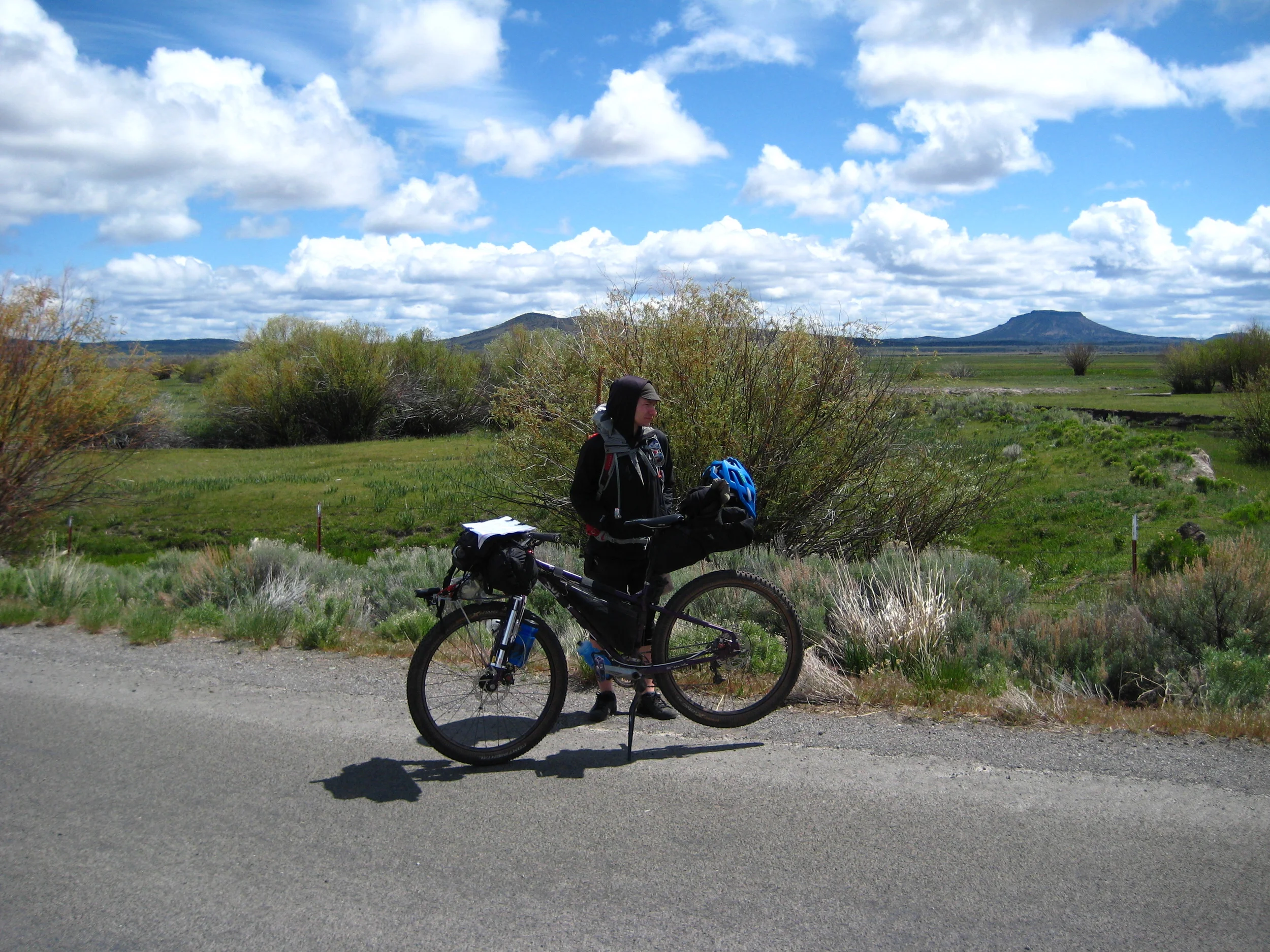
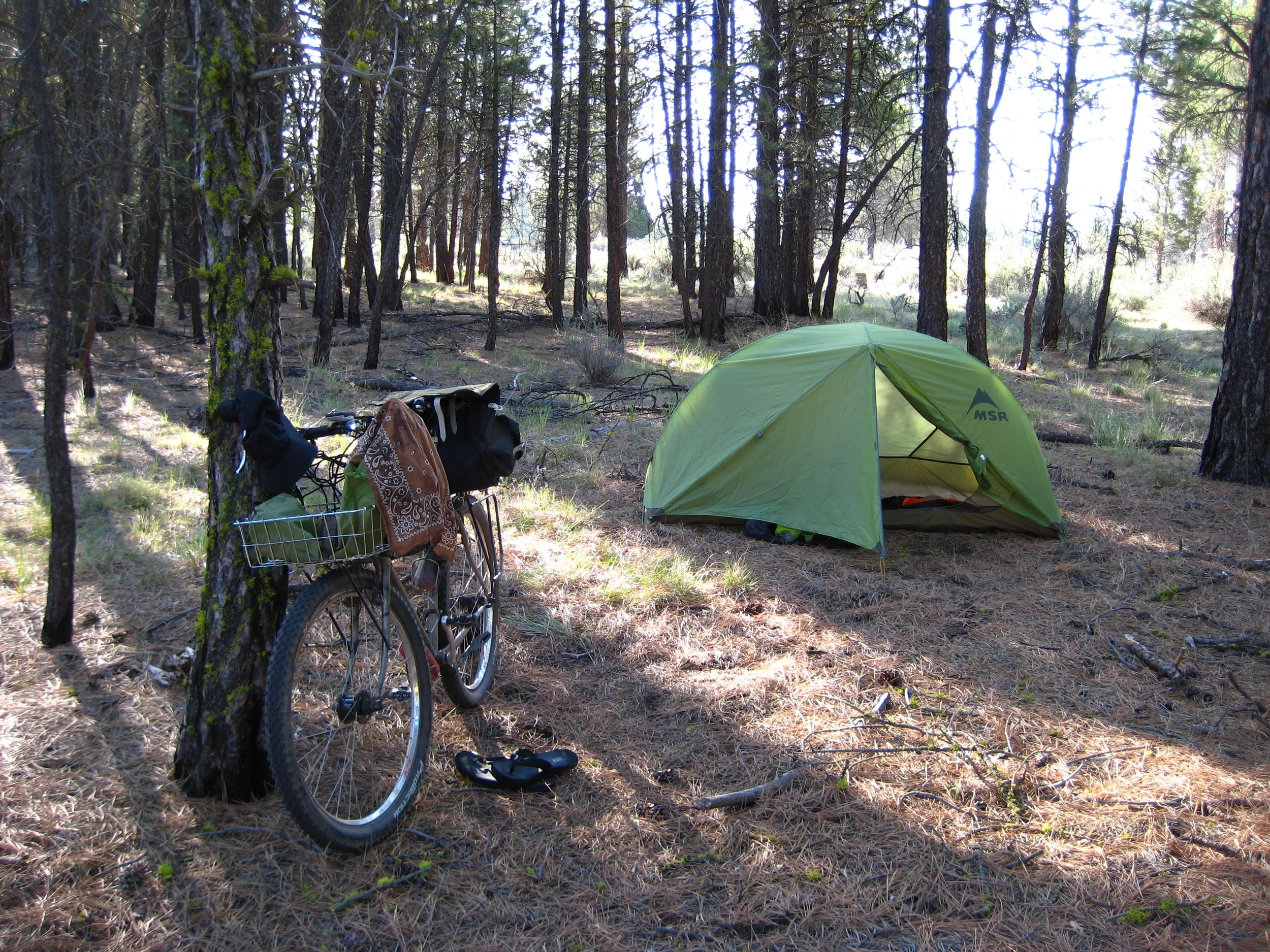
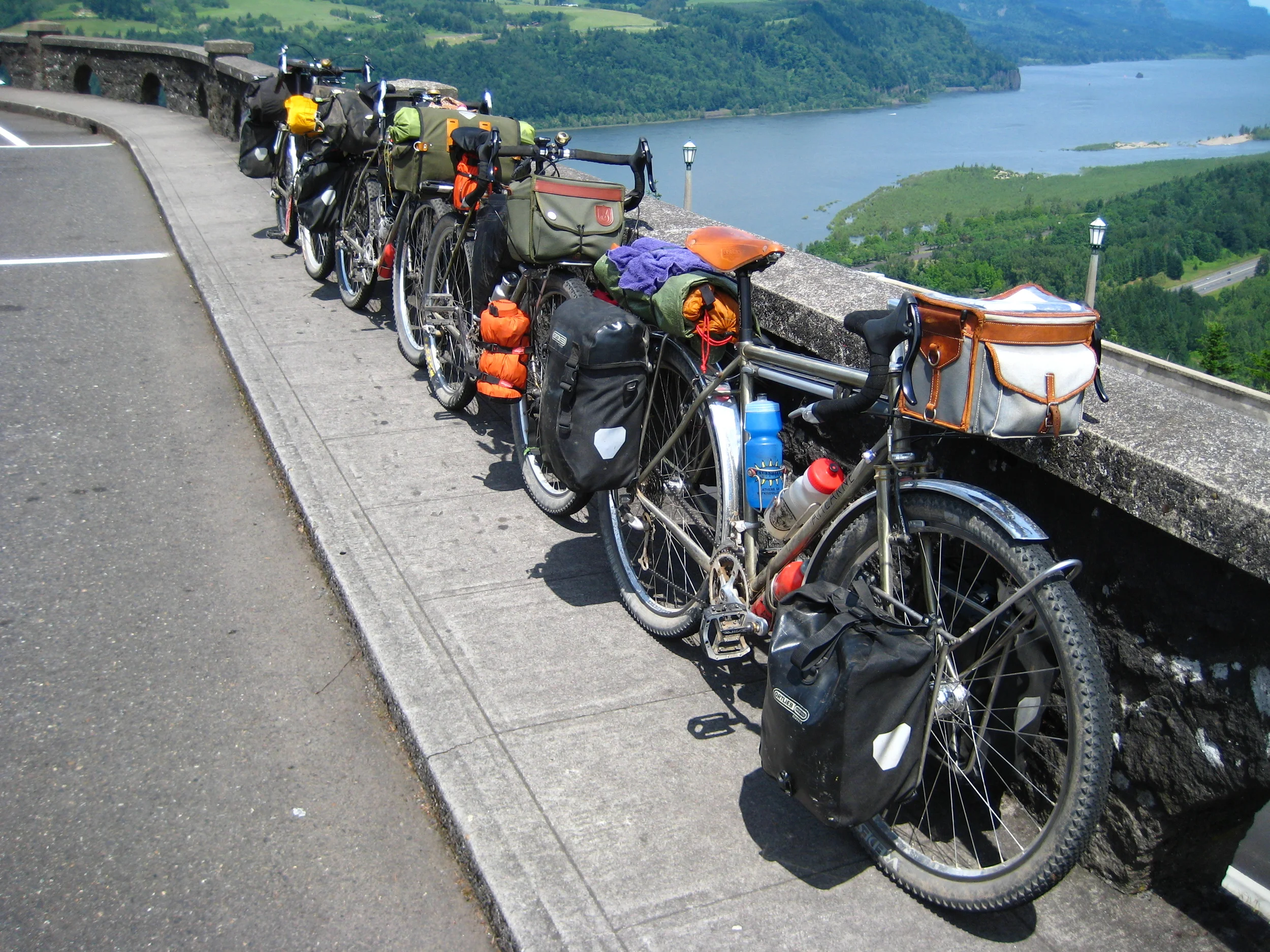
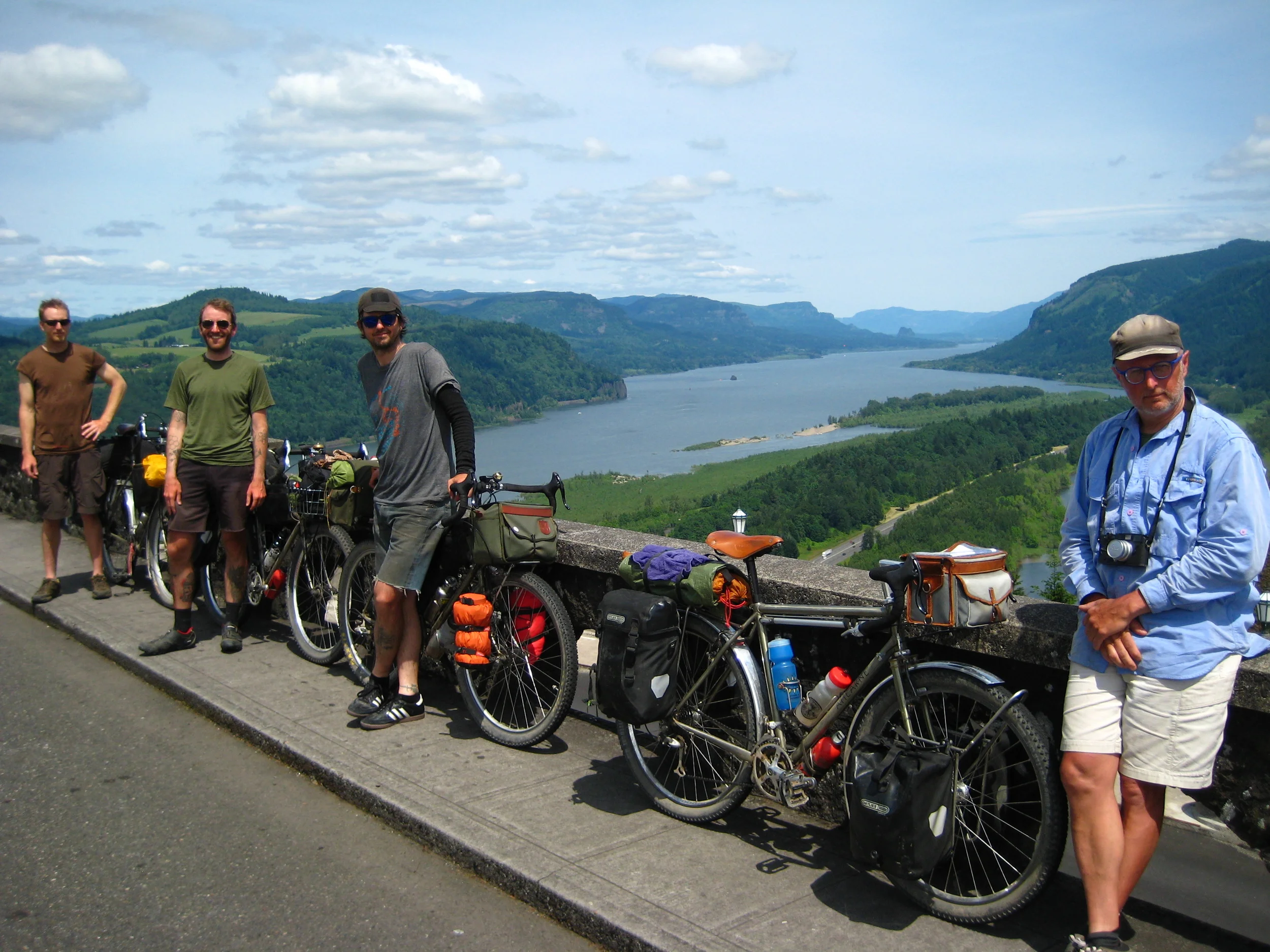
As for the four Ahearne bikes on this trip, there were no complaints. We were all grateful for the fat, knobby 650b tires, for the inherent flex of steel to help take up the road shock, and the carrying capabilities these bikes offer. The handling on fast gravel descents was confident and sure, at least as much as fast gravel descents allow. They climbed well, and took the abuse of being fully loaded over days of bumps, dirt, pumice sand and stream crossings. There were no mechanical issues, and each person said they were really pleased with the overall ride of their bike. Better yet, this bike has been officially named. From here on out it’s going to be called the Outback. The off road touring bike. I’ll talk more about the bike soon. 

The Outback Machines