Ahearne Cycles

Are Steel Bikes Heavy?

Joseph Ahearne2 Comments

The Ever-Loving Question: Why Steel?
Joy in Steel

Joy in Steel

Recently, I’ve been asked why I use steel for building bicycle frames. I’ve been building steel bikes for so long, and I’m so immersed in it as my material of choice that I forget that this conversation sometimes needs to happen. 

The short answer is: I use steel is because I believe it’s the material best suited to the kinds of bikes I build. There are a lot of different types of bikes and styles of riding, and I won’t claim to know what’s best for everything, and everyone. I only know my own experience, and my methods of bike construction, and the time I’ve spent in the saddle, riding bikes in various situations — touring, commuting, road rides, off-road, city meandering and neighborhood exploration.

What’s It Made Of?

The four main materials used for bike frames are steel, titanium, carbon fiber, and aluminum, and I believe each has their place, their “genre” of bike, exploiting each material’s best attributes. Steel and aluminum are the most commonly used for bicycle frames, and they’re the most versatile. But steel has, in my opinion, the widest range of desirable attributes. If you want to read more, here’s an interesting blog post that compares steel and aluminum.

As a custom bicycle maker, I like options. When I’m designing a frame for a person, I take into account a lot of variables, including the rider’s size and strength, their flexibility, as well as what they tell me they’re going to do with the bike, what they’ll expect from it, where they think they’ll go, what they’ll carry, and so on. Based on this overall picture, I design the bike and choose each individual tube to try and balance all the demands, and bring out the best qualities.

Each manufacturer of steel tubing offers their own versions of heavier, stronger, and lighter tubes, harder and “softer” materials, varied butt lengths, cold-rolled, heat-treated, welded seams or drawn tubes, etcetera, each of which has different properties for construction, for ride quality, weight, and cost. 

What’s Weight Got to Do With It?

What’s Under the Paint

What’s Under the Paint

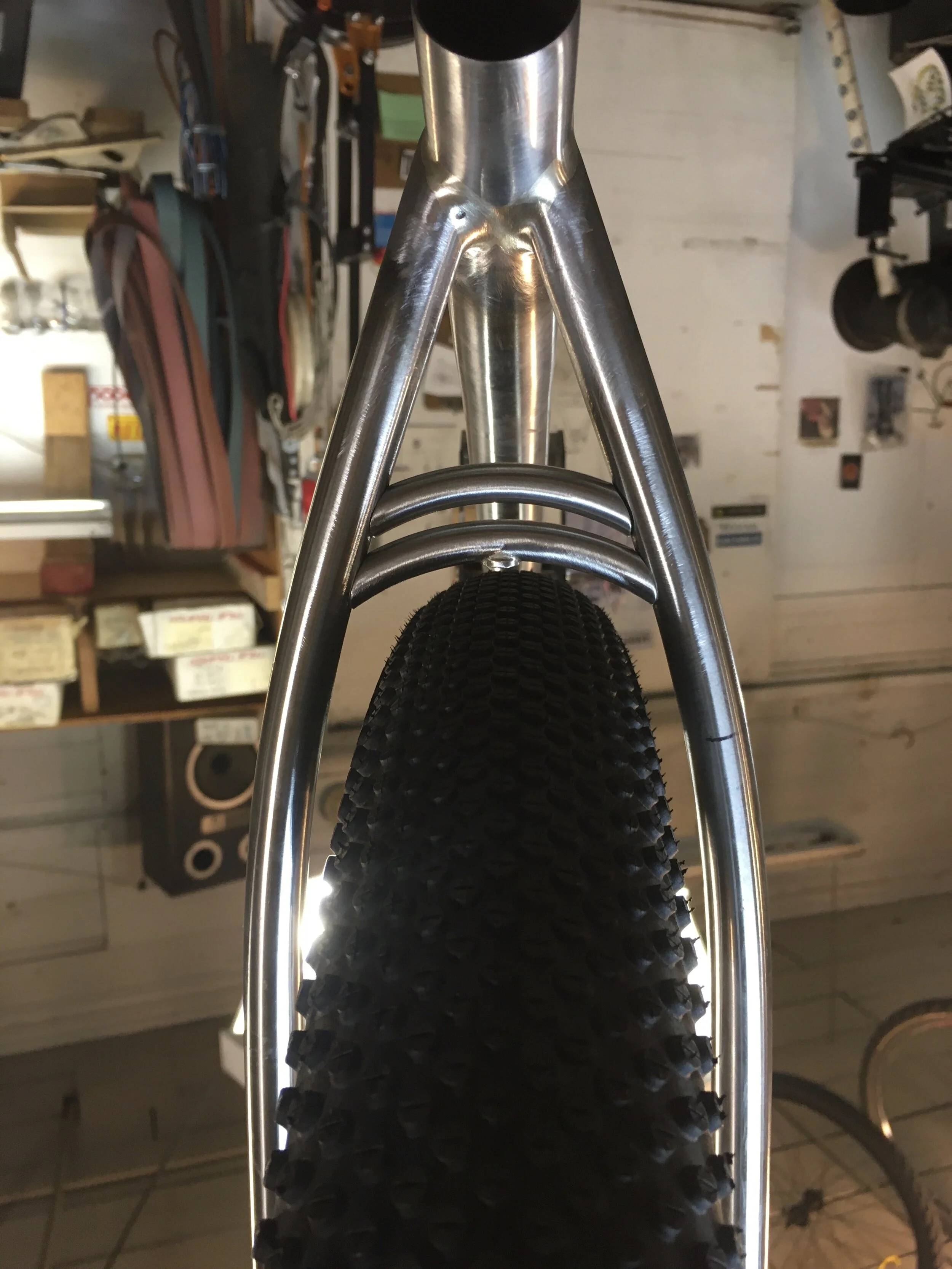
In regards to weight, I forget that some people still have the perception that if a bike is made from steel, it must be heavy. There is some amazing steel tubing available, extremely thin-walled, hard, and incredibly strong. It’s not too difficult to build a steel bike at or below eighteen pounds. Depending on the size and strength of the rider, and how much money they want to spend, it could go lighter. Eighteen pounds may sound heavy these days when compared with carbon fiber bikes that push toward ten or twelve pounds, but a twelve-pound carbon bike tends to have a fairly specific purpose, and is not, in my opinion, a bike most people really need.    

In the Real World

Carbon fiber and aluminum bicycles have finite lives. If properly cared for, a steel frame will last much longer, potentially a lifetime. This has to do with the inherent flexibility of steel, which is one of its greatest attributes, and one of the main reasons why it is considered such a desirable material for bikes. Steel accepts rider inputs and road vibration, dispersing these over the span of the frame, and doesn’t so readily translate into rider fatigue, and, over time, frame fatigue. It creates a relationship between the rider and the ride, giving a bit of snap to the acceleration and carve to the turns. It’s this same flexibility that prevents a steel frame from wearing out.

Without going too deeply into physics or metallurgy — subjects I’m not qualified to discuss for more than about 30 seconds — what we’re talking about when we talk about frame flex is the material’s elasticity. What makes steel so interesting is that there’s a balance, a “sweet spot,” between its weight and flexibility. 
Building bikes out of steel
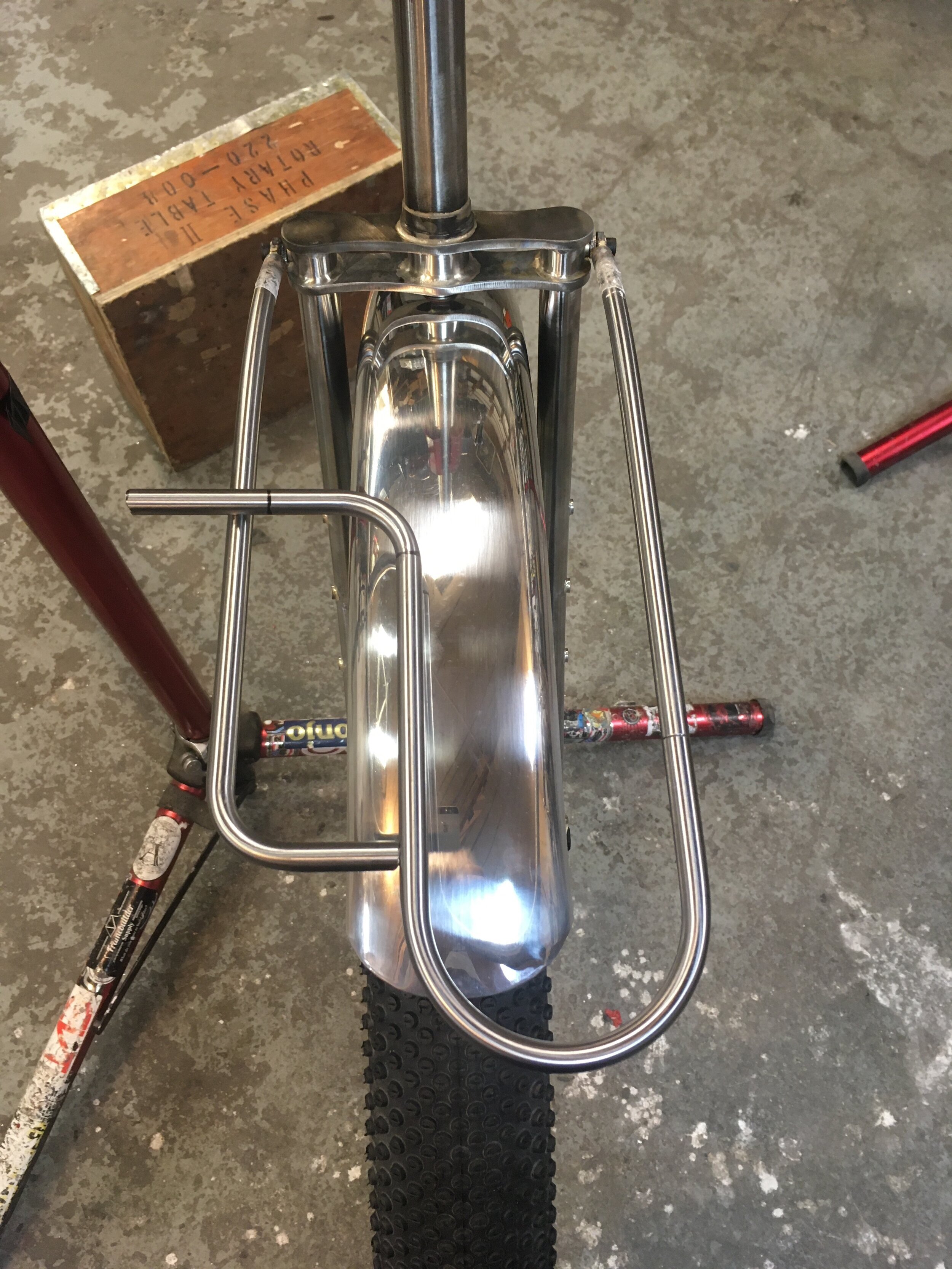
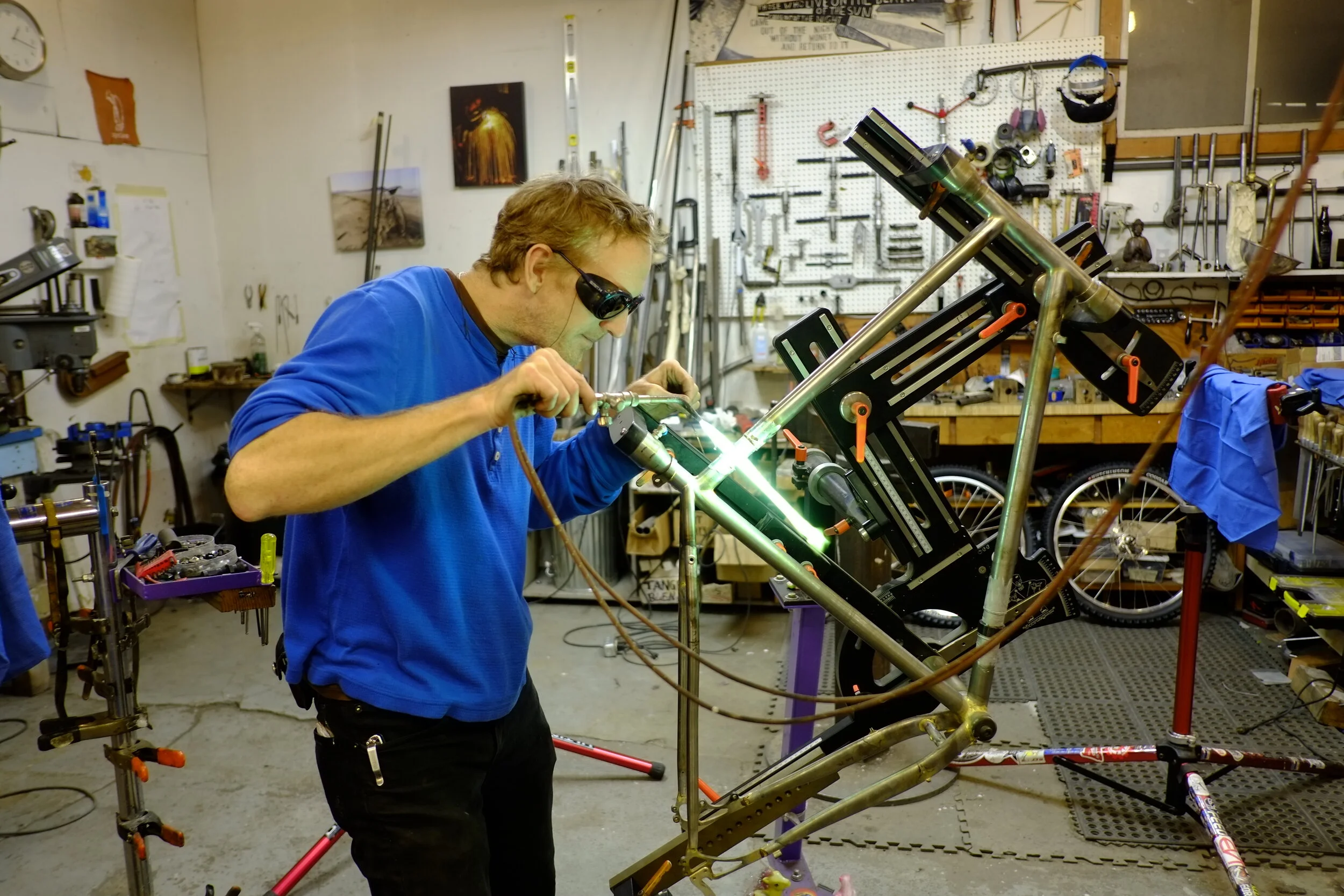
Building bikes out of steel

Bent Tubes

Bent Tubes

When we reach the end of a material’s ability to flex, we’ve arrived at its “yield point,” which is its point of no return. This is when you’ve bent the material so far that it won’t ever bend back to exactly where it was, to “straight.” What happens is that the molecules have stretched beyond their ability to return to where they started.   

Let’s translate this to everyday riding: Every time you push on the pedals, hit a bump, load your bike with gear and take a hard corner, stand up out of the saddle to crush it up a hill, and so on, you are stressing your bike frame.

Whereas steel will flex and absorb these stresses, carbon and aluminum frames gradually, incrementally, microscopically, become weaker and weaker. Over time, these inputs will cause aluminum and carbon frames to lose their rigidity, and eventually, they will become soft, noodly, and inefficient. And, especially with aluminum, it will finally crack. This may take years. But if the bike is being ridden, it will happen. 
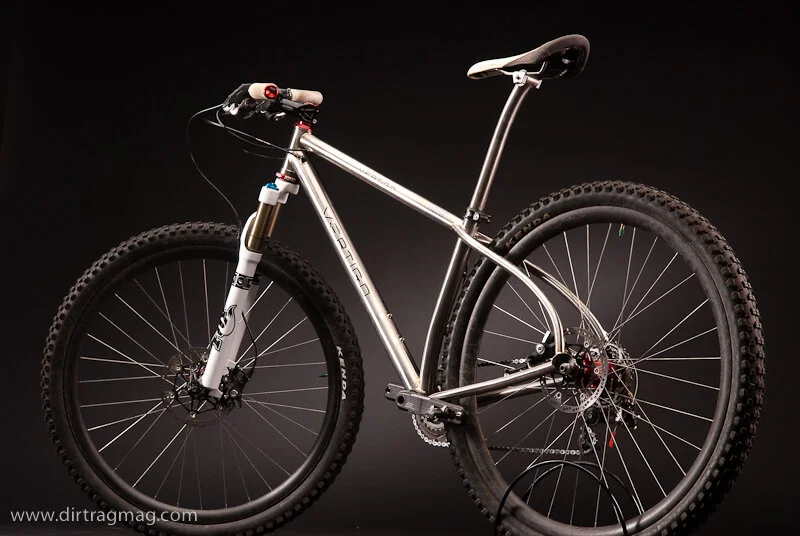
Titanium Hardtail MTB

Titanium Hardtail MTB

I don’t talk too much about titanium here because I consider it to be in a class by itself. It’s an amazing material, but it presents several barriers to use for general purpose bikes. It has the most elasticity, meaning it’s incredibly flexible, which can be beneficial, or detrimental, depending on what you want the bike to do. It doesn’t corrode, and it’s very light, but it is much more expensive to manufacture than the other materials, and the way it flexes limits its versatility. But, for the bikes it works for, it works extremely well. The ti bike I most want is a hardtail mountain bike. 

Gravity’s Rainbow
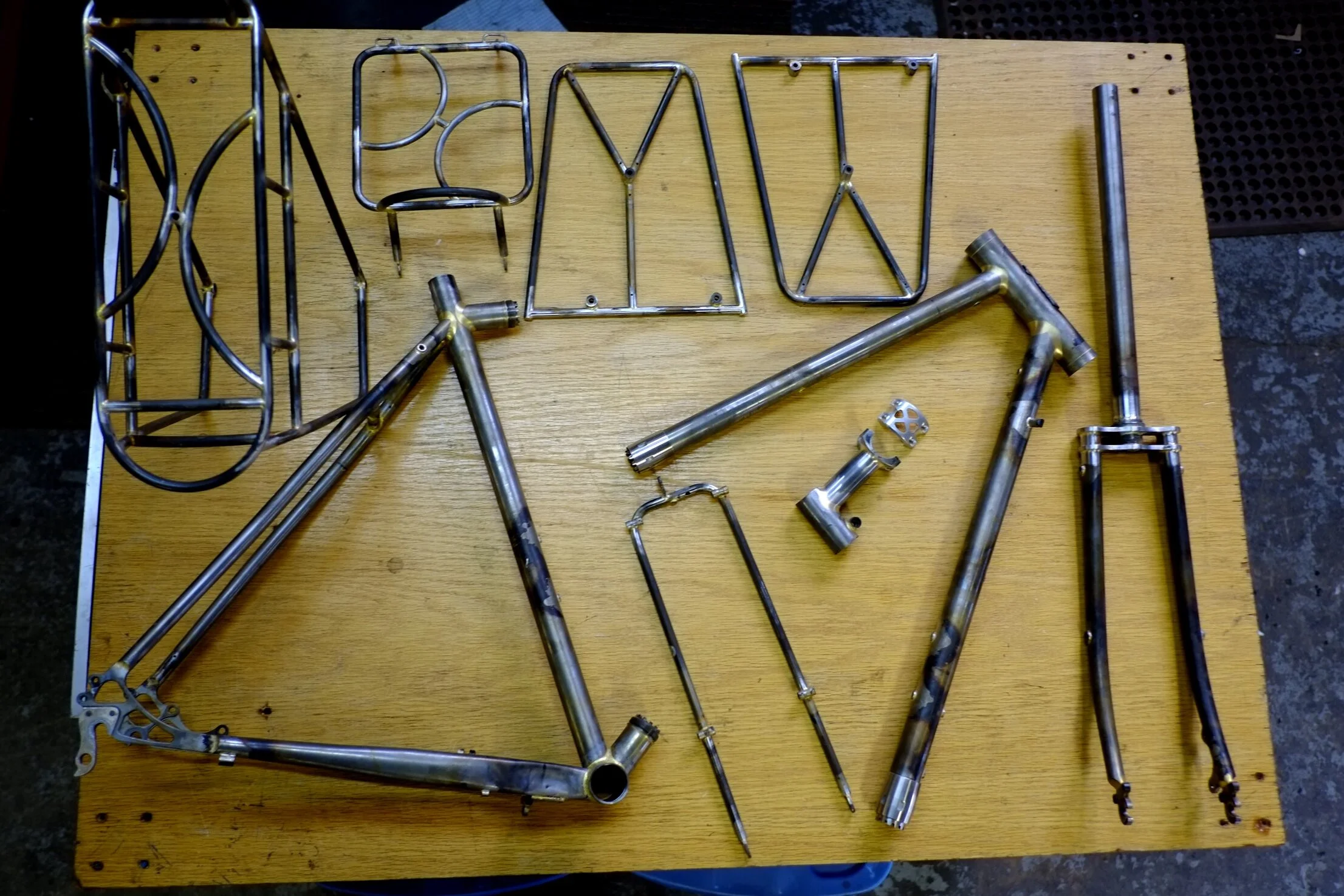
Lay It Out

Lay It Out

Getting back to the discussion of weight: If you compare frames of the same size made from carbon, aluminum, steel, and titanium — frames that were built to do the same job — you will discover that the actual weight range between them is relatively small. Probably within a couple of pounds. If you’re talking about a road racing bike, this may make a difference, but if you’re talking about touring or commuting bikes, this additional weight matters much less.  

One major problem with comparing frame weight is that each material lends itself to certain kinds of bikes, so there aren’t all that many ways we can draw meaningful comparisons. Carbon fiber touring bike? This doesn’t sound like a good idea. Steel competition road bike? In the not-too-distant past, yes, but those days are likely over. Titanium full-suspension downhill bike? Possibly, but I can’t imagine the cost of machining all the hardware for the suspension mounts and pivots, and, in the end, so what? — aluminum is probably as good for this application, and it’s way cheaper.

Also important to think about — for a relatively traditional bike, the frame only makes up about a quarter or less of the overall weight. So if you’re going to talk about weight, you’ve got to talk about the components. The single greatest upgrade that I’ve made to my bike over the past few years was to switch to carbon wheels. I was a purist for a long time, a nay-sayer to anything carbon. But then I bought some Rolf Prima wheels for a show bike and afterward when I rode them, it was like, Oh my. This transformed my mid-weight gravel bike into something so light and fast that when I first rode it I felt like a superhero. It was amazing.
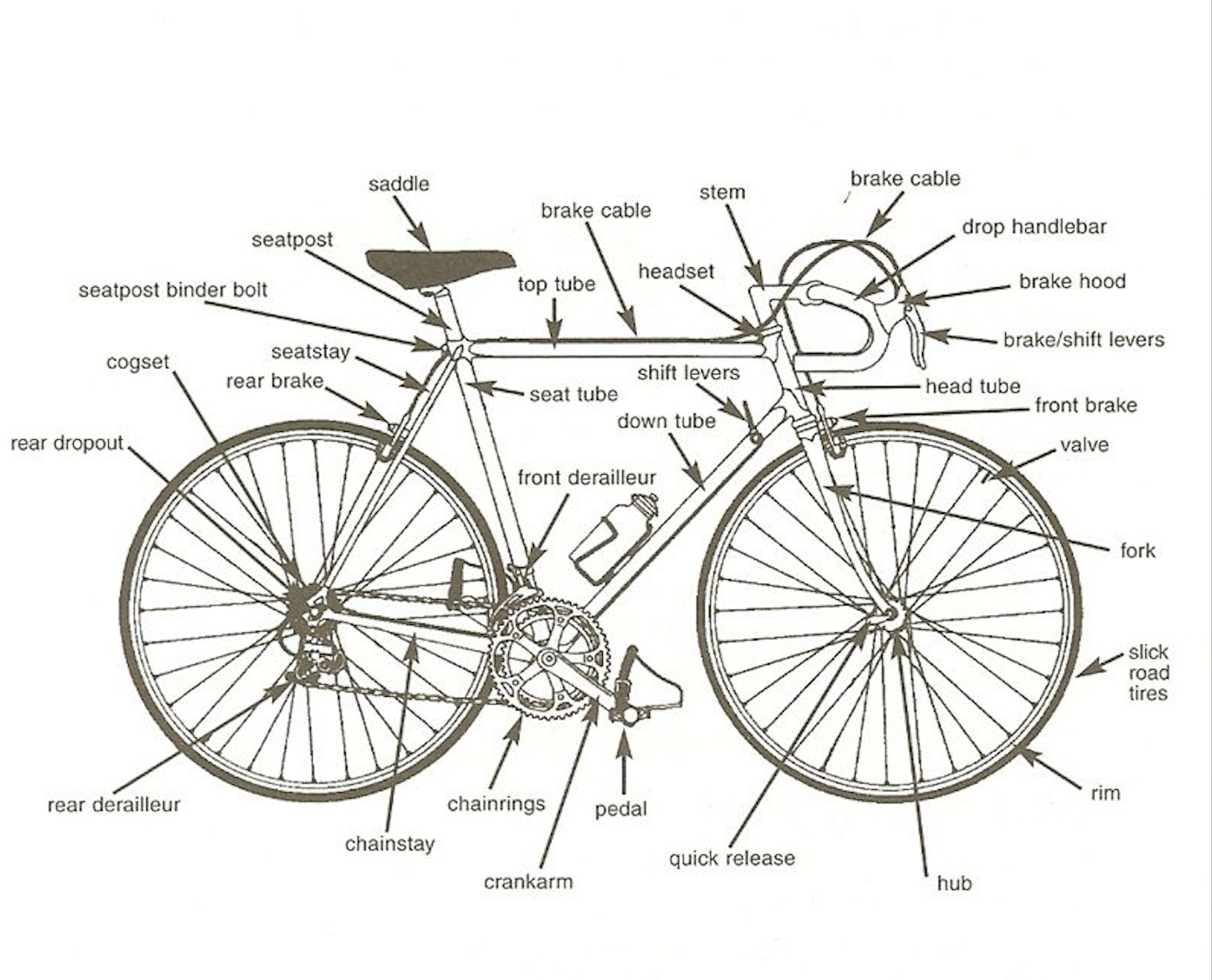
Design & Components Matter Most

Design & Components Matter Most

For me, I think the main issue with talking about bike weight is, there is almost no correlation between weight and ride quality. A bike rides well because of choices made in its construction, including the material used, the geometry of the bike, front end design, chainstay length, and bottom bracket drop, etcetera. Ride quality, in my opinion, is so much more important than weight. And steel bikes — especially the ones made custom — bring these positive qualities forward like no other material. 

As with everything, there’s a balance to be stricken, and if you don’t know for sure, you could go discuss frame materials and components with someone at your local bike shop. Ask questions. And whatever you hear, take it with a grain of salt — everyone has their experience and their knowledge base and their own special bias. The only subject I can think of that’s lousier with bias might be politics. 

Clearly No Bias

Clearly No Bias

Speaking of which, are you registered to vote? If not, please do so. And vote. Then make sure everyone you know has voted, too. If you’re not sure how or where to register, here’s a link.
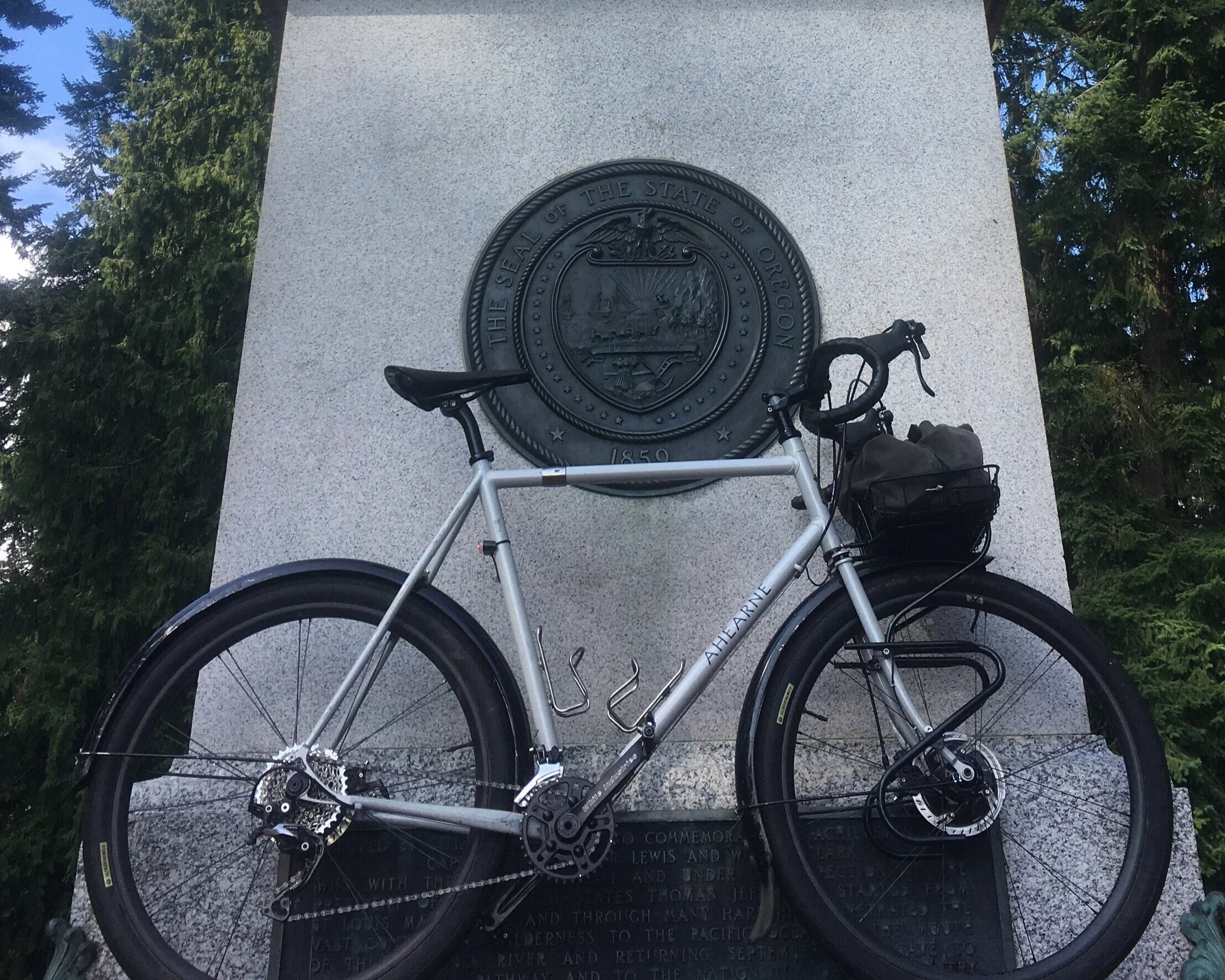
Get out and Ride

Get out and Ride

The Most Important Thing

Of course, and lastly, the most important way to learn about bike materials is to ride your bike. If you’re paying attention, the bike you are riding is going to give you so much information. Do you like it? Could you like it more? How so?

If you would like to discuss options for a ride that might suit you, feel free to send me a message. But be forewarned — we can talk about all sorts of things related to bikes and life and whatever, but I may not want to talk much about frame weight. Or, for that matter, politics. 

Thank you for reading!
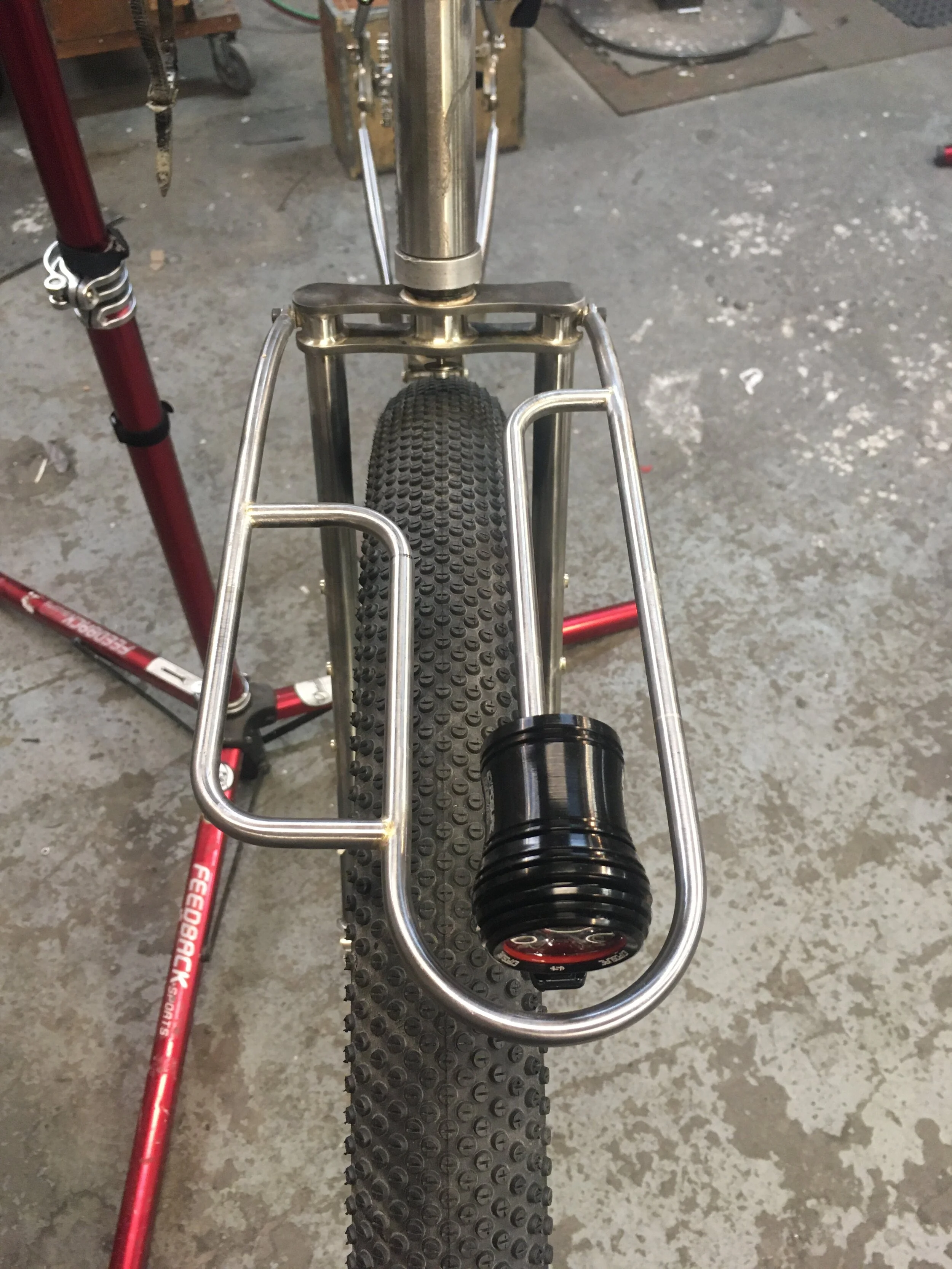


Bike Notes from a Strange Time (part II)

Joseph Ahearne3 Comments
The following is for entertainment purposes only.

Multiple Uses

My Favorite Bike Goes Anywhere

The Springwater Corridor is a multi-use path here in Portland, one of our great cross-town routes that goes on for many miles, totally separate from cars. It links into several other bike and pedestrian paths, and on it one can ride all the way out to Estacada, a small town about 30 miles south & east of downtown, and from there into the hills beyond.

In my previous post I wrote that right now the safest places to ride are NOT the bike paths. It’s safer on the roads because of the very low traffic, and the clean air. The other day, against my better judgement, I turned my bicycle onto the Springwater, which was busier than I’d expected, and I regretted not having brought my cloth mask.

Riding my bike, I thought about the physics of a virus. Not as a scientist, but as a layperson, a thoughtful cyclist. I tried factoring how near was too near to be following other cyclists when the six-foot rule is, I assume, the safe distance for people standing still, or possibly walking. But what about wind; what about motion? 

Social Distancing at Varying Speeds

There ought to be a formula, some way to calculate safe distancing with an elevated velocity, a graph for visual reference. Mathematics as a way of counteracting fear of the unknown.


Peloton

I was not the only person riding a bike on the Springwater. There were small groups of people, some joy riding, some more serious, some groups intentional, others because of the natural traffic jam of slower and faster riders.

Consider the lead rider of a pack of cyclists during this time of COVID, the exertion required to stay in the #1 position, legs burning, lungs gasping for oxygen, expelling some serious CO2, the spiny exhalations laden with contagion dripping downwind into the pulmonary sieve of the inhaling followers. 

Factoring in wind dispersal at increasing speeds, and considering the huffing and puffing required to maintain high velocity, what distance could possibly be safe? The math becomes murky, convoluted, with too many variables, nuanced to oblivion.  


Tunnel Vision

The number of humans walking, cycling, skating, simply breathing on the Springwater Trail conjured a vision of a localized green cloud of exhalation, a vaporous tunnel through which I traveled.  

I know it’s spring, plants are in a bloom-cycle and the pollen count is through the roof. But while riding I wasn’t thinking about pollen, I was running from something much more horrifying: I imagined invisible and weightless clusters of COVID clinging in increasing numbers to my eyelashes, worming into my tear ducts, riding rivulets of sweat down to the corners of my panting mouth where my dry tongue’s tip tucked in determination, licking little droplets of destruction like a cat lapping at radiator fluid. I was trapped between exits of the Springwater Trail, there was nowhere to go but forward into my claustrophobic vision.

I pedaled furiously and my eyes became itchy, my throat raw, my rattly lungs inhaling their ruin again and again. I pictured my lungs like flypaper gathering germy gnats, parasitic mutant cells with teeth, boring holes in my chest, rapidly multiplying, trashing my insides. 

Quote

From the writer Joy Williams, in her short story, The Last Generation

“…Similes are a crock. There’s no more time for similes. There used to be that kind of time, but no more. You shouldn’t see what you’re seeing thinking it looks like something else. They haven’t left us with much but the things that are left should be seen as they are.”


The Flying Scotsman

The Flying Scotsman

The Flying Scotsman

Graeme Obree, unconventional cycling hero who once upon a time was the fastest cyclist in the world, remarked that he rode his bike at these punishing speeds because he was pursued by demons.

And it was true — he was chased by literal, bi-polar demons. His handmade bicycle, like mine, could have been faster than any bicycle on the planet, but that still would not have been fast enough. Not nearly so. 

Source in the Written Word

Source in the Written Word

While blazing down the Springwater corridor I discovered the same kind of stuff that pushed Graeme to accelerate to his record breaking velocity: A deep existential fear with an invisible source. 

Legendary

I was running like hell from something I could not escape, and in the process I invented a legend of speed in my own mind. There’s nothing like terror to motivate a person to move quickly.

Happy Trails

Maybe I’m fast, or maybe I’m just delirious with language. I won no trophy, no medal, but still, I was lucky. I made it home. I won’t forget my mask next time. And from now on I’m going to do my best to ride only on empty trails.

This is an amazing time to ride a bicycle. Stay safe out there, and choose your routes wisely.

Empty Trails is Happy Trails

Bike Notes from a Strange Time (part I)

Joseph Ahearne1 Comment
The following are a series of random thoughts and ideas from the past few weeks, mostly inspired by bike rides and general isolation. I’m sharing these for entertainment purposes only.

The Fullness of Emptiness

On Broadway

On Broadway

I never thought I’d be able to ride my bike on Broadway through downtown Portland during rush hour and swerve lazily over all three lanes without even looking over my shoulder. The other day I did just that — it was early evening and I wove through town and the only vehicle I saw for a dozen blocks was an ambulance roaring up my way, doing pretty much the same thing I was doing, which was ignoring the lines and treating the road like they owned it. I’d like to think they were out joy riding the way I was, taking advantage of the free lanes, even though I’m sure their reasons were much grimmer. 

Everyday that I ride my bike it feels sort of like we’re living an ongoing string of Sundays and everyone but me is at church. It’s lonely and a little spooky being in a city so quiet. When the sun is out it’s easy to forget there’s a disaster upon us. 

Imagine

Everything is different right now; the quality of light, the sounds, the way it feels being in the world. The shift in perspective reminds me what the Buddhists have been talking about for ages — all we have are stories, and the stories are so flimsy. The things we take for granted, like ice cream after a bike ride, a stable society, burrito carts, an endless supply of toilet paper — these are no longer given. It’s shaking us all to the core, and it’s frightening in the way that Big Change is frightening. 

But the cool thing is this: Right now we get to reimagine our world.

Sign of the Times

Earlier this week at the bike shop adjacent to my workshop, a mechanic named Shawn had his thirty-something birthday. Bradley, the shop owner, one of the most conscientious humans I know, brought out a rectangular birthday cake with lots of food coloring on top, and gifted Shawn a 12-pack of toilet paper. Shawn’s kind of the new guy, and he clearly wasn’t expecting all this.

When a bike mechanic is gifted a 12-pack of TP instead of beer, and nearly tears up at the gesture, you know shit’s weird in the world. I helped sing the b-day song, watched Shawn bow his head, the surprising blip of joy and camaraderie in the shop — all very moving. 

(Pun accidental, but I’m leaving it)

Silent City

I stopped near the highest point on Broadway, right in the middle of the road, and it was like looking at Multnomah Falls or the Grand Canyon or something too big and amazing to comprehend. Witnessing a city without its noise is like accidentally walking into a room and seeing someone naked. Clothed in sound, a city can seem tough and unforgiving, or impatient, intolerant, crass; but without, it’s vulnerable, bashful even, simply made of parts and nothing special, and yet special in so many unsuspected ways. 

I heard birds chirping, and there was no need for me to scurry out of the street. 

Never Enough

I am so grateful for my bicycle. For every frickin’ pedal stroke. I've said it ten thousand times before and I hope I keep saying it forever.

Air Quality

One of the least safe places to cycle right now is on bike paths. I never imagined I’d say this, but ambient air is cleaner in the streets. It makes sense, though: Few cars = low pollution.

And on the bike paths, with pedestrians and cyclists and skate boarders and roller-bladers and etcetera using the oxygen, breathing all over the place, shedding invisible clouds of god-knows what all — it’s enough to inspire germophobia in anyone with an active and visual imagination.

Forgetting 

This morning I saw videos recently shot from all over the world where elk, moose, bear, seals, foxes, and a variety of other fauna were seen wandering city streets. It’s not just rats anymore. It’s like, oh yeah, we all live here, I forgot.

Less Is More

Envision a world with 95% fewer cars. It’s quite possible, possibly inevitable, that that’s what is coming. Right now is a sampler, everything smells better. I can see Mt. Hood and St. Helens in the distance almost every day, and it is so blessedly quiet.

Right now, more than anytime I can remember in recent history, is the perfect time to ride a bicycle around town. 

Golden Oldies

There’s this song I heard on the oldies station the other day that went like this:

“I feel stupid, and contagious, Here we are now, entertain us…”

Combustion Criterium

If I was into muscle cars or crotch rockets this would be a rad time for an improv downtown drag race. 

Infected

I thought about writing a short story set in Portland, where downtown gets walled off and there’s a televised sci-fi alleycat race but not just with cyclists in skinny jeans. There’d be weapons and combustion engines and armor and what not, Hollywood style murder and anarchy, TV ratings driving the mayhem, anything & everything goes.

Like a cross between Mad Max and the Running Man, apocalyptic urban racing where a character, a sort of bionic and nearly unkillable bike messenger has to pick up a 12-pack of bottled beer and carry it unbroken across town before he can drink it. Everyone else is motoring around with grenade launchers and razor-sharp boomerangs and jet packs and battle axes and shit like that trying to behead and explode everybody else, especially our hero, because they want his beer. 

It was one of those stories that I thought might be cool for like a minute and then, you know, the magic faded. I think reading William Burroughs is infecting my imagination.

William S. Burroughs

The kinds of books I was able to ingest before this whole pandemic started are not the kinds of books that work for me now. I don’t read for escape, I read to be more connected, more in tune with the Greater Flow of the Universe, whatever that means. Books are like supplements, and my body craves certain ideas, stories, minerals, resources, that allow it to function better within the context of How Things Are.

Starting in March, as our situation deteriorated beyond comprehension, I had to stop reading anything contemporary that was too self-involved, which to me felt like everything I was reading. I don’t like to abandon books that I’m reading, but with COVID my whole path of usual thinking was derailed.  

I was three-quarters of the way through a memoir by a quietly famous literary figure who lives in NY, and as the virus swept through the USA and things started shutting down, it was like the book dissolved in my hands. 

So instead I pulled my copy of Cities of the Red Night by William Seward Burroughs from the bookshelf. If you’ve never read anything by Billy Burroughs, my first recommendation is that you don’t start. Just forget you ever heard his name. 

If you’re like a cat, though, unable to resist curiosity, and feel you just gotta try, then I’d say don’t start with Cities of the Red Night. Go read Naked Lunch first, and see how that does for you. If you get through it, and want to explore further, then move on to The Job, where, depending on your disposition, you may find a lot of reasons to dislike the author. And if you make it through that, and feel like you need more, then, maybe, try Cities of the Red Night

End of part I
Bikes & Books for Survival

Bikes & Books for Survival

Nothing Ever Stays the Same

Joseph Ahearne4 Comments

If I’m looking to escape Portland’s cold and rain for a few weeks in the winter, Mexico is one of my favorite destinations. If I only have a short time I usually I head straight for the coast, either somewhere in the Yucatan, or anywhere along the Pacific coast of the mainland. Swimming in warm blue water, reading and sleeping on the beach, shifting gears into that sort of languorous beach vibe that typically resides wherever there are palm trees and salt water — this is about the quickest antidote I can think of to the dark, humid damp that descends upon Portland for the winter months. Don’t get me wrong — I love the rain. But I love it more when I can step out of it for a while. 

This time, though, I decided to stay inland, at least at first. I wanted to explore someplace new. The beach will be there for me, at least until it isn’t — I heard on the radio a few weeks ago that with climate change and rising sea levels, we’re going to start losing beaches all around the world. Hundreds of thousands of miles of beaches are expected to be submerged within the next couple of decades. But…

Neighborhood Way

We’re Riding Bikes

Guadalajara is a big city — second largest in Mexico. It’s inland from the coast by maybe 150 miles, situated in the highlands. Famous for its tequila, there are blue agave farms all over the surrounding countryside. The air is drier, the climate more moderate than in other places I’d visited in Mexico. I don’t know how accurate this is, but it felt similar in size to Seattle. And, Guadalajara is the first place I’ve been in Mexico that has cycling infrastructure, which was part of the curiosity that drew me there. 

Guadalajara has bike lanes on many of the major roadways, signs on certain back roads that gave priority to bikes, and a bike share program. And, amazingly — build it and they shall come — people rode their bikes. Not that drivers necessarily respected the bike lanes, or biker’s right-of-way, nor pedestrians for that matter. But the city has made the effort, and as I well know from Portland bicycle commuting, these things take time, and continual energy to make them work. 

One of the best things about cycling in Guadalajara was every Sunday, all year round, they close about 60 km of major roadways to car traffic, and open them to cyclists, pedestrians, skaters & roller bladers, etc. If you want to see the routes, visit the website for Via Recreativa. Every Sunday, from 8 a.m. to 2 p.m. it’s like a giant mobile street party that stretches over a significant portion of town. Thousands of people come out, and there is nothing better, in my opinion, than to allow people to slow down and take over the roads in this way to build community and help people feel “safe” on the streets. Each week I picked a different direction, and after a few weeks had cycled the entire length and breadth of the route. I liked the city all the more for being able to participate in this. 

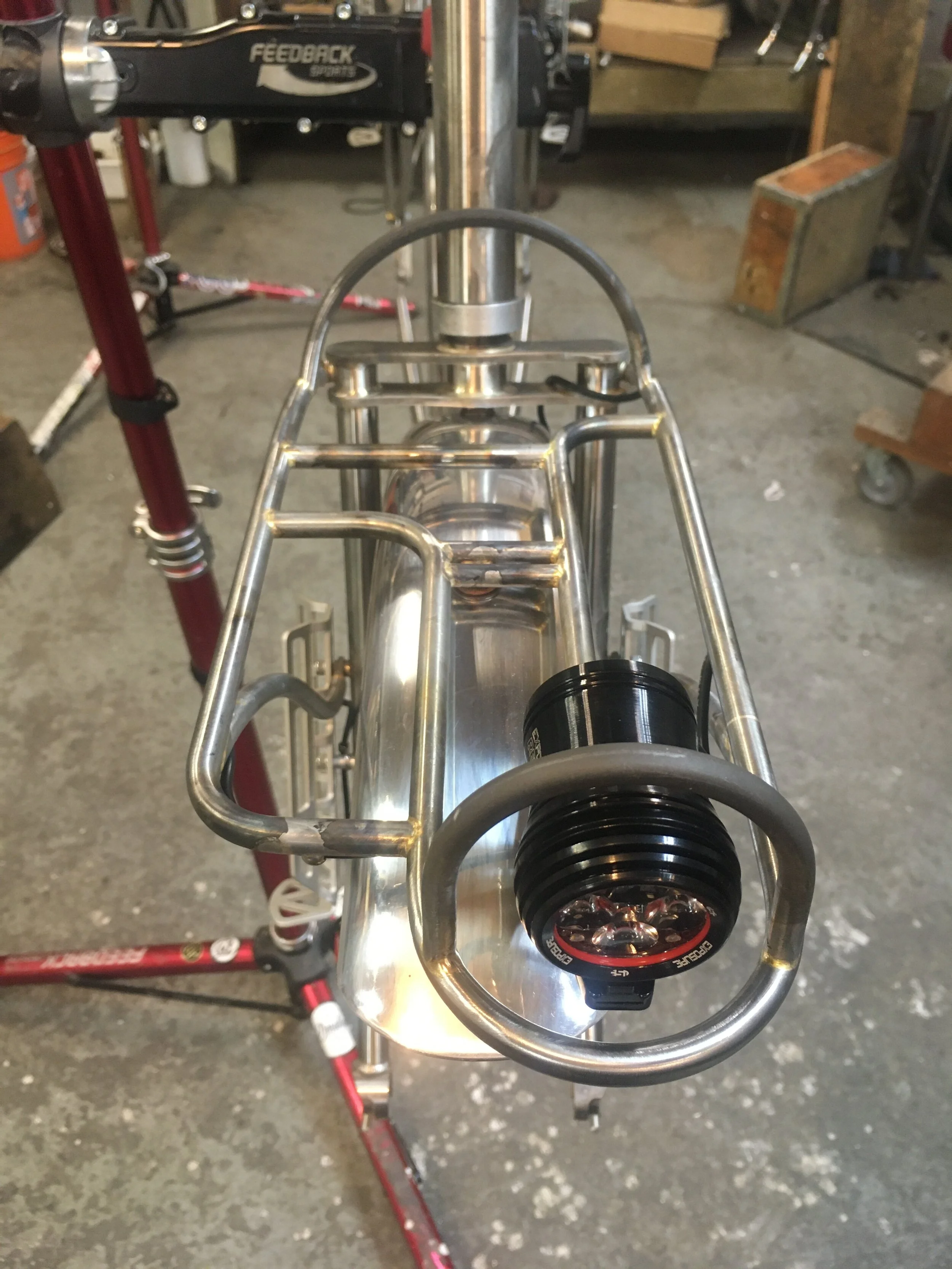
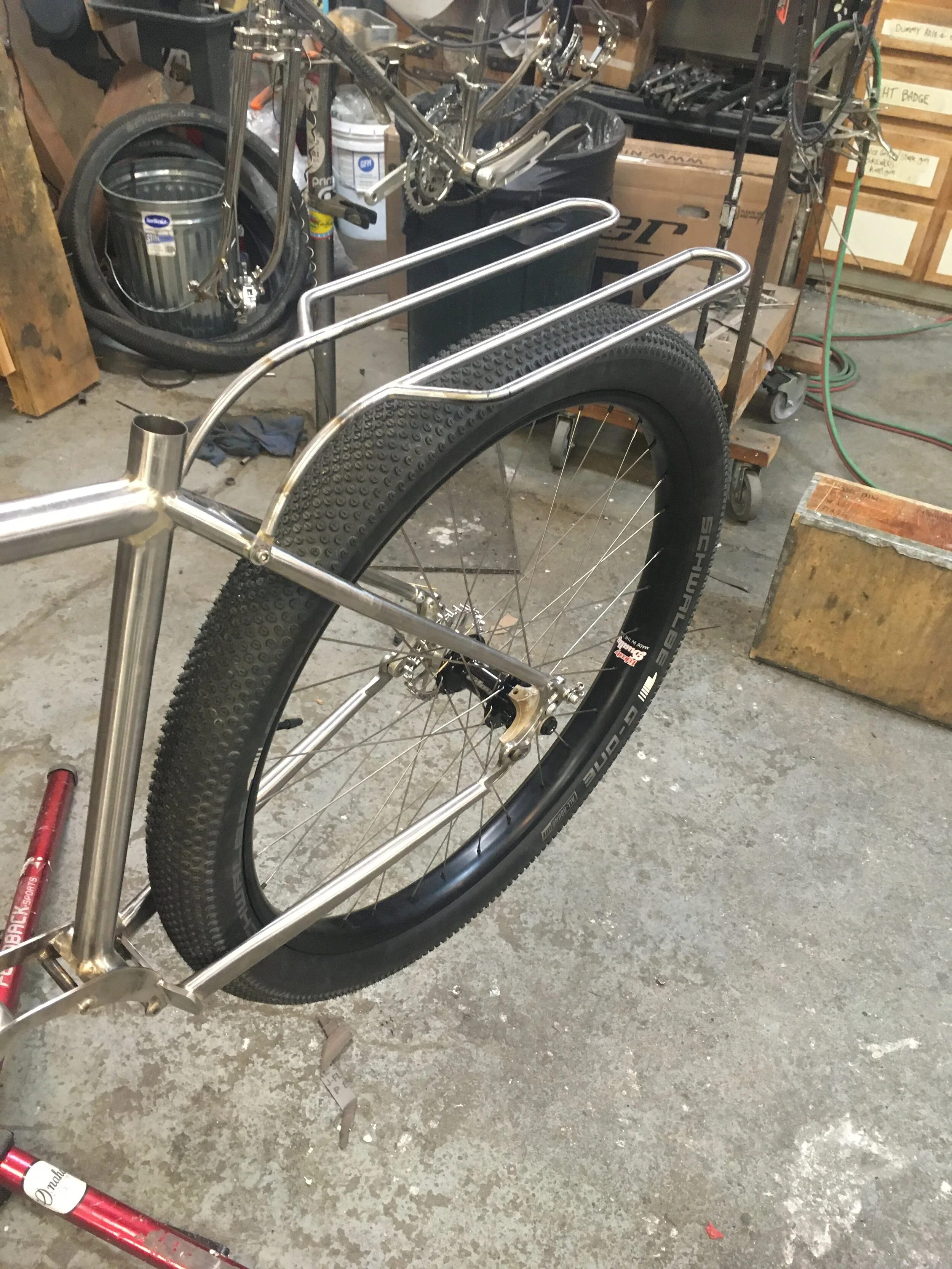
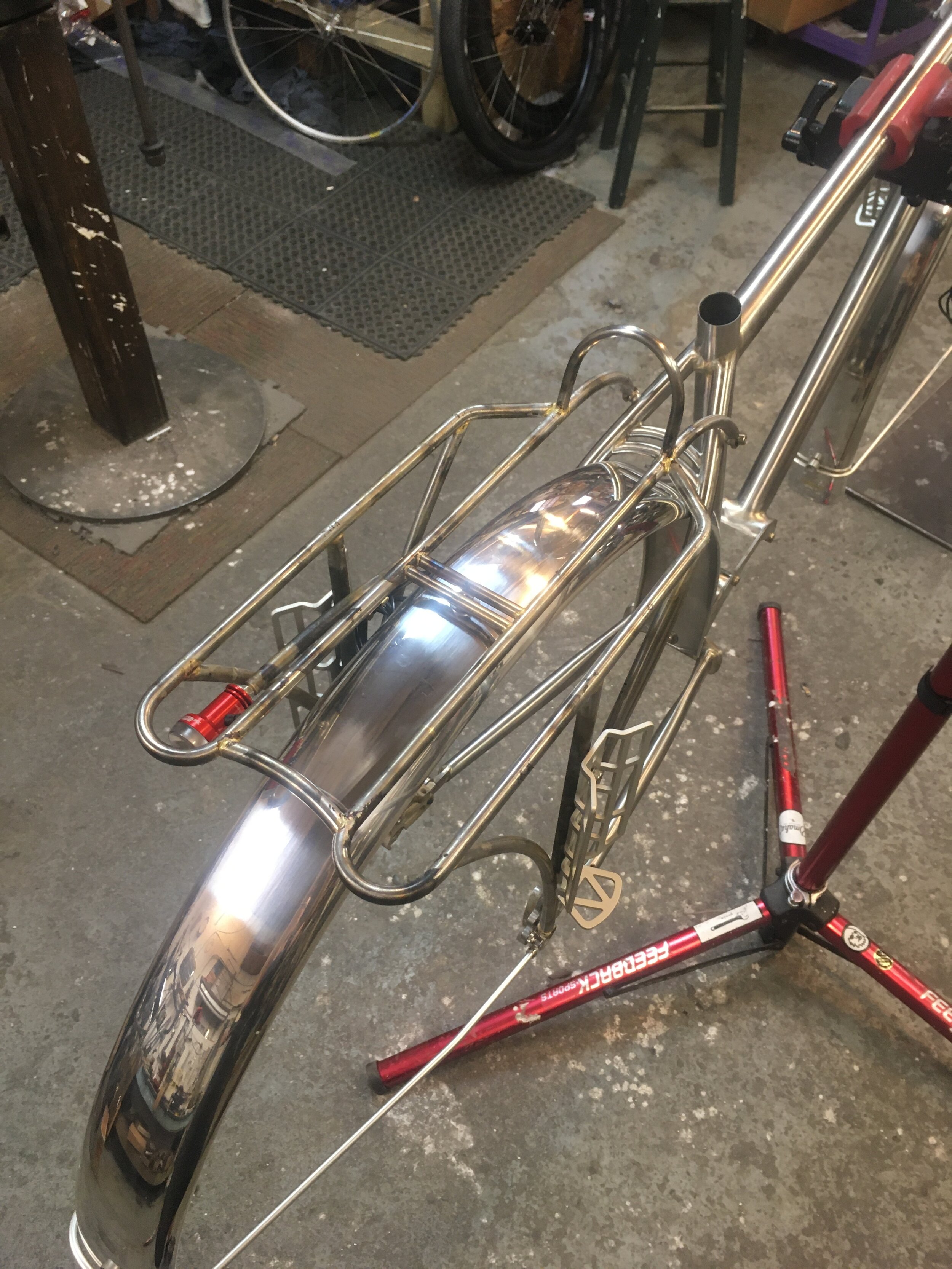
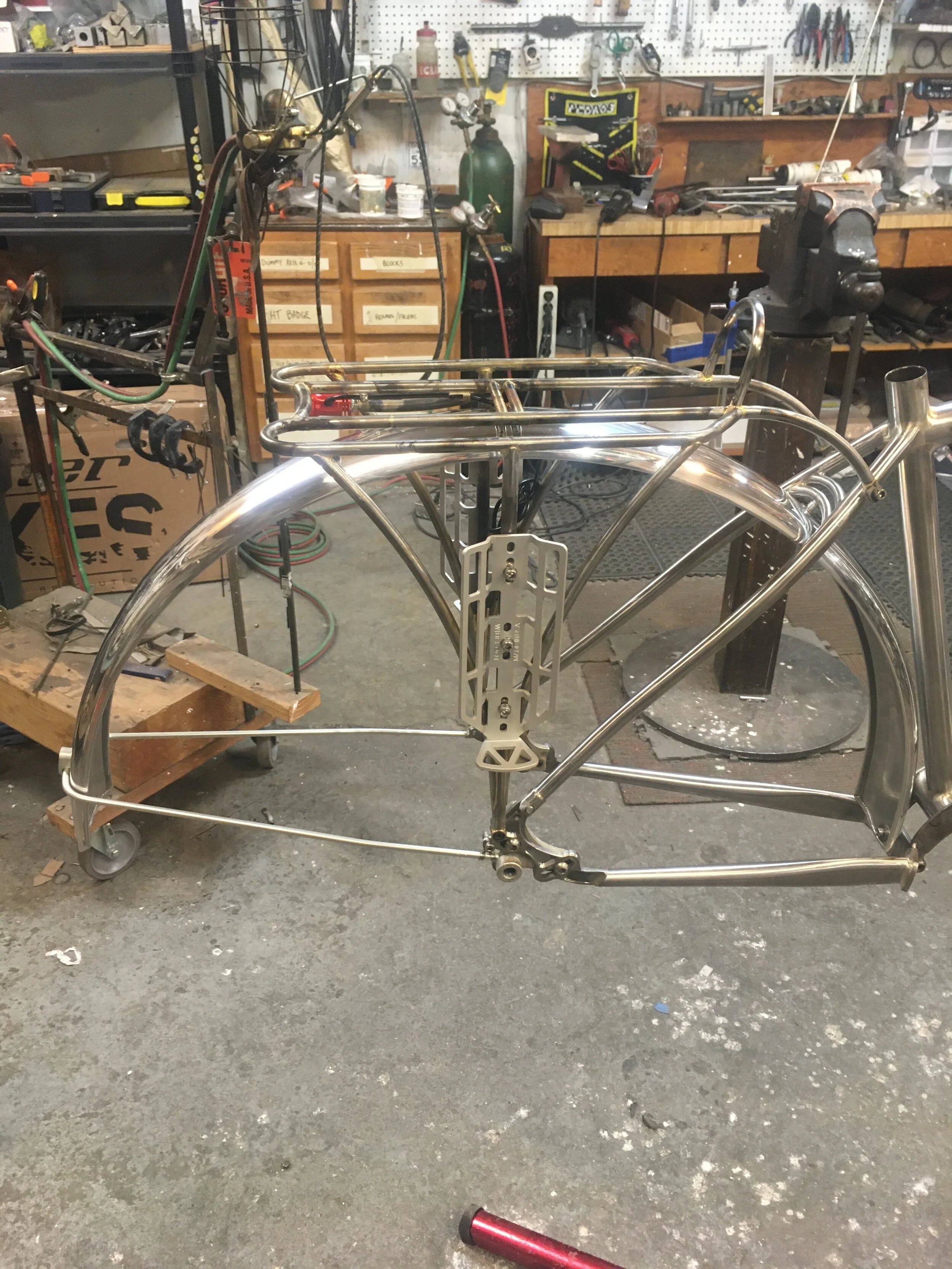
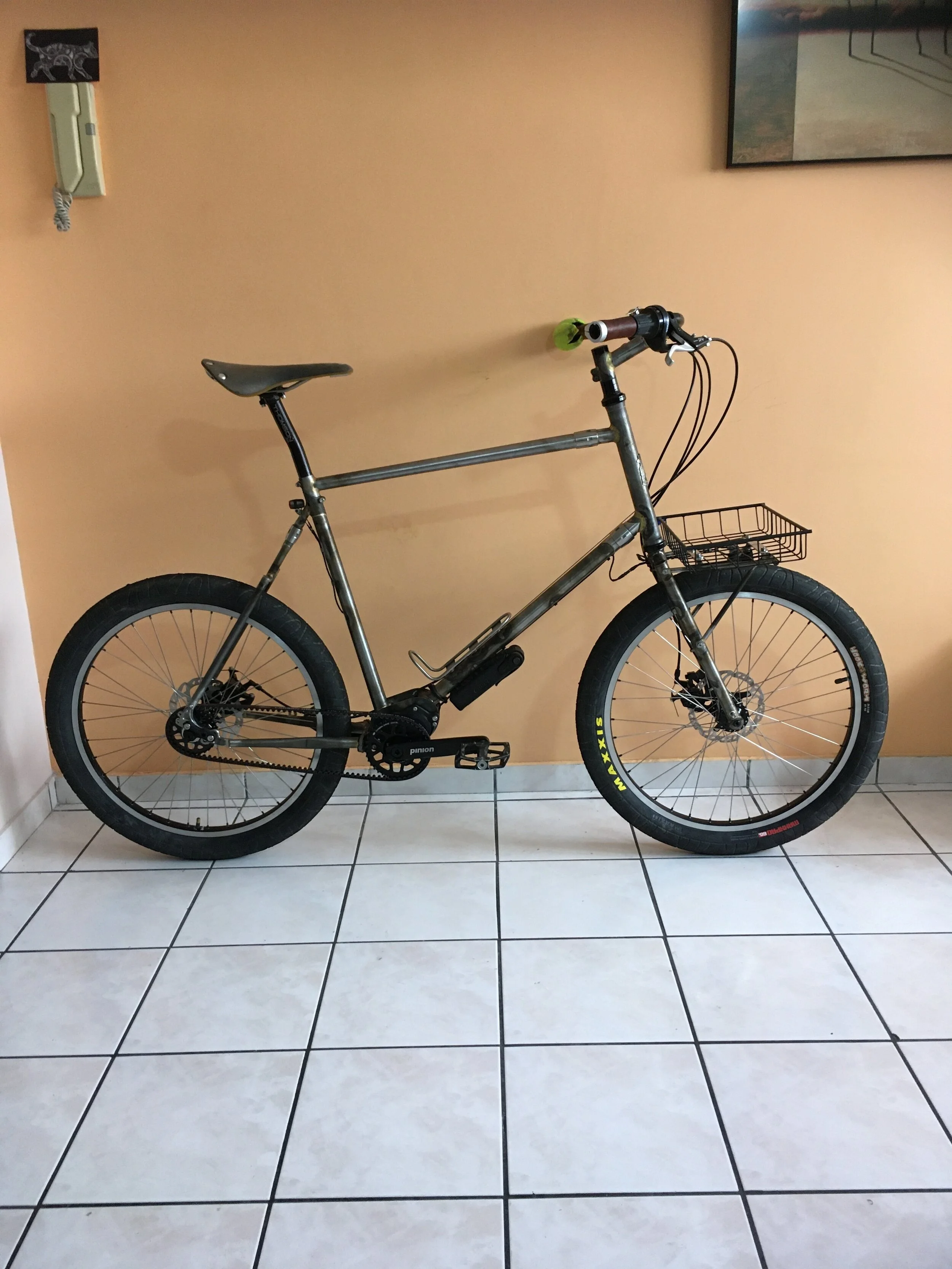
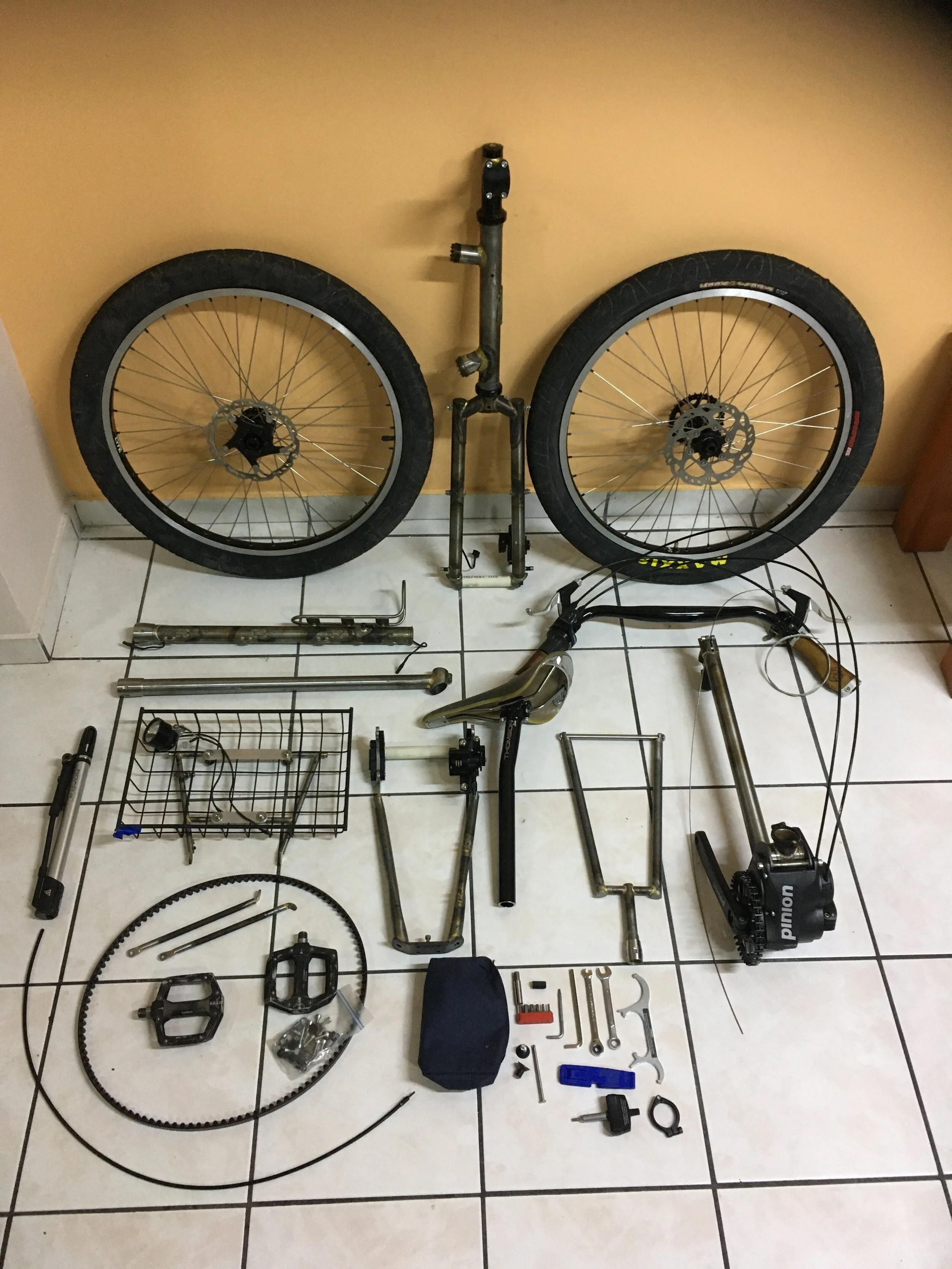
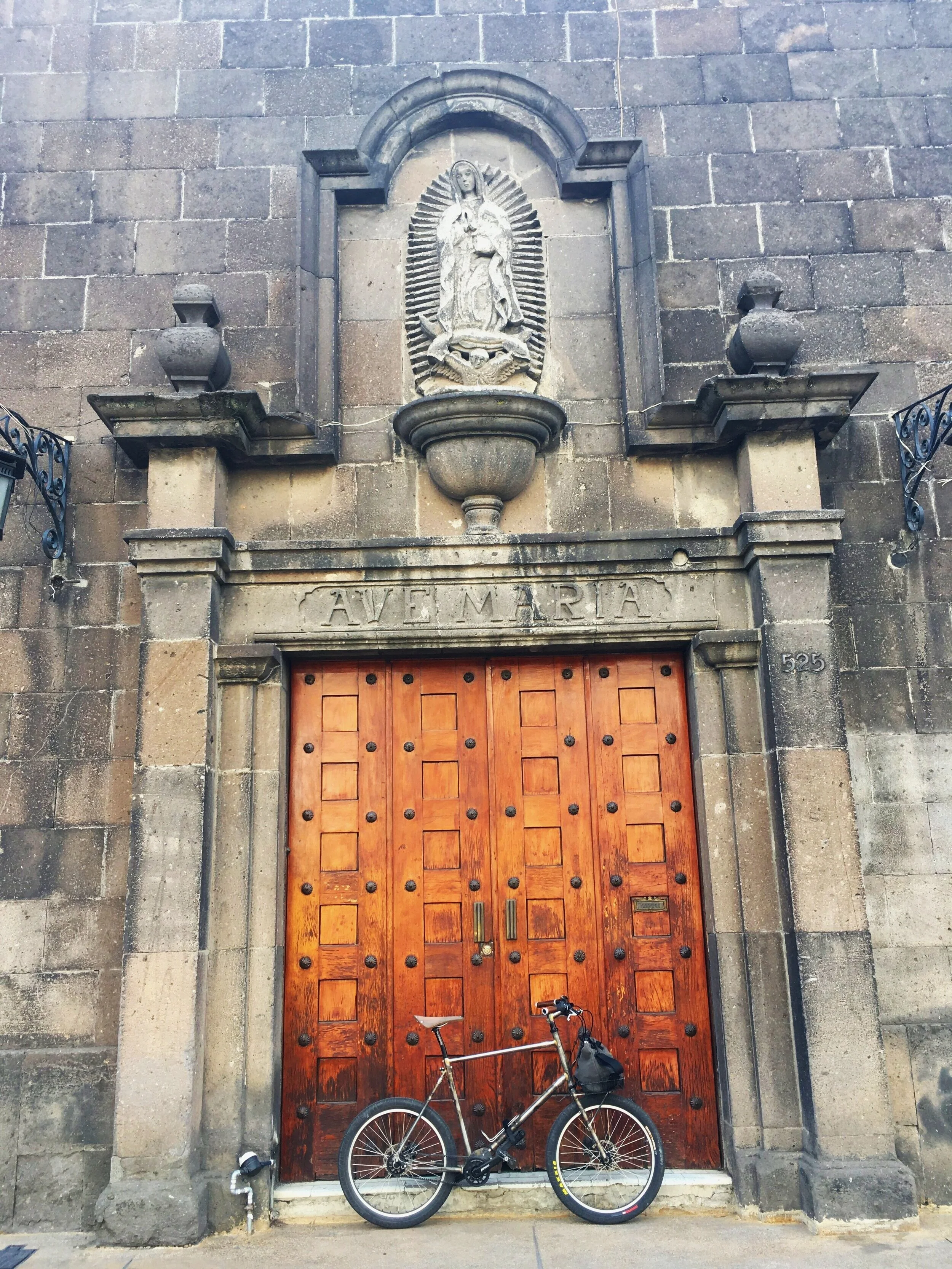
I built a travel bike specifically to take with me on this trip. It’s one of those bikes I’ve been thinking about, piecing together in my mind over the past few years, and it seemed like the right time to put it together. I wanted something that didn’t compromise ride quality for packability, and I knew that with the variety of roads I’d need big, comfortable tires. At first I was going to build it as a single speed, but then I thought the versatility of having at least a few gears would make the bike more practical in the long run. I decided on the Pinion 9 speed gearbox — plenty of gear range to get me up and down any hills. 

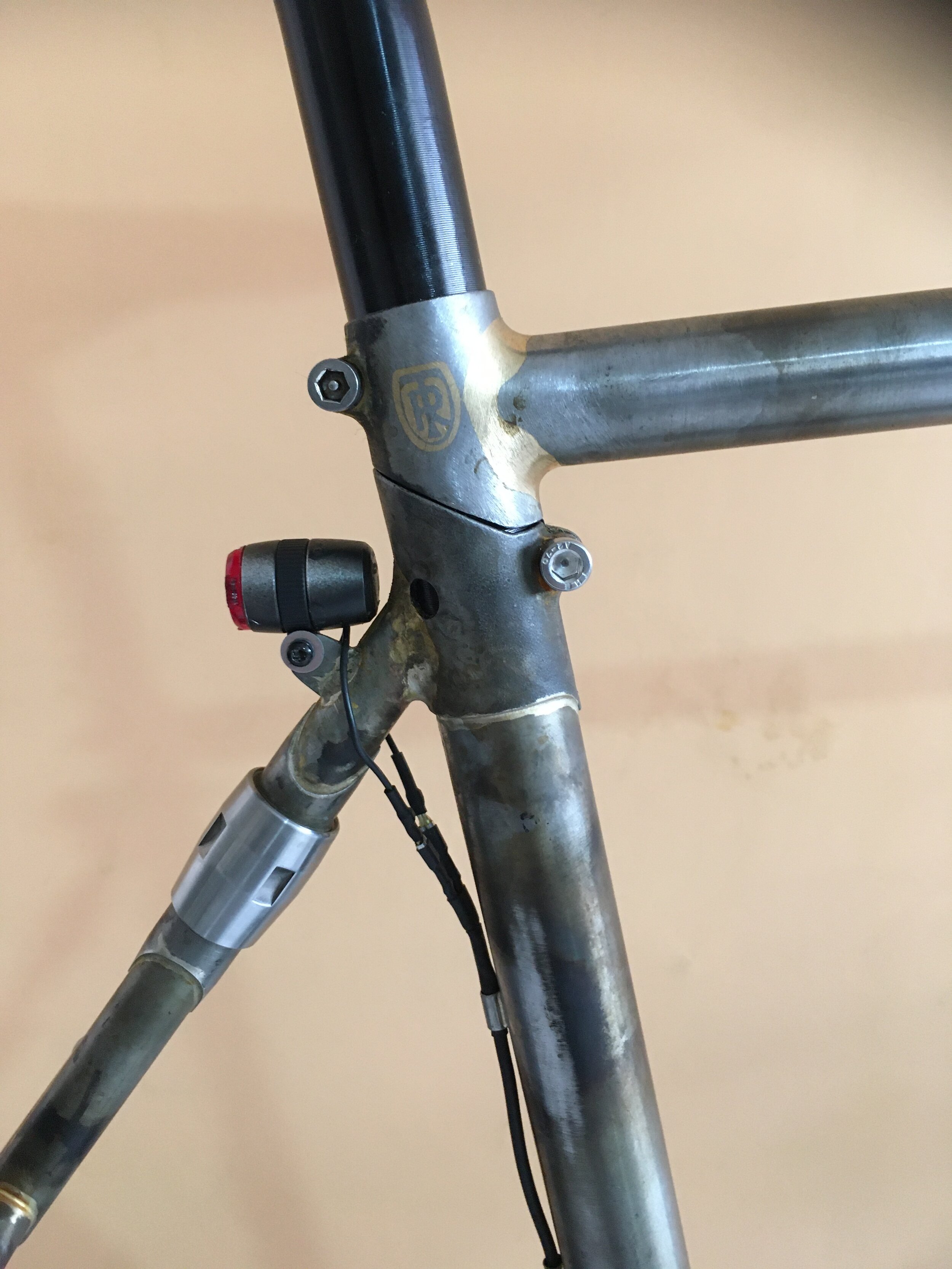
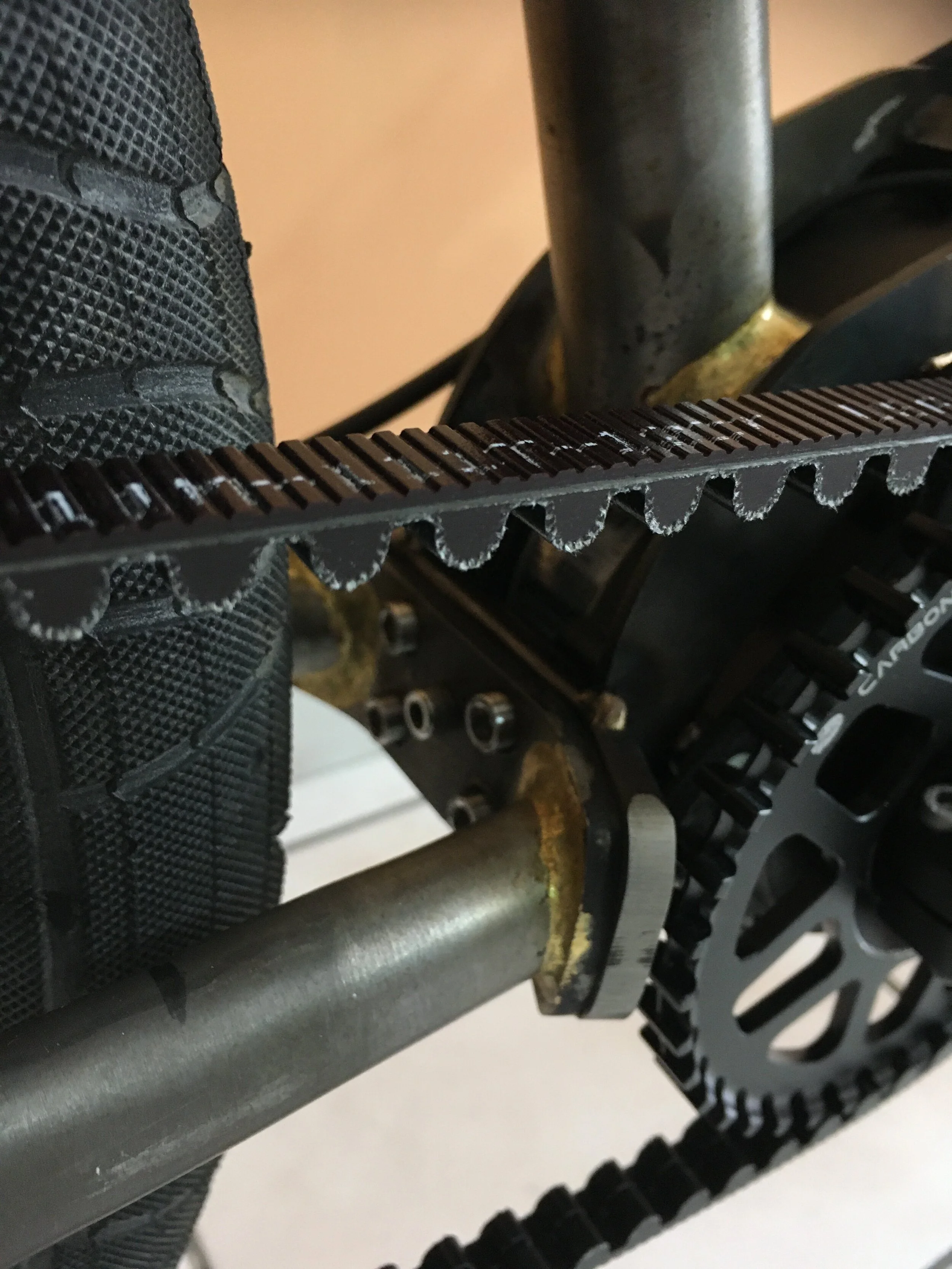
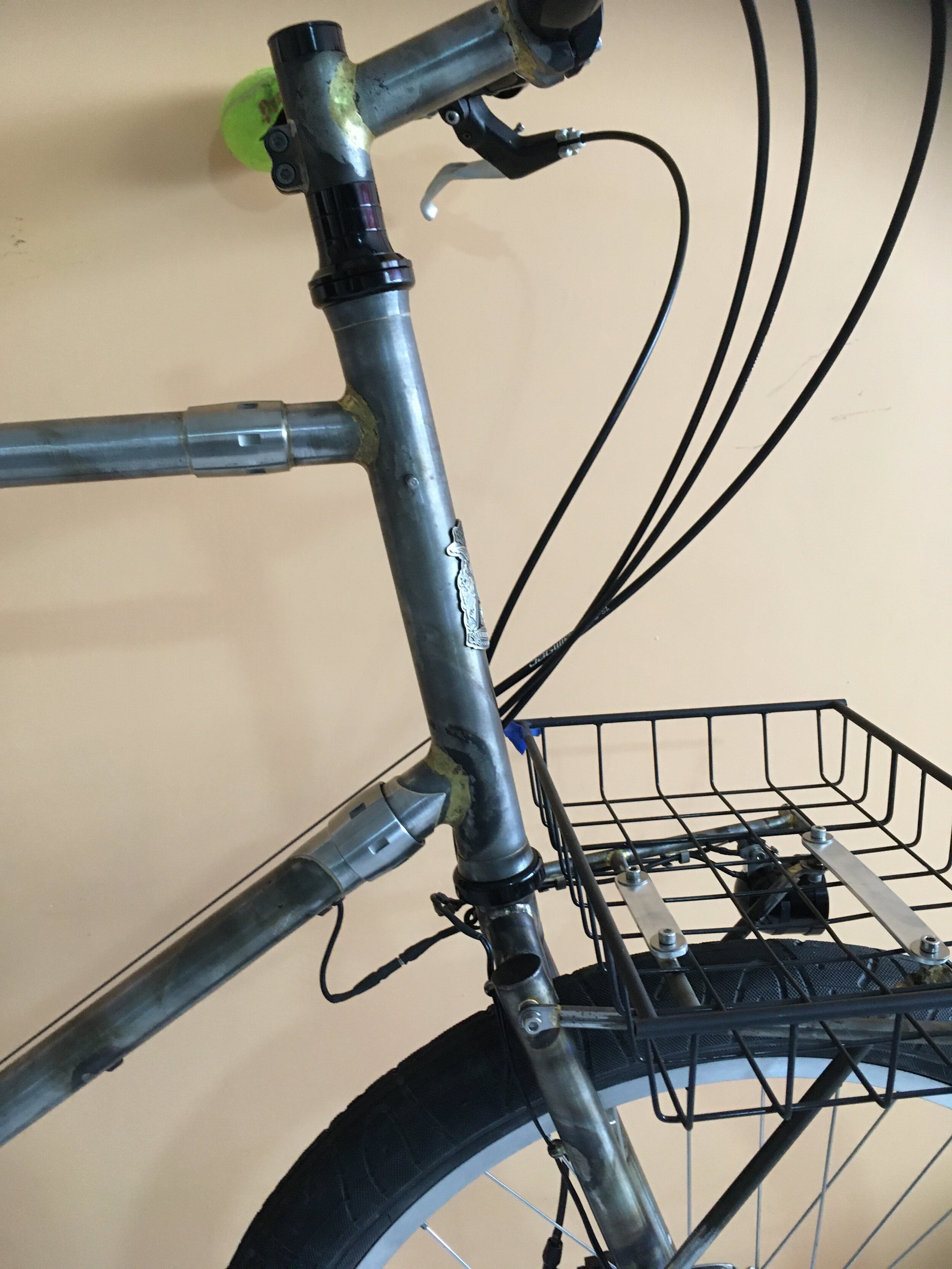
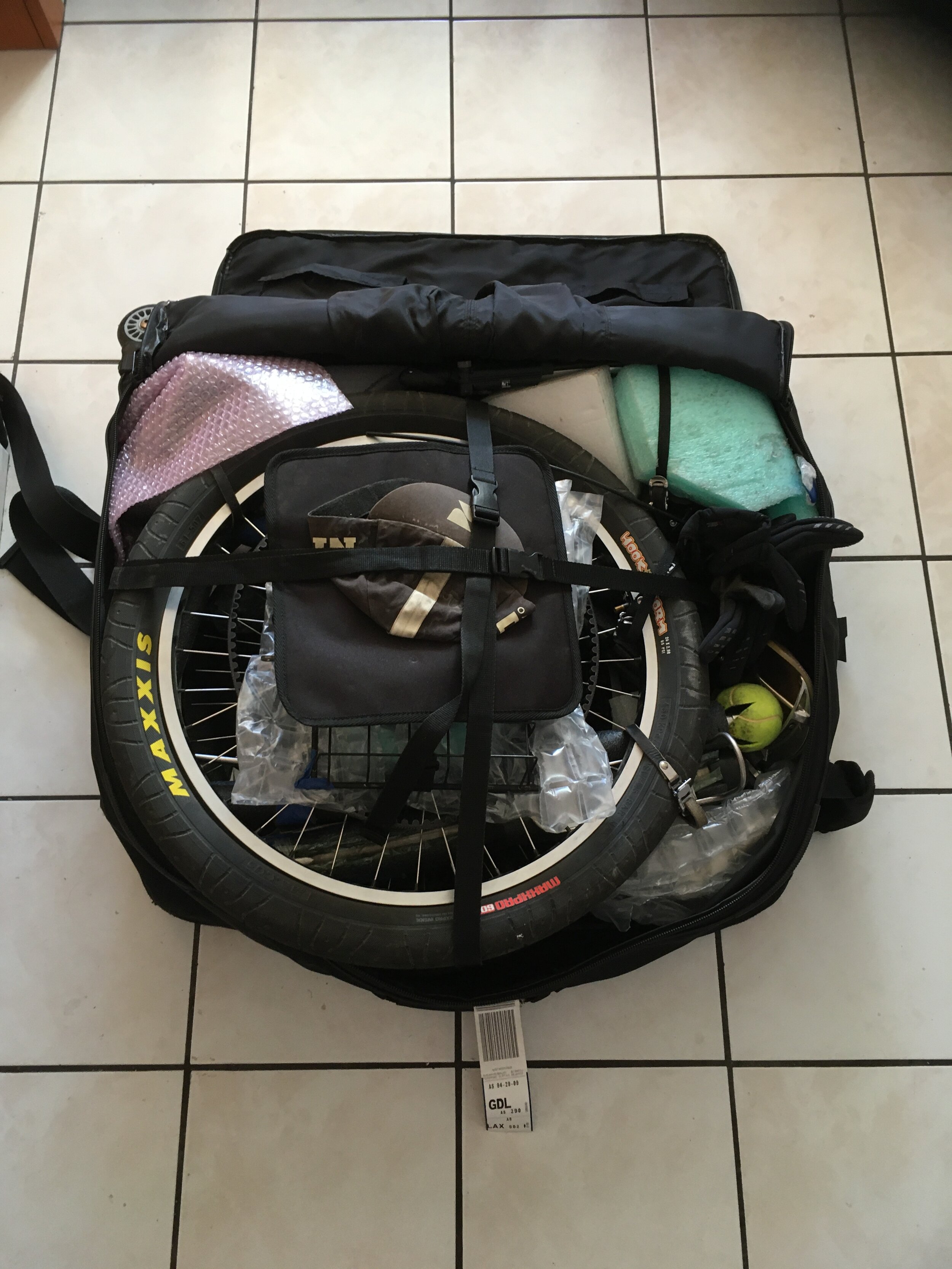
This bike is a little crazy, how it breaks apart: two S&S couplers up near the head tube, a Ritchey breakaway seat tube and down tube coupler, a coupler on the seat stays, bolt breaks at the rear dropouts, and even the chain stays are removable. The biggest part to pack are the wheels — 24” rims with 2.5” tires. Bomb-proof wheels, they’re heavy, but I don’t have to worry about them getting damaged in transit. I was grateful for the gears — Guadalajara is mostly flat, but on my explorations I did periodically find myself on some long steady inclines. Building and disassembling the bike, including packing and unpacking, took me about 1.5 hours each way. I could have done it faster, perhaps, but I was in no hurry. If I built it again there are a couple of small things I would change, but not much — all in all the bike was a success. And it was a perfect bike for exploring the city, and for commuting to and from my Spanish lessons. 

Old Wall

That’s right, while I was in Guadalajara I took a half-immersion course, 2.5 hours per day of lessons at a school affiliated with the university. I’ve taken a lot of Spanish over the years, and I’m still far from fluent. But everything seems to help. Of course it’s not easy, at least, not for an aging person like me. I may be slow, but I tend to retain what I’ve learned pretty well. I’m better when I practice, but that’s like anything. It’s the same with bike building or paragliding or computer programming or yoga or chess or woodworking or writing: If you hate it or are afraid, or just don’t care, you’re never going to progress. It requires enough discipline to persevere from moment to moment, for years, even when tired, or feeling bored or lost or frustrated; in my case, to view the language like a puzzle that I really want to solve, even knowing it could take a lifetime or more to “get there,” wherever “there” is. Fluency, or something close to it. 

Old Door

Old Door

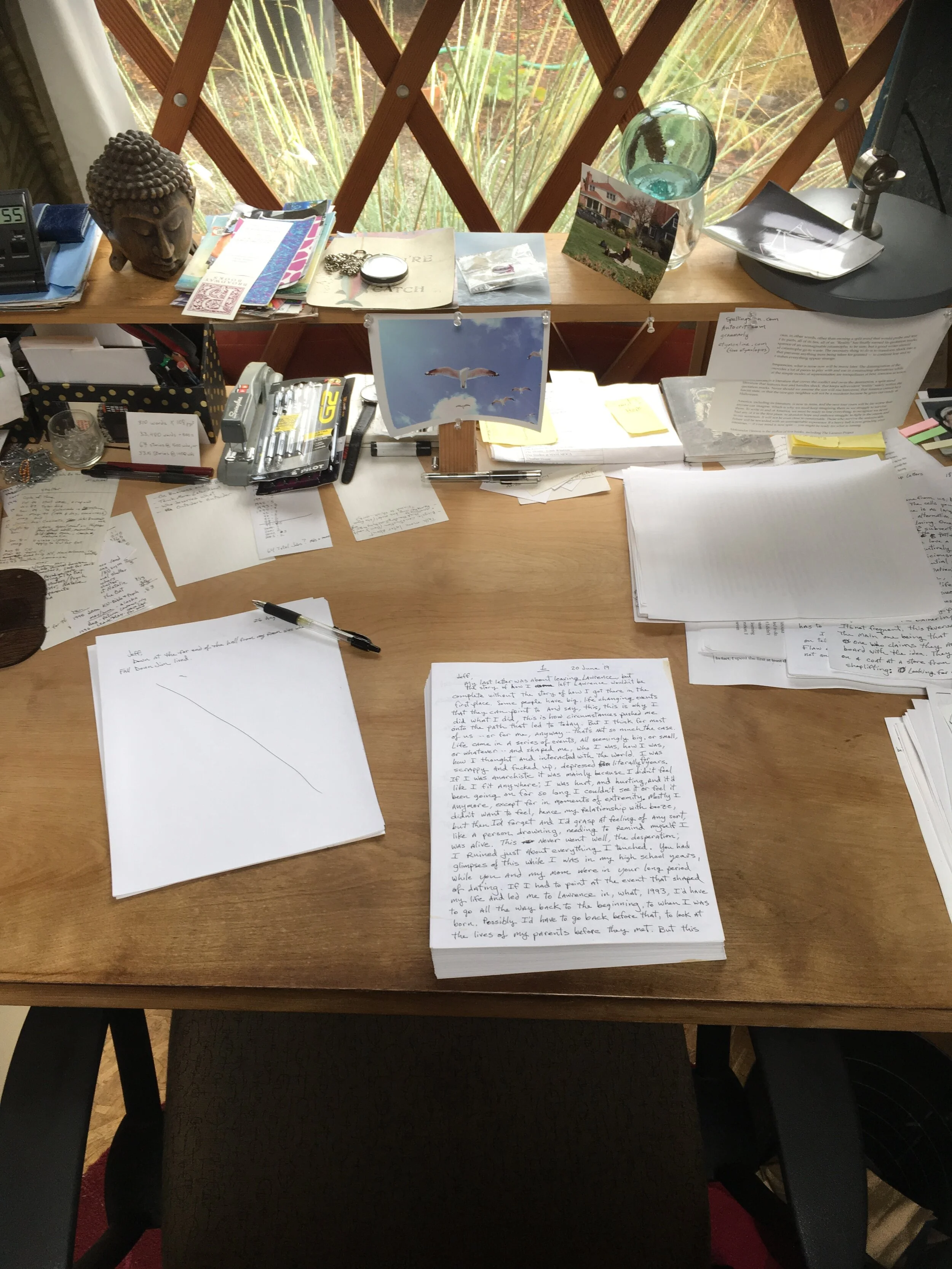
The other goal I set for myself in Mexico was to give myself time to write. I’ve written this long, book-like thing, a memoir, and it still needs a lot of time and editing. So, that’s what I did — edited and rewrote. Isolation in a distant land, where my phone doesn’t work and internet access isn’t reliable, where there’s no one knocking on my door, and no bicycle work that I can go escape into — it can feel pretty lonely, but it does wonders for the written word (at least, that’s what I keep telling myself). Writing is the hardest thing I’ve ever done. Maybe not moment to moment, but definitely cumulatively. For what its worth, the Spanish lessons were a good reason to get out of the house, and out of my head after several hours of writing. My choice was that, or or lots of cerveza, and of these two options only one is really sustainable. 

Crossed Paws

I left Guadalajara early one morning last week, and as the taxi drove me across town to the airport I had a brief moment of nostalgia that I felt I hardly deserved. My time was so short. As we passed the big blue cathedral on Calzada Federalismo I thought about the skaters I’d watched in the park just across, and the huddle of black and orange cats I’d seen pressed up against a tree, sleeping. We passed one of the backroads I’d frequently taken on my bike and I thought of the patches of graffiti that were within a few blocks, one in particular of a giant fish with a man on its back, riding it like a jockey. 

Fish Jockey

In the cab we passed the flower market on the other side of the road, with their elaborately sculptured bouquets, and the tortillaria where I’d bought tostadas and met the old man who told me in broken English that his name was Eugene, he was 87 years old, he’d lived in Chicago twenty years ago. “Welcome to my city!” he’d said proudly, sticking out his gnarled old hand for me to shake. 

Un Amigo Sucio

These moments and memories stacked one with another as my taxi drove me onwards, and I knew they didn’t mean much, except these are the very first grains of the structure that would, if I stayed, eventually build a community. But whose to say — maybe I’m building my world community. 

The whole trip came and went in that one taxi drive, and even now as I sit at my writing table in Portland, the distance grows and the memories that don’t get built into stories are already fading. It’s been just over a week, and how much have I already forgotten? The language is the medium, the stories are where the memories stay alive. 

Sunset at the Ocean, Sayulita Beach

I did make it to the coast for a short time, to Sayulita and San Pancho, hip little towns north of PV. Whatever sun color my skin acquired is quickly fading to my usual winter paleness. Yesterday there was snow on the ground when I woke. This morning it’s mostly gone. I’m kind of sick, but on the mend, some kind of flu, and just about everything in Portland is closed down as we all go into a nation-wide quarantine. This virus is a great equalizer — it doesn’t matter who you are or what you look like or where you live, we’re all susceptible, and we’re all at least a little bit scared. I feel for everyone whose lives are being deeply affected by this, either directly by the sickness itself, or by job closures, or the falling off of business. These are some wild times we’re in. 

One hope I have is that this shake-up we’re receiving will cause us (we the people) to step back from the usual noise and political shouting and remember that at the end of the day we’re all alike, because we’re all human. We all essentially want the same things: to be healthy, happy and free. And we need to figure out how to get there, together. Because of course it is possible. 

Freo

I don’t know if I have the virus, but I’m staying pretty isolated right now. I feel like I’m getting better, a little more each day. I’ve been spending a few hours each day at the shop — my cave — working on the next bike. It’s Pinion commuter, belt drive, disc brakes, generator front hub to power lights front and rear. A straight up functional bike for life. After my trip it feels good to put my hands back on the tools I know so well, to let the tool-smart part of my brain come back online. I brazed a fork crown to a steerer yesterday, the torch felt comfortable and familiar in my hand, the dialogue between hot steel, flux, and molten brass. A language that I’m very familiar with.

Watching

At home we have a new cat. A big orange fellow named Freo; 19 pounds of furry love. He likes sharing the bed, walks across my chest while I sleep, puts his nose to mine and purrs until I wake up and pet him. Selfish beast.

Let’s be safe out there, alright? Keep it simple and do good things for your health, everyday. If you’re up for it, go for a walk, or for a bike ride. Stretch, and keep breathing deep into your lungs. You’re lucky to have them. 

It’s a scary time, for sure, but remember to be grateful for the good things you have. 

As they say: This too shall pass. 

Another Passing Day