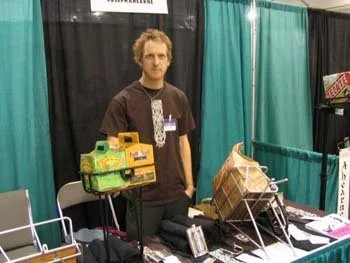
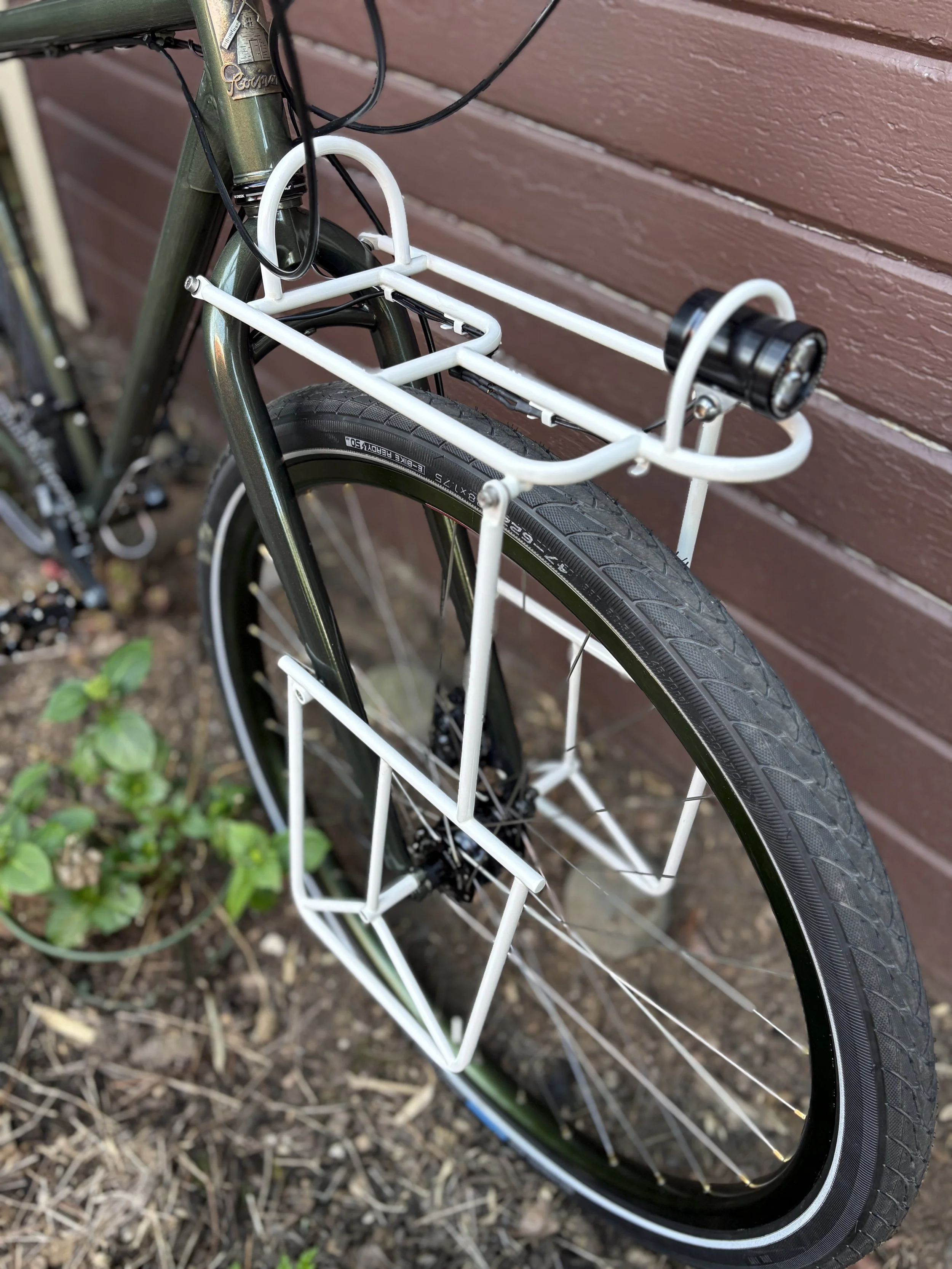
Check it out!
If you’ve ever considered learning how to hand-make a bicycle frame or fabricate a rack, Firsthand Frame Building is offering classes beginning later this year. I’ll be teaching frame courses, both for lugged and fillet-brazed bikes, and in March 2027 I’ll lead a rack making course. The rack course has been a long time coming — for all you who’ve expressed interest over the years, we finally have a format and the space to do it properly! Course sign up opens on Monday, June 1, so check out the full list of courses and grab your spot — they’re going to go quick!
Me and Racks: A History
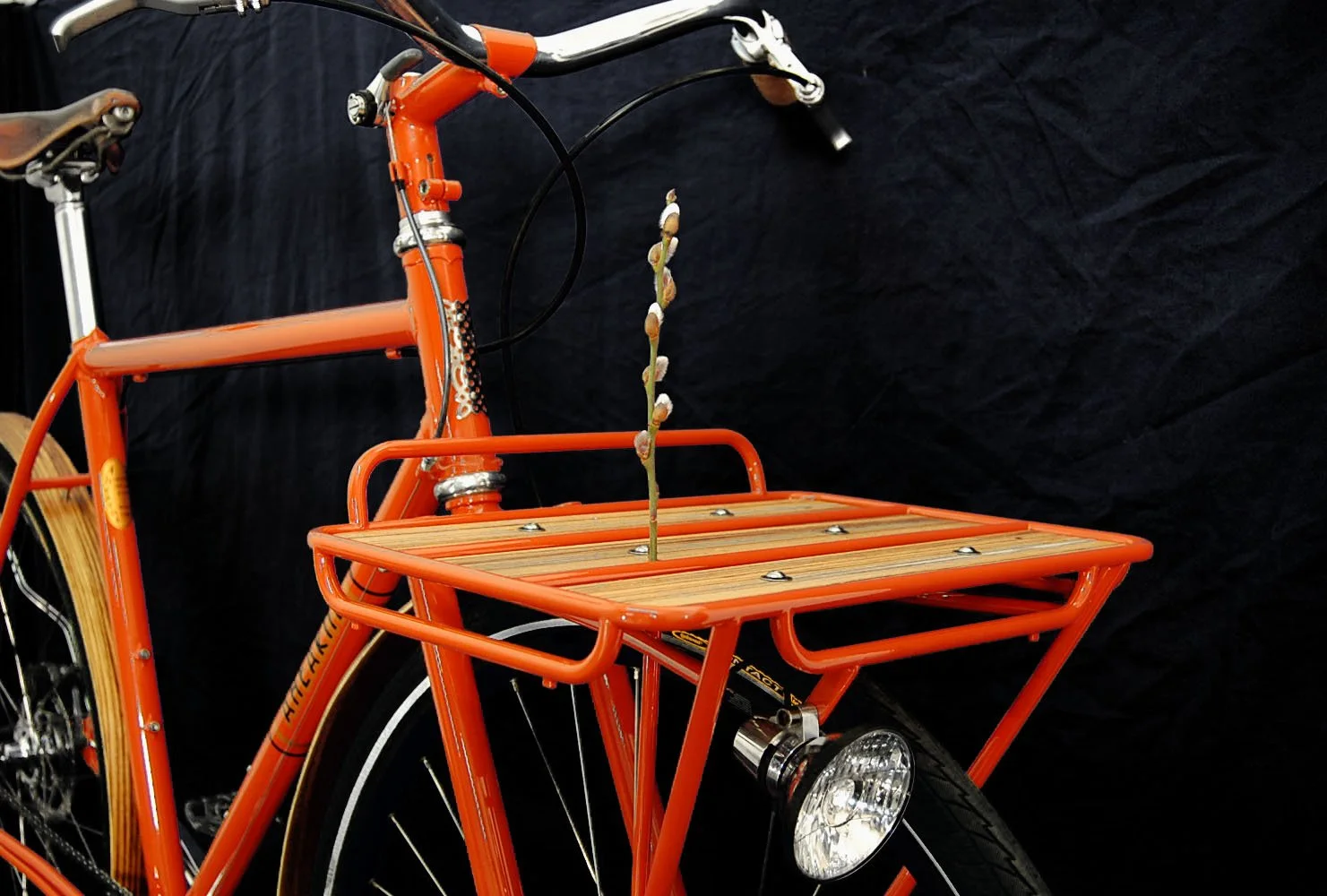
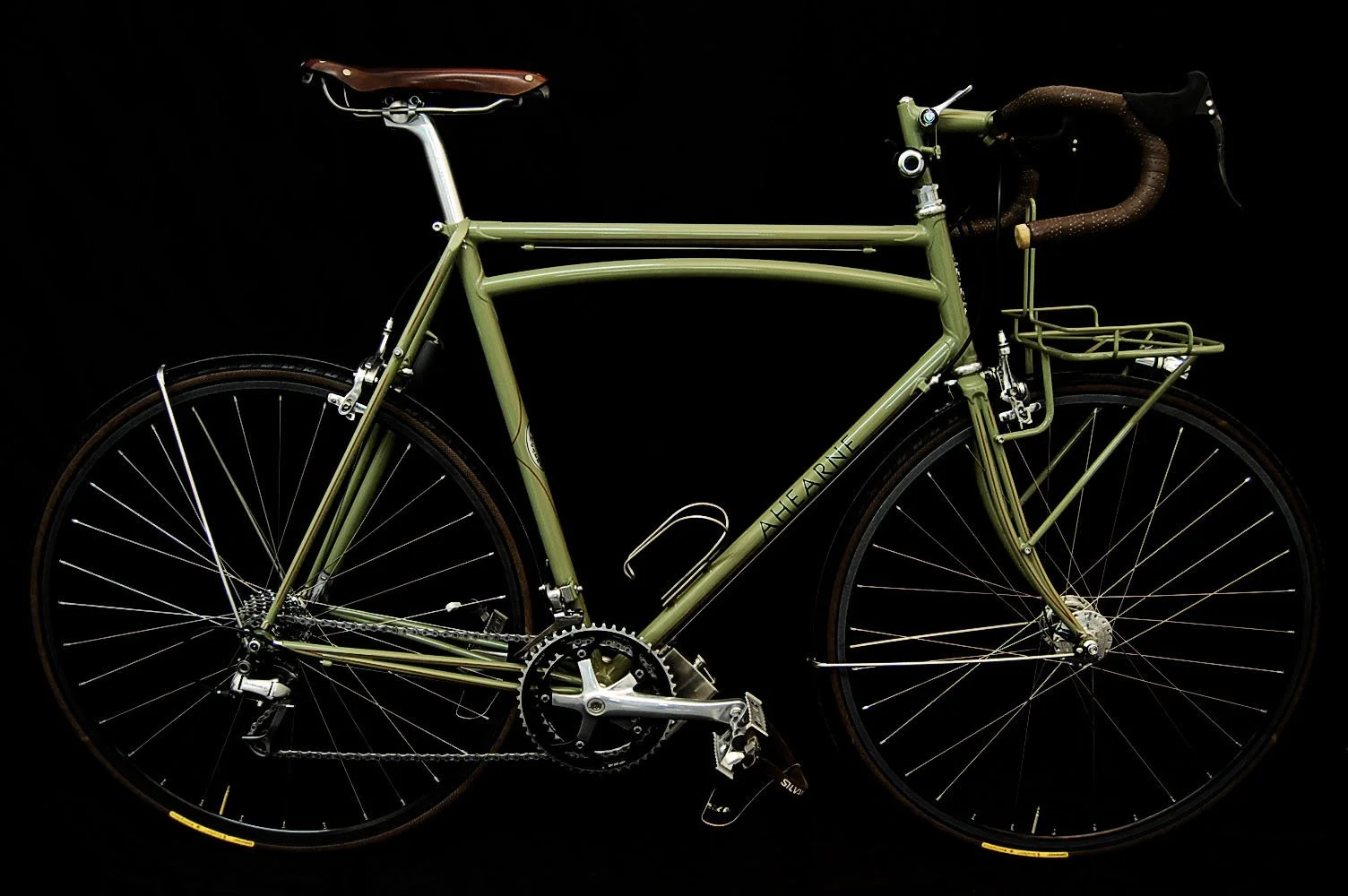
Tony Huggins’ bike won an award for Best City Bike at the North American Handmade Bicycle Show
The very first rack I made
…was in 2003, not long after I’d taken a class with Tim Paterek to learn how to make bike frames. Tim had written and edited The Paterek Manual for Bicycle Framebuilders, a long, arduous manual detailing step-by-step methods for bicycle frame construction. To supplement the book, one could also get a series of 6 or 8 homemade VHS tapes featuring Tim in his workshop wielding tools and a torch, his moustache waggling as he delivered a detailed, step-by-step instructional monologue. The videos also boasted rare guest appearances by Yoda (RIP), Tim’s bony, geriatric siamese shop cat whose valuable commentary on frame building was delivered with a gravelly, guttural yowl.
After I’d completed the frame course with Tim he decided to make another video that showcased techniques for hand-making custom racks and stems. He’d programmed his original bicycle fitting system in DOS, and Tim had actually given me a floppy disc along with his book and the VHS tapes as a part of the frame course. Whereas bicycle frame design had mostly plateaued, digital camera technology was rapidly evolving and in the spirit of modernity Tim invested in a video camera that could burn video to DVD. Regardless of the camera’s advancement, Tim still needed someone to press the red button, manipulate the tripod, and pan it to keep him, his moustache, and his working hands centered in the frame. He invited me to come out to his workshop and help on the day set for video recording.
I was hungry for knowledge the way some people eat paint; undiscerning, a bit self-disgusted, unable to digest, missing crucial elements for nutrition. Not just for bikes, but for everything; for experience, meaning, work, belonging, all of it. I was ravenous for learning, wanted to go everywhere, read everything, know how and why and wherefore this messy world functioned and to seek a context into which I might fit — thus far I hadn’t had any luck with that. It was like an unhealthy tic, I devoured anything relating to life and literature and substance.
This paint-eating metaphor opens a lot of questions about my past, which I’m getting around to, slowly, but regarding the day we video recorded, I wasn’t much help because I was so enamored by what Tim did. It felt like a great secret was being revealed to me. I’d never even thought about fabricating something like this. Tim bent these skinny tubes, notched and cleaned their ends, then used the torch to brass-braze them together, all the while talking the process through. For me it clicked, and kept clicking throughout the day. Seeing this rear touring rack form before my eyes, something cracked open for me. It was so organic, so beautiful, made by hand. I was like, Wait, I get it… I can do this.

Waterproof Ortlieb Panniers — ready to tour
By this point in my life I’d put a lot of miles into bike touring, having ridden most of the way across the country, toured in Ireland, Northern Italy, Croatia, Slovenia, always destitute, living on a budget more frayed than an old shoestring, always just barely getting by. Early on I’d invested in waterproof Ortlieb panniers, which I’d put on layaway at River City Bicycles in Portland. Remember layaway? Bless River City for their patience, it took me months of rolling burritos and other near-death minimum wage employment experiences to finish paying for. As far as racks went, I hadn’t thought about them at all beyond their function. In those days there weren’t many rack options available and all of them were ugly, kind of a stain on the beauty of the bicycle. Rack manufacturers had one or two models they made to fit every frame, which was impossible. Bicycles vary too much, and some bikes just aren’t meant to hold racks. Consequently most racks fit badly if at all, requiring creative strapping and weird adaptors to stay attached. If a rack did happen to fit properly it was often only by an accident of design. Usually they sat too high over the wheel, or the upper platform listed away behind the rider like a dump truck dropping a load.
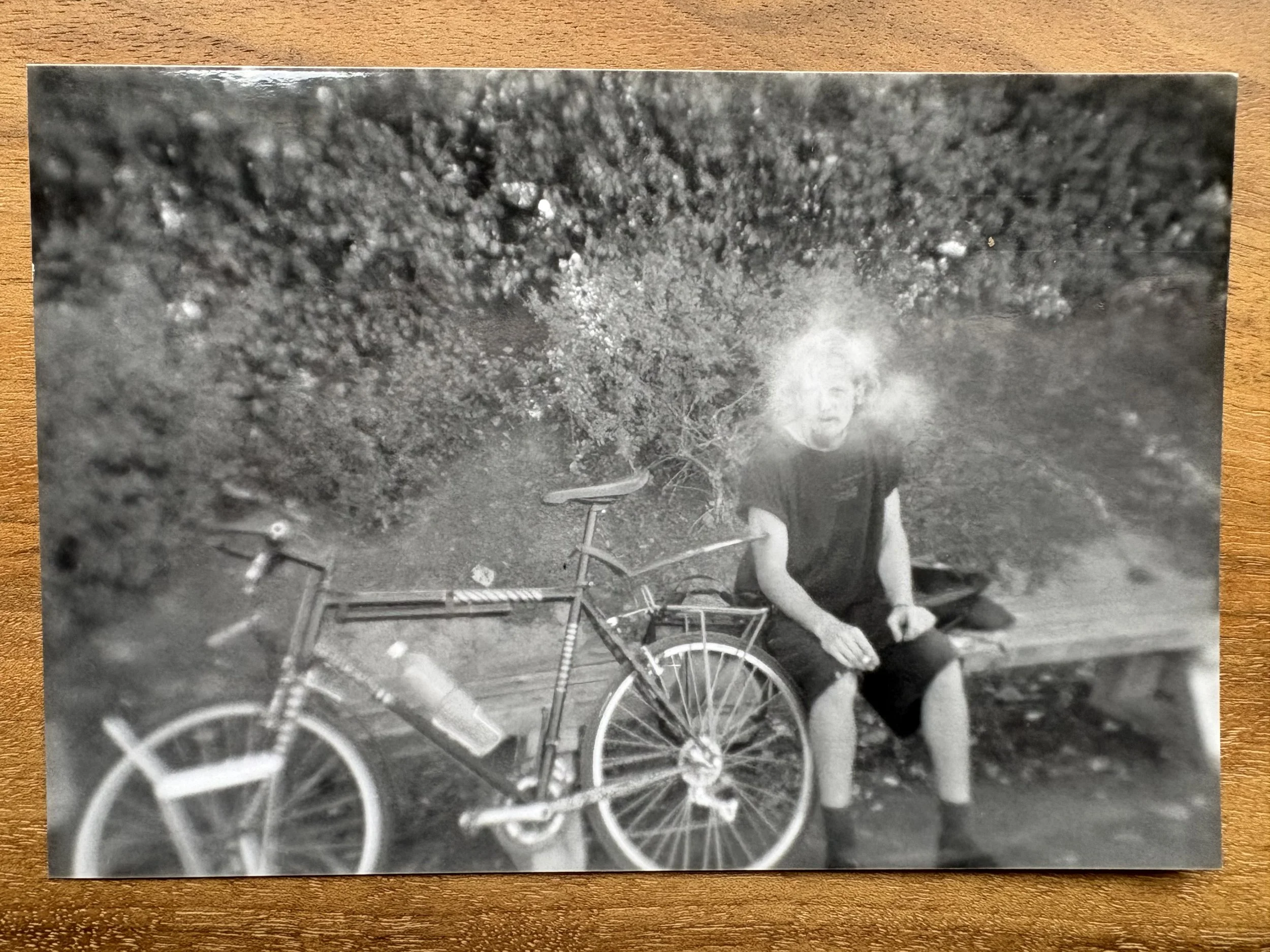
A very rare old photo with my Stumpjumper in touring mode. This was taken in Portland in about 1995. Notice the cloud of darkness I hid in, the all-black clothes, down to the socks. Also, look at the way the rear rack lists backwards like it’s dumping something into my lap, symbolizing, perhaps, a sort of Karmic retribution.
With bikes, as with everything else in my little life, I was cheap because I was perpetually broke. From the outside it may have appeared my poverty was a choice, but at the time it didn’t feel like one. The simplest explanation is that I had problems working for other people. There’s a lot to unpack in this statement, and again, this is another, much larger, story. I’m working on it, and I promise you’ll get to read it as soon as it’s in some kind of shape.
Back then, regarding racks, even if there’d been better options I would still have bought the cheapest thing I could get my hands on and figured out how to make it work. Duct tape, baling wire, hose clamps, screw the paint, fitted with help of a mallet, pliers, whatever. It was a rack, it’s only job to hold bags. For the longest time I thought, Who cares what it looks like? It doesn’t matter.
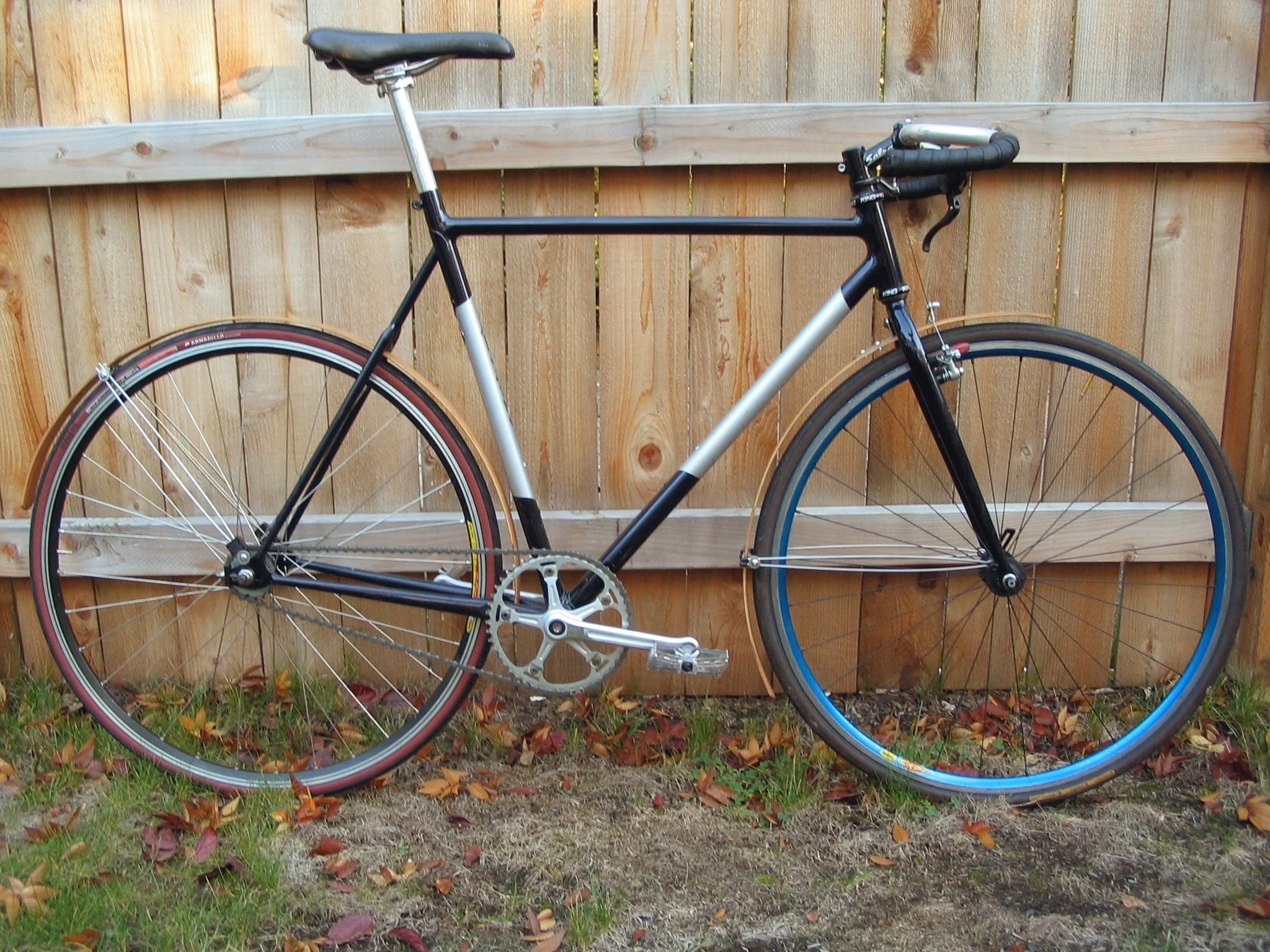
My first hand made bike was a lugged & fillet brazed fixed gear. So cool, I thought. And so uncomfortable. Hand painted (spray paint), co-op found parts, Full Wood fenders.
My bike, which happened to be my first and last “real” bike before I took Tim’s class and learned to make my own, was a 1991 Specialized “Stumpjumper.” An adapted mountain bike — meaning I put slick tires and a rack on it — this is what I toured on.
As an aside, I was only able to afford this bike because of a dubious insurance claim after a guy, an ex-friend, had been transformed literally overnight by his newfound love of crack cocaine. One day I left my crappy Peugeot mountain bike at his apartment and by the next day when I came to pick it up it was no longer there. Dude had traded it for a $40 rock. For clarity, that’s a crack rock, a little buttery-white nugget of euphoria some people find exceedingly hard to resist. I’m not mocking it — addiction is real. I’m kind of mocking myself for having landed in this situation. But such was my life back then.
Now, as an aside to the aside, and to be totally transparent, I was not some blameless innocent to whom bad things just happened. When the Peugeot came to me it was likely stolen. I’m pretty sure it was, but at the time I failed to ask. I bought it, the Peugeot, in Colorado for $50 from a sketchy dude I’d met shortly after getting a paycheck from my dishwasher/ prep cook job. I lived in the mountains, thought I might disappear there, kind of like Chris McCandless when he walked off “into the wild” in Alaska. Maybe I was thinking about it, but it was like 47 degrees below zero and I hadn’t seen the ground for the snow in months. I think I bought the bike as a sort of lame prayer for spring to please already arrive. I ignored the obvious possibility that the bike might be stolen because I didn’t want to think about it. Even then, experiences in my life clearly evidenced that Karma is real, an active and dynamic accounting that’s here for all of us, like it or not. You may or may not believe in it, and I won’t argue with you. When I take up this one thread, from Peugeot to Stumpjumper, looking back, then forward in time and watching how things came to pass, I’m just saying, bike for bike, the story is almost too neat to be “real,” and it definitely points towards what, to my mind, looks a lot like Karmic retribution. I can be an idiot (Sí señor!) and then sometimes I stumble upon clarity. Putting on blinders and not thinking about it was not going to save me. Not this time and not any other.
How many karmic life lessons came to me like this, like blunt head trauma? As though I had a guardian angel who knew I was too dim to hear a message without being beaten with it. Yet, also, for a long time, acting tough and arrogant, aka scared and idiotic, I laughed hollowly at these lessons, the doomed accounting too obvious to be anything but a joke, I believed, with me and my little life events as the punchline. That, my friends, is a hard-living spiral, let me tell you.
Regardless of its origin, though, the Peugeot was the only wheels I had, and when it was gone it was gone. And too, a dude I’d thought was my friend. In retrospect, though, this friend and I weren’t doing each other any good. We’d fed off each other’s lesser impulses and kind of egged each other on, traveled down some dark and gnarled paths together. In the end I’m certain he was better off being rid of me, and me him.
Anyway, where was I before all these detours? Let’s go back to Tim’s shop, him making his rack video, me there, kind of helping but not really helping.
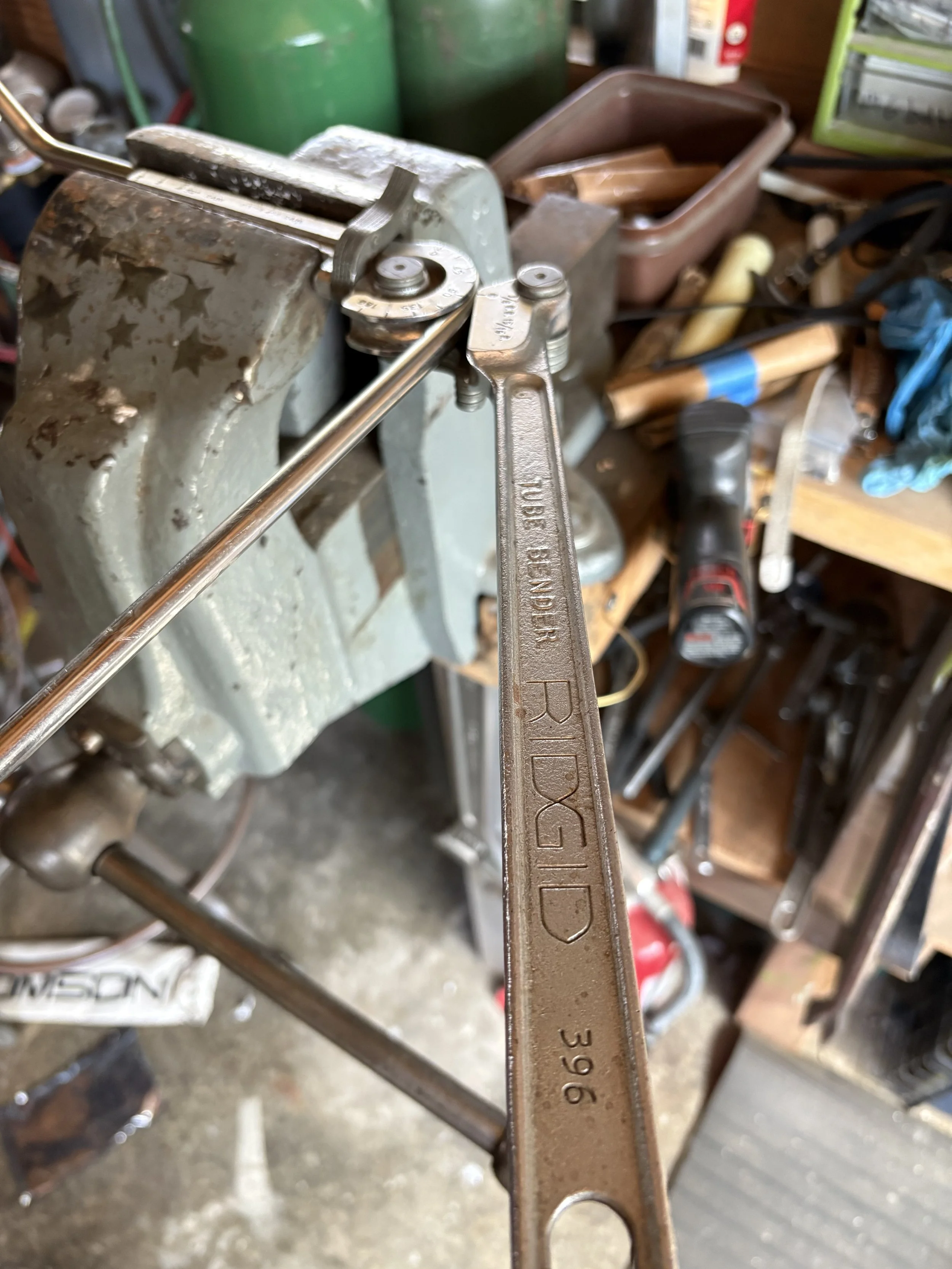
Tim’s gift, a Rigid tubing bender
Over a few hours, seeing how Tim cut tubes and brazed this rack together, possibilities opened for me like the sun breaking through storm clouds. I couldn’t wait to try making a rack for myself. Tim gifted me a Rigid conduit bender for 3/8” tubing, the same hand bender he used in the video, as well as a couple of lengths of appropriately sized chromoly steel tubing. I took these things to the little garage I rented from my friend William and got to work. The Stumpjumper was no longer with me because of a long series of misadventures, battles with metaphorical monsters, etc., that came to a strangely Odyssean ending in Ithaca, New York. The stories within stories are endless.

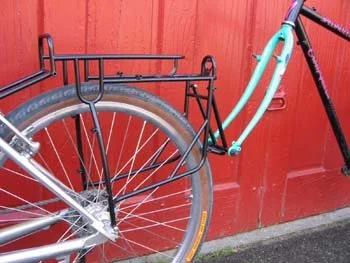
Look at this kid! Making a bike trailer for RCB around 2004.
Not long before helping with the rack video, I’d finished constructing my first fillet brazed bicycle frame. If you didn’t know, the term fillet brazing refers to an older, more artisanal method of joining steel tubes with molten bronze. It’s how I build bike frames to this day.
Anyway, my first frame was kind of a disaster because of alignment issues. I’d tried to muscle the frame straight and buckled the down tube which felt like the end of the world to me. But once I’d cussed and thrown some things around the shop I got over myself and cut the kinked down tube out and replaced it. I finished the bike, stuck wheels on it and rode it with a mixture of real and feigned pride. I was hard on myself, wanted to do everything perfectly from the beginning, and when it wasn’t I was certain it confirmed I was a failure and should stick with my minimum wage life. But no, not that! I couldn’t forget this bike was mine, I’d made it, and it did what it was supposed to: it moved forward when I pushed on the pedals and seemed to track fairly straight. Maybe not the prettiest thing, kind of Frankenstein, but cool in its own freakish way. Anyway, this bike became the platform onto which I built my first touring rack.
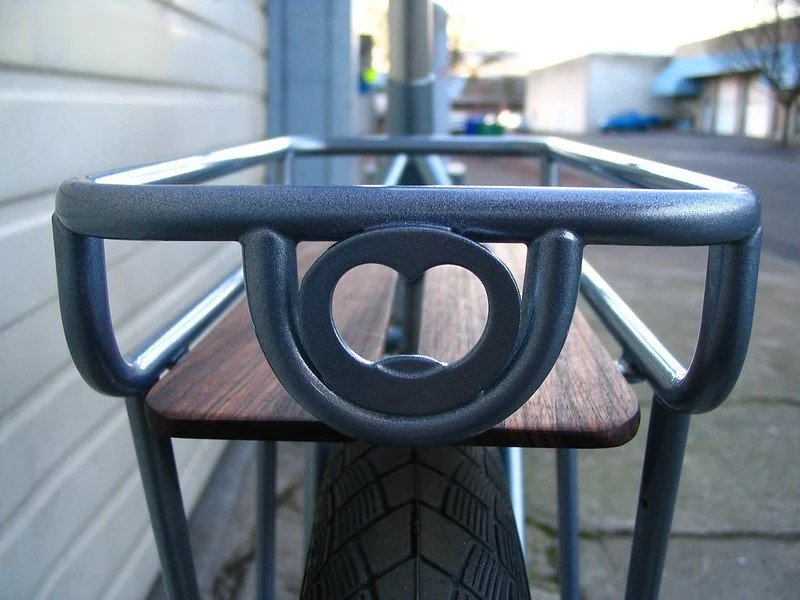
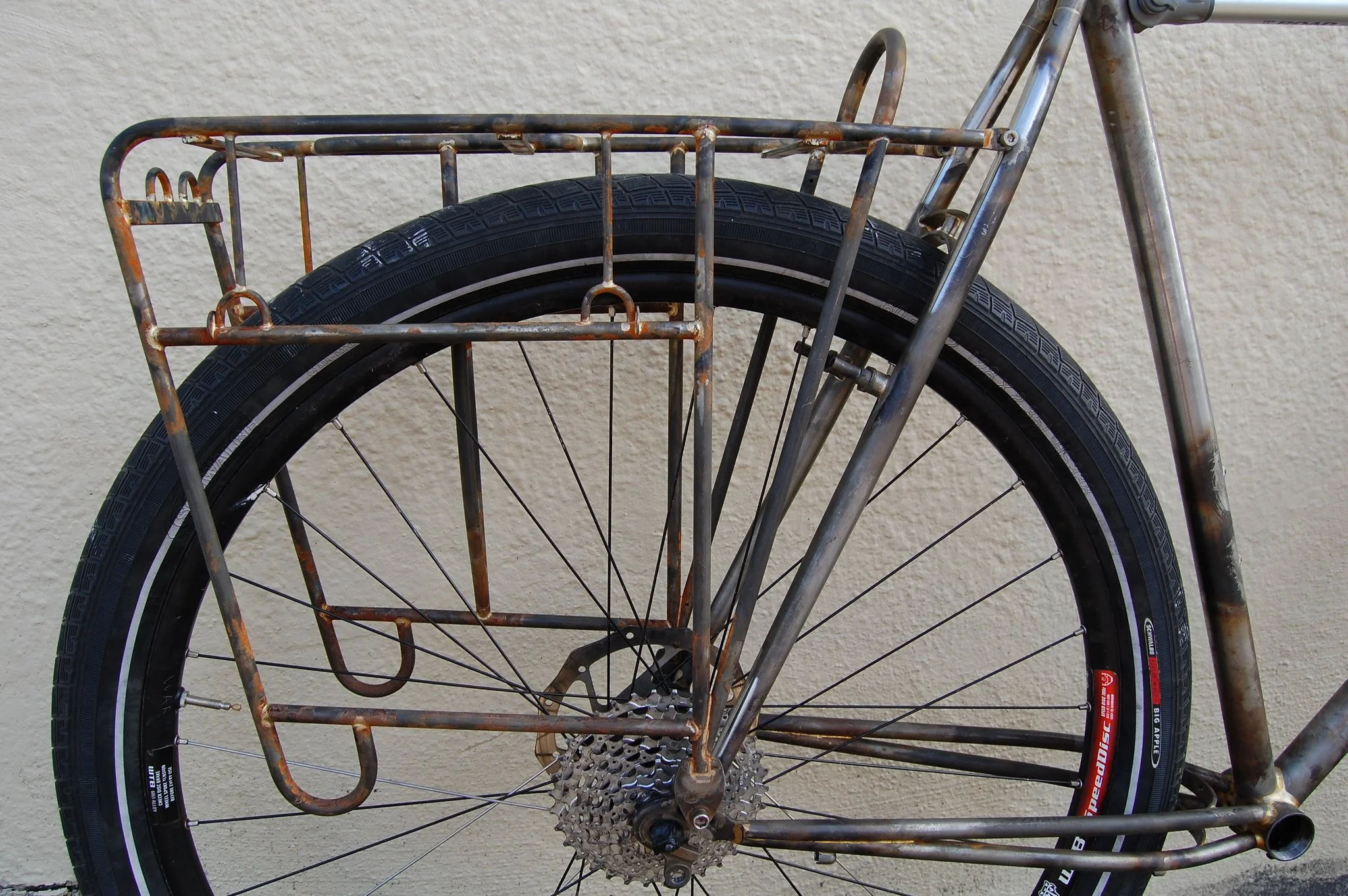
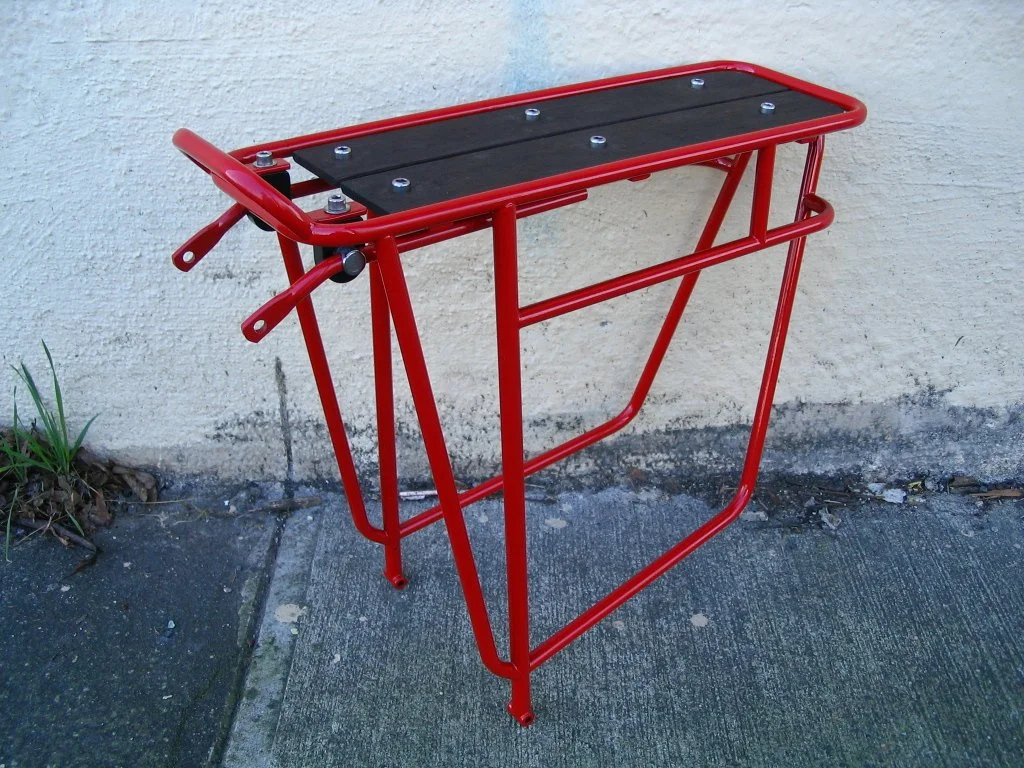
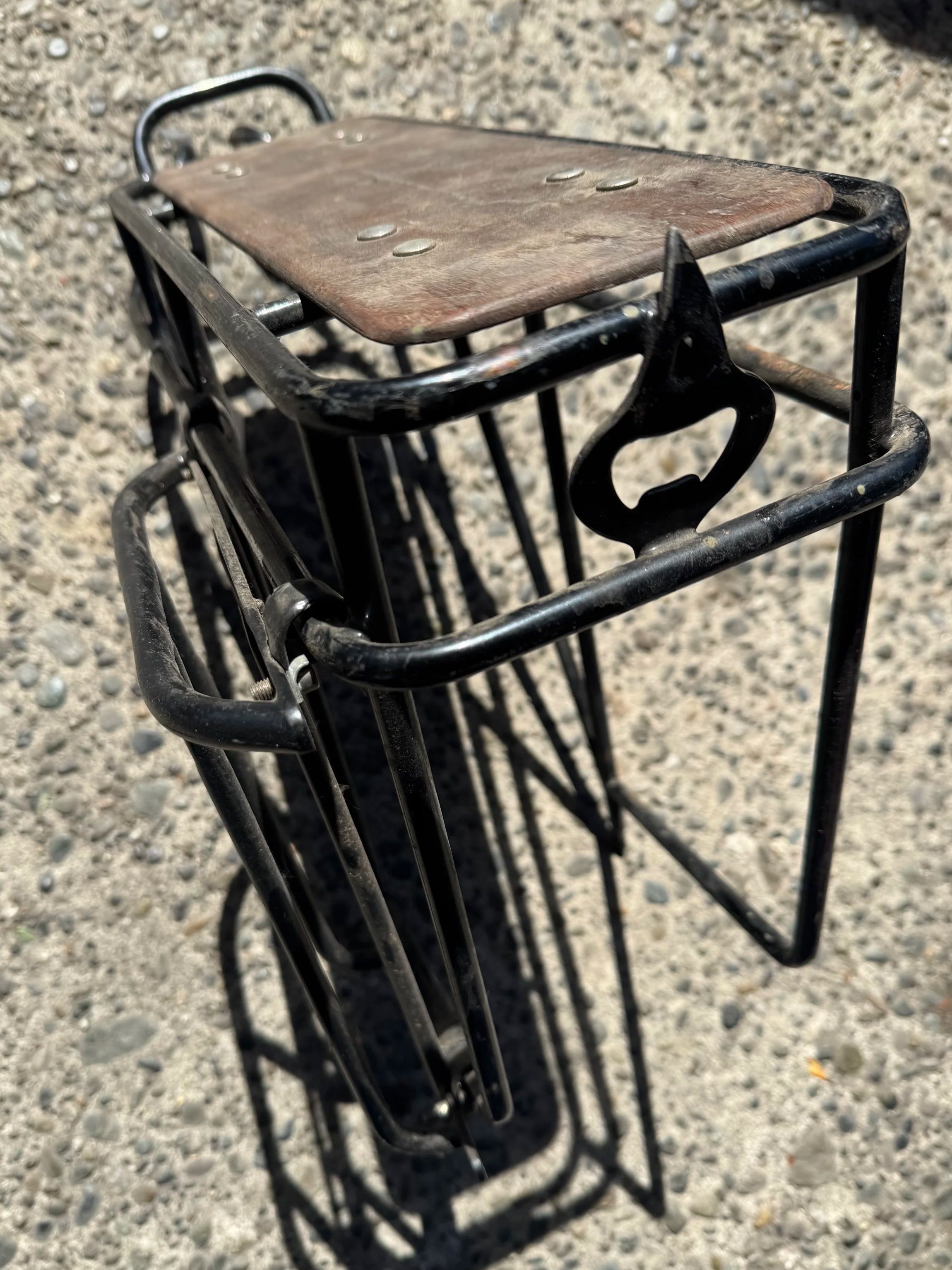
It took me the better part of two weeks to bend and notch tubes and braze all the pieces together, perhaps far longer than it should have. I savored it. Every step of the way I stopped and ogled what I’d just done. I couldn’t get over how progressively more amazing it was. Look, I said to myself. Look what I’ve done! I made the upper deck perfectly parallel to the ground, no listing, no dump truck dumping. I had to be creative with the upper attachment points because the rack mounts on the frame were too high, but I did OK with it. The fit was solid, no weird adapters required. I brazed a bottle opener on the back almost like I’d invented it. How had anyone ever opened their beer before I came along? A celebration was in order!
To me the whole process was purely love-powered, it felt like puzzle pieces falling into place in my soul as I formed, fitted, and brazed each tube. Every addition increased the rack’s beauty tenfold. And, crazier still, I was doing it, it was me making this beautiful thing. I’d been so certain I was incapable, like I knew beauty existed but it was not for me to have, to hold, definitely not to make with my own hands. It speaks volumes to how lacking in meaning my work had been to this point. Washing dishes, mowing lawns, cleaning up after others, cooking eggs, cashiering, folding boxes, sweeping floors, stocking shelves, chopping onions, cleaning up dog shit, so many minimum wage ways of trading my time for things that mattered to no one, least of all me. I was famished for something like this.
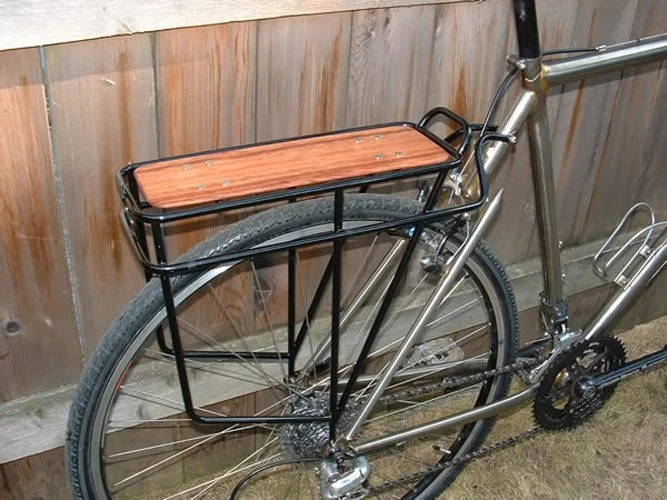
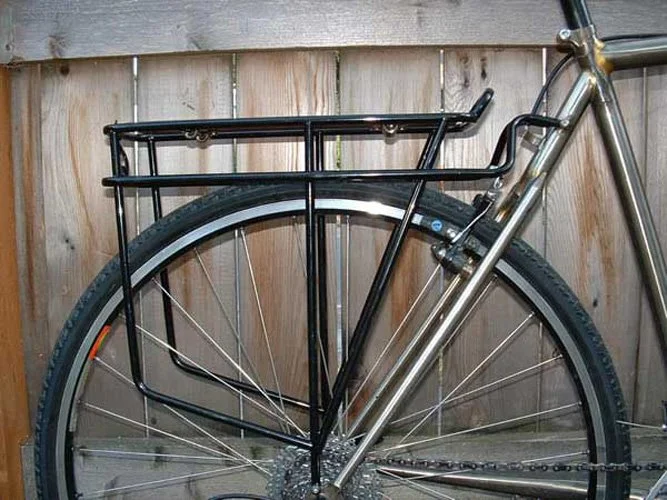
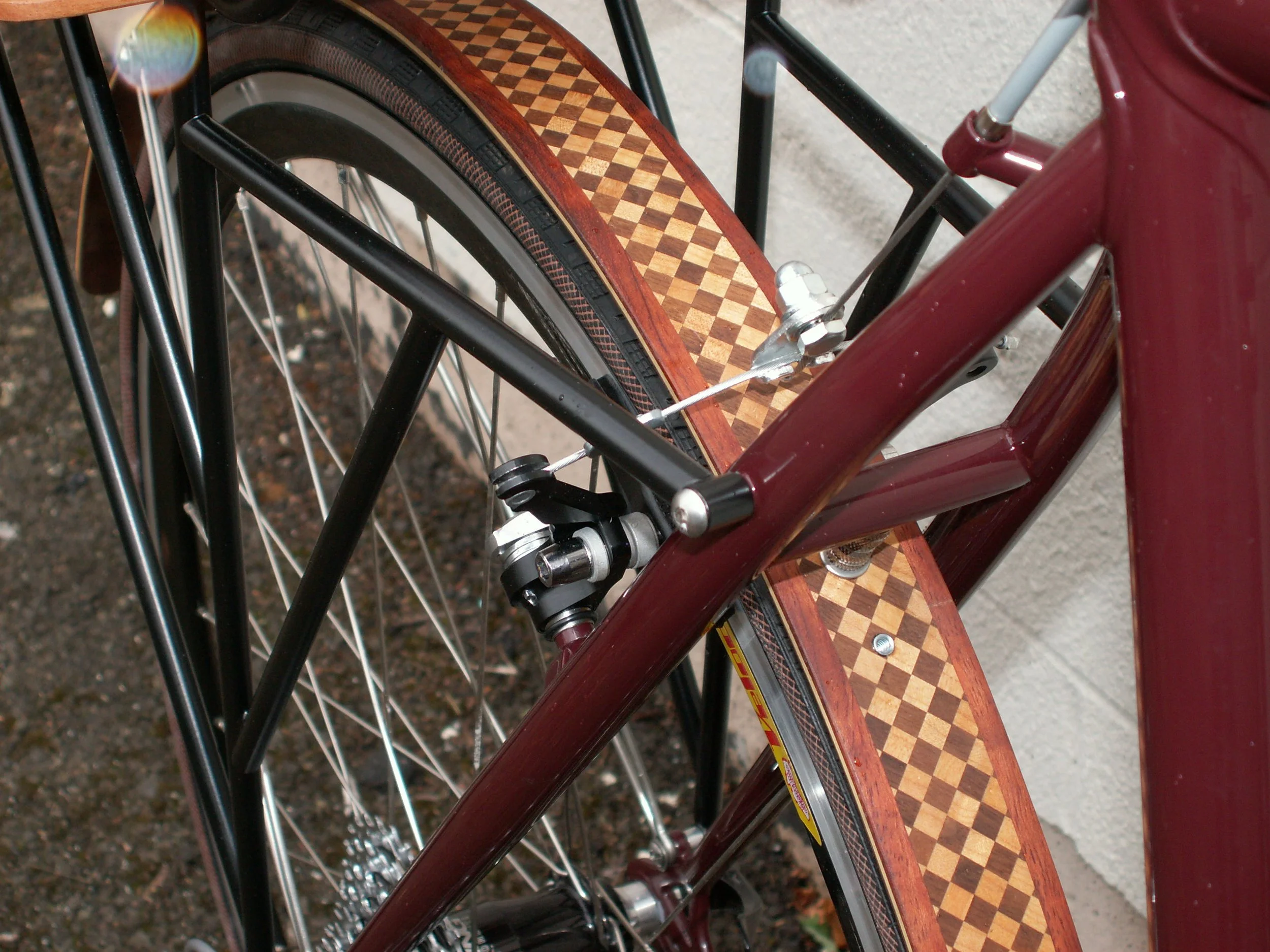
Dave G.’s fancy Full Wood Fenders
By this time I worked at River City Bicycles (RCB), which turned out to be the best — and last — hourly job I had before I started working for myself full time. The owner of RCB, Dave G., had a side project making and selling beautiful wooden bicycle fenders. To finish off the rack I asked Dave if he’d cut a wooden base plate. I gave him dimensions and he cut it from a piece of Ipe, pronounced “ee-pay,” a weather-resistant hardwood, which I carefully drilled and bolted down.

Once the wood was on there and the rack fitted to the bike I leaned it up against the fence outside William’s garage and popped open a beer — and yes, it was so easy to open because of this new invention I’d installed on the rack! It was a sunny Portland afternoon and I sat in the yard and stared at it for hours. The bike, the rack, individually, and all of it together. I could hardly believe what I was looking at. I periodically went close and traced its lines with my fingers as though I needed to make sure they were real, then I’d move away again and savor the overall picture. I probably drank an entire six pack while admiring what I’d made, and stayed out there until it was fully nighttime. I thought it was the most beautiful thing I’d ever seen on a bicycle and in an unexpected way it completed the whole picture. My freakish bike had just needed this one piece to bring it all together and attain something approaching elegance.
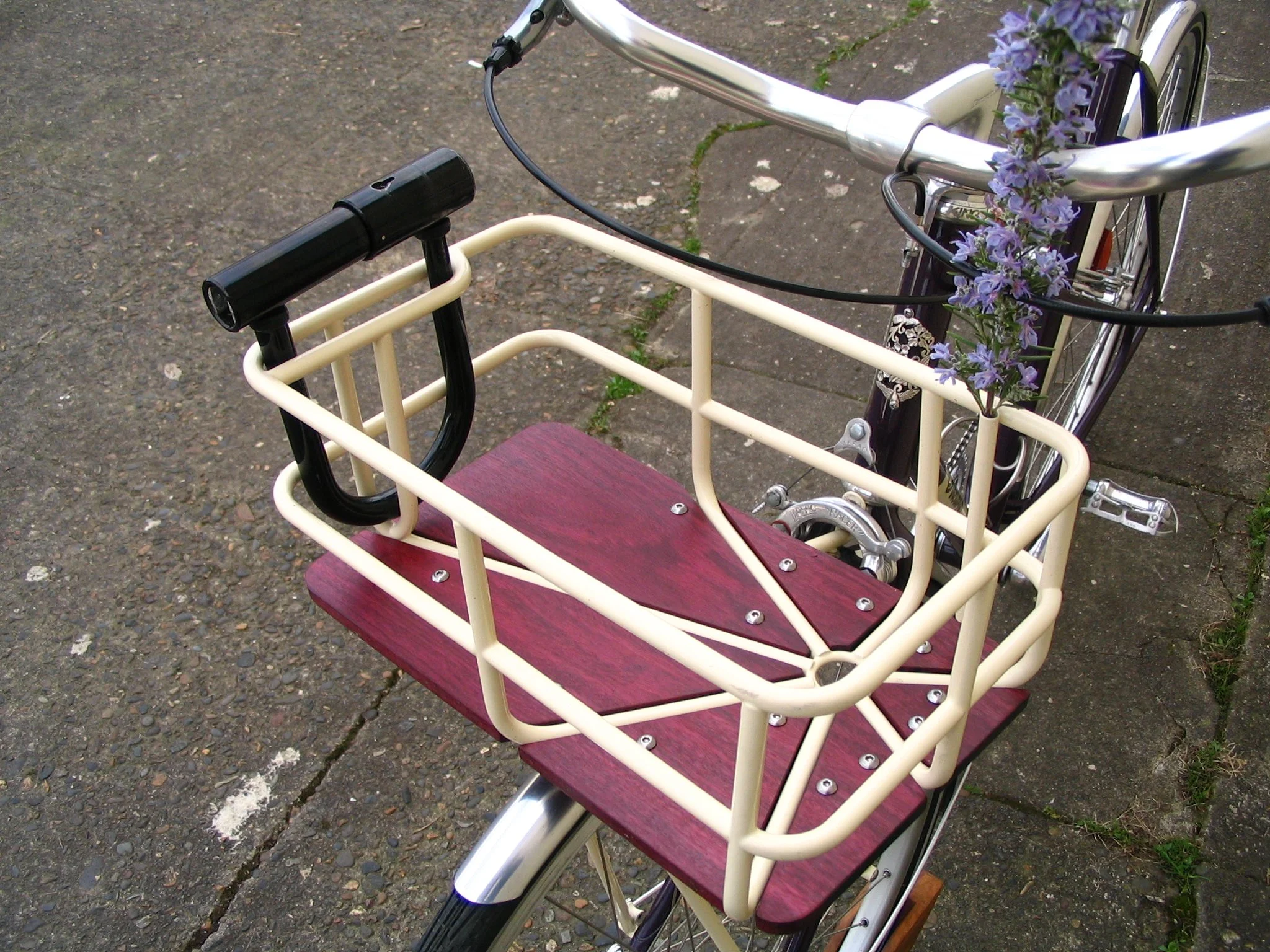
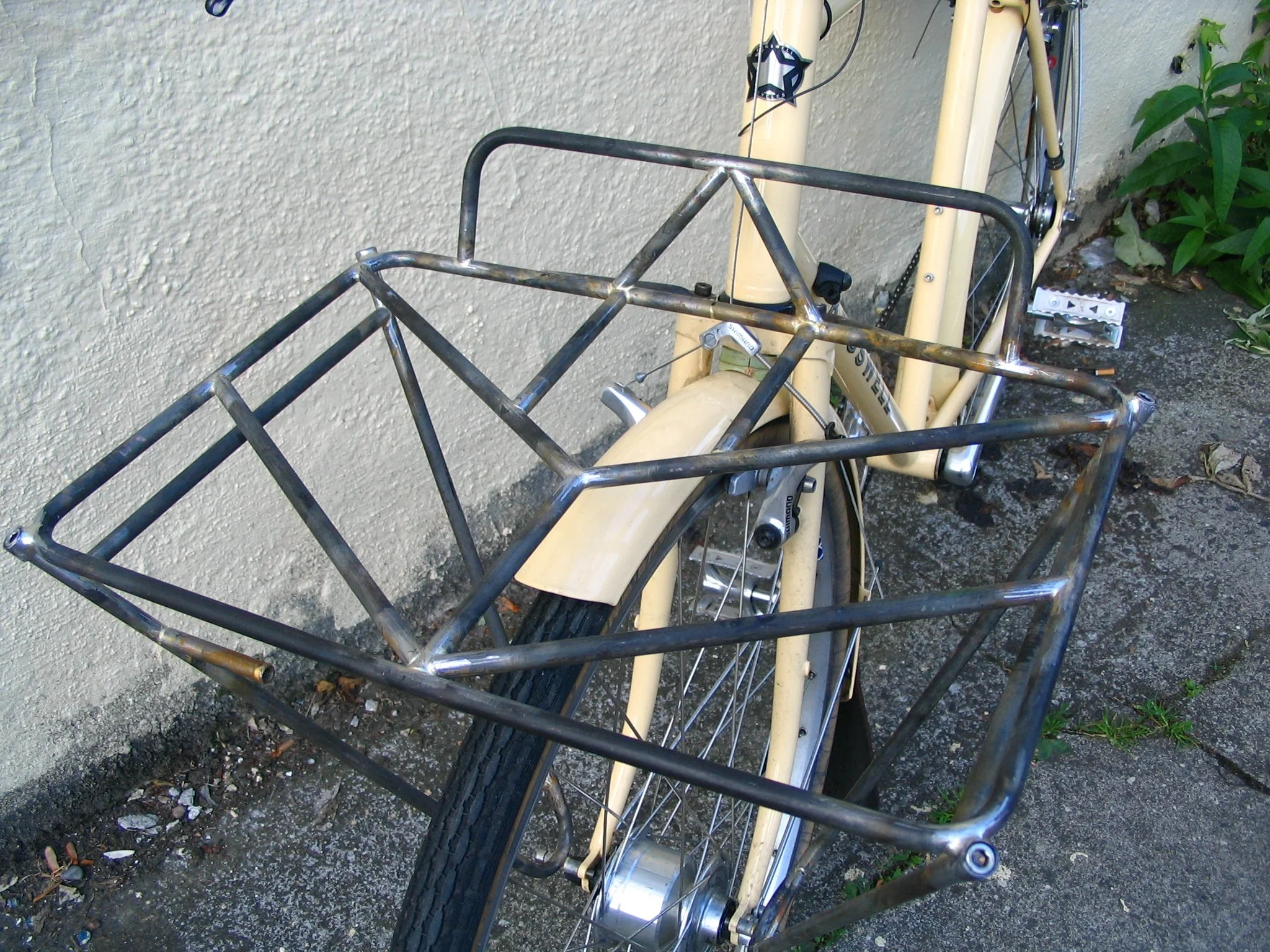
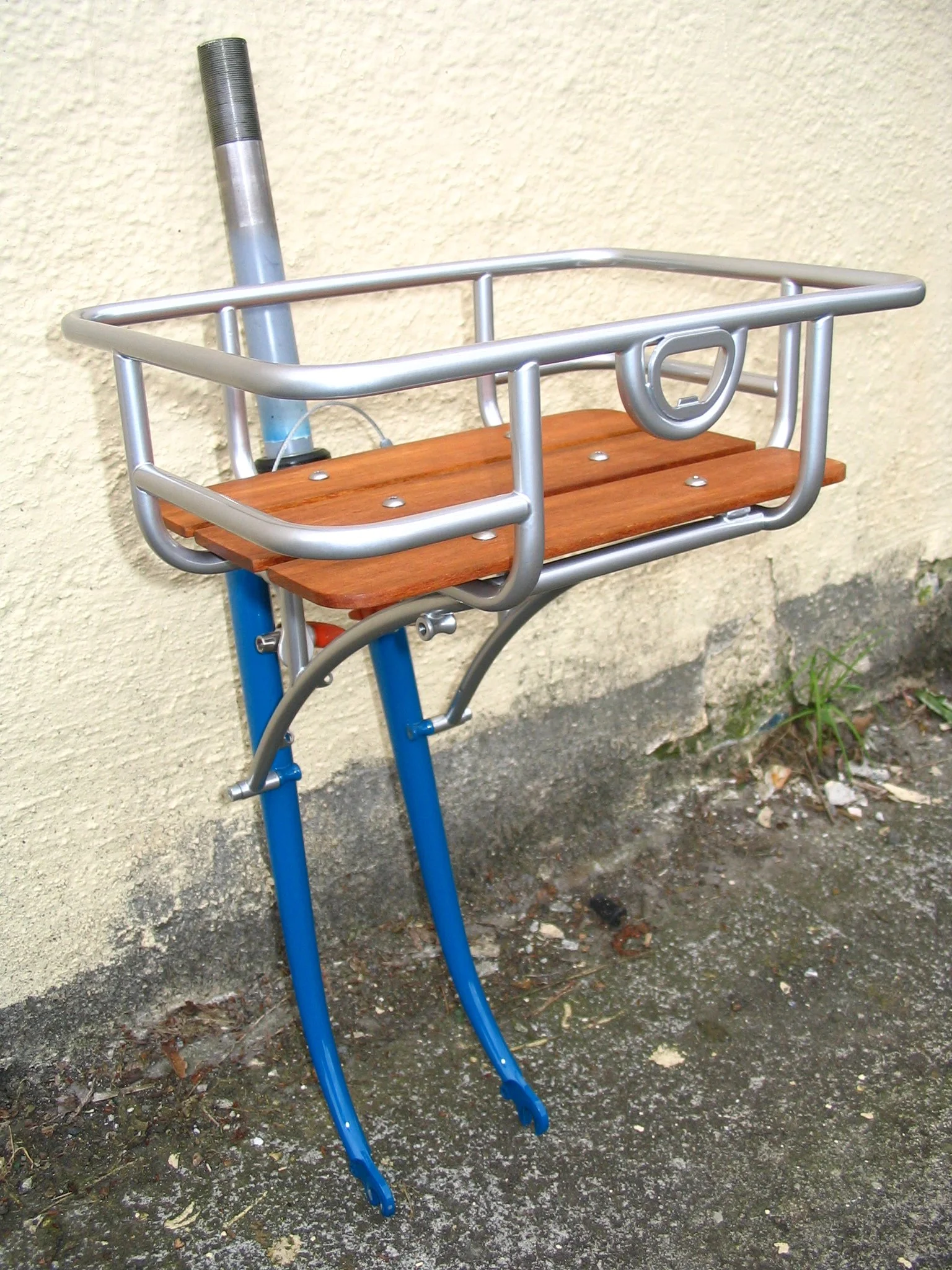
Sunburst basket design made for someone special
After this first rack I was hooked. In the creative arena of rack making I could do whatever I wanted, make whatever I envisioned, and in the end, so long as I did my part decently well, brazed the joints solidly and built it relatively straight, that’s all that mattered. The aesthetic would follow the function and leave room for a bit of flair and individuality. I’d never before been given the opportunity to be creative in this way, definitely not as a job. And straight away people started offering to pay me for racks. Bike people saw them the way I did, as something that enhanced the sexiness of their rides rather than being these dumpy things bolted on like a bad afterthought.

Many basket style racks, orders flooded in
Early on I discovered how difficult it was to make bicycle frames and to get them right. The learning curve was so much greater than with racks. The number of steps to make a frame, the materials expense, just generally the stakes were higher, and there were already so many great bikes and bike makers in the world. My tool skills just weren’t there. I’d yet need years of practice.
But racks! The field was wide open, nobody I knew was doing it properly. Bruce Gordon (RIP), maybe, but his designs were standardized, and as functional and “right” as they were I was sure I could take things further. I didn’t want factory repetition, I wanted art!
Rack making is hard work, it’s fussy and tedious, requiring patience and persistence, but I had nothing else going. I would have worked myself down into the dirt if only I could have done something meaningful. Rack making felt achievable, accessible, and it offered plenty of space for creativity. And better still, it taught me the same tool skills I needed to get better at making bike frames. I once described it to my friend Alex by saying that each rack I build is like making a couple-three little bicycles, it has at least as many tubing joints, and all the same kinds of steel cutting, fitting, clean up, and brazing. So much good practice while making something practical. A win/win for sure!
A few more words on Karma, if I may. I’ll keep it short, and say that just as bad acts may beget bad outcomes, curiosity, creativity and the desire to bring beauty into the world begets joy and love, which in my humble opinion is where we find meaning. To simplify, you aim for good and good comes back to you. I’ve been lucky in about ten-thousand different ways, just to have made it through the first half of my life. And then getting the chance to do this, to work for myself, be creative, and make things, has been one of the most significant. Racks and bikes, amazing. How lucky is it that my everyday question is something like, how can I be in service to meaning-making today? Where’s the beauty and how can I achieve it?
My life isn’t all about making racks — thankfully! Or bikes for that matter. But I’ve learned to rely on them as a practice, and a way of asking and answering these existential questions. Each rack and bike, each step in the process, when I focus in it’s a way of honoring the search. And for me, in my simplified little world, bike and rack lessons translate. I ask it what it wants to be, build it, put it out in the world, and start over, again and again. It’s real, and it’s a metaphor. Both.
Whether I’ve succeeded or failed isn’t really my place to say, and it doesn’t matter because it doesn’t ever end. Even when I end, the story will keep on. All I can do is do the work, aim for best possible outcomes, keep at it, and share what I find with others.
Thank you for reading! If you enjoyed this brief history and found inspiration in my writing please consider heading over to my Substack account, where I tend to post writing that is more personal and may or may not focus on bicycles and bike making.
And if you’re feeling really inspired and want to leave a tip or a donation as a nod to the time, effort, and energy required for writing, it is highly appreciated. I love writing, and as any writer knows, getting paid for your work feels like a gift and can be incredibly validating, and inspire a person (like me!) to keep writing, keep doing the work. No expectations, of course, but if you can afford it, the gesture is extremely appreciated.