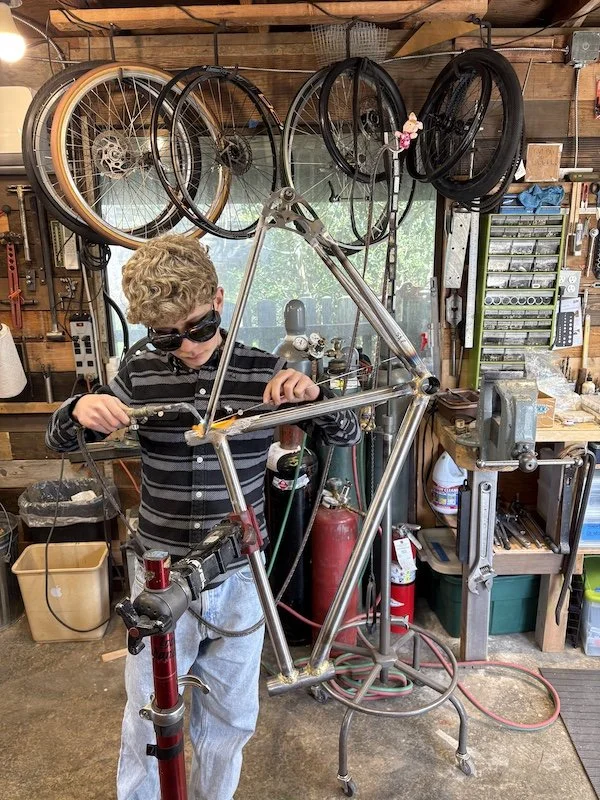
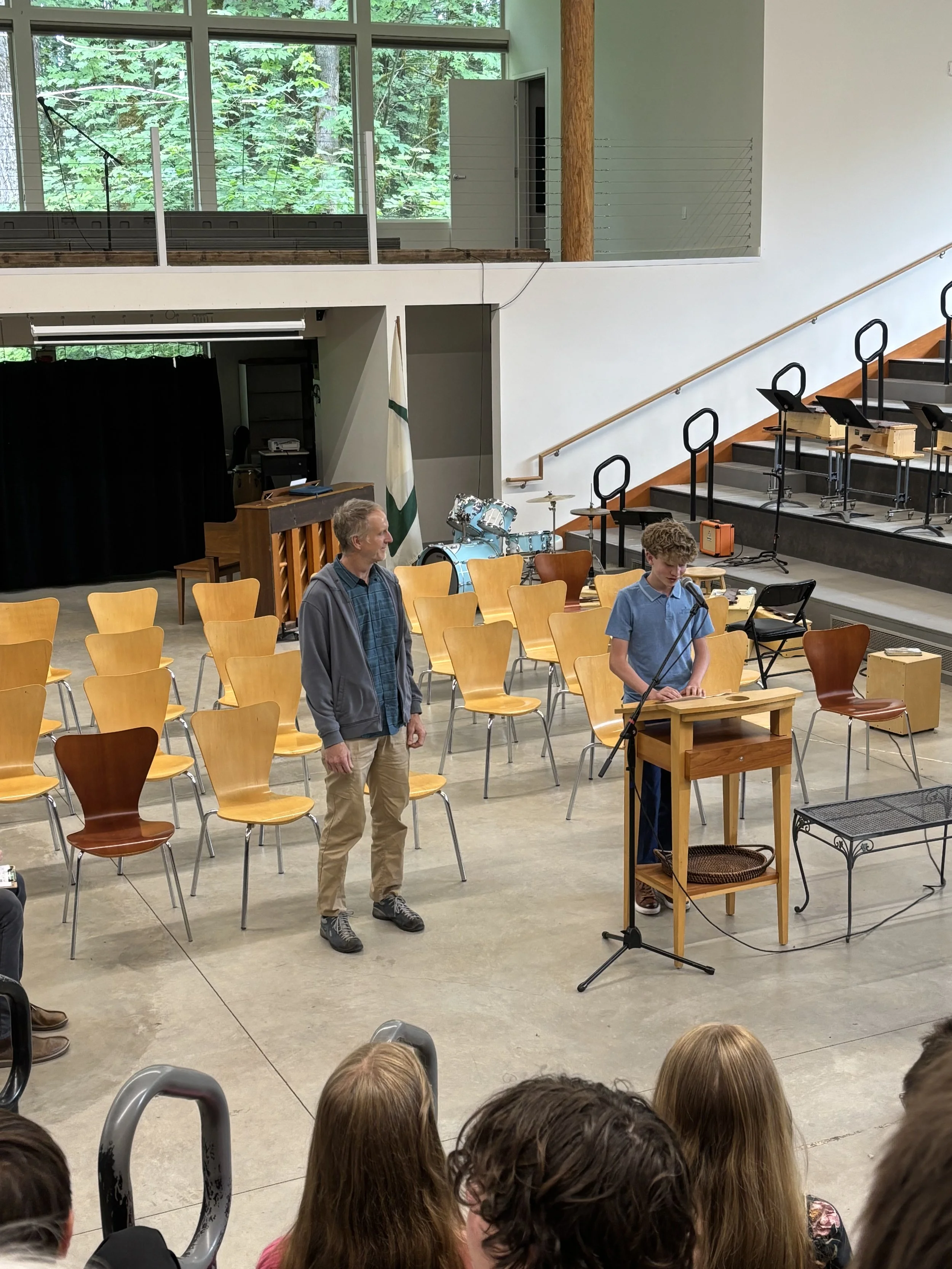
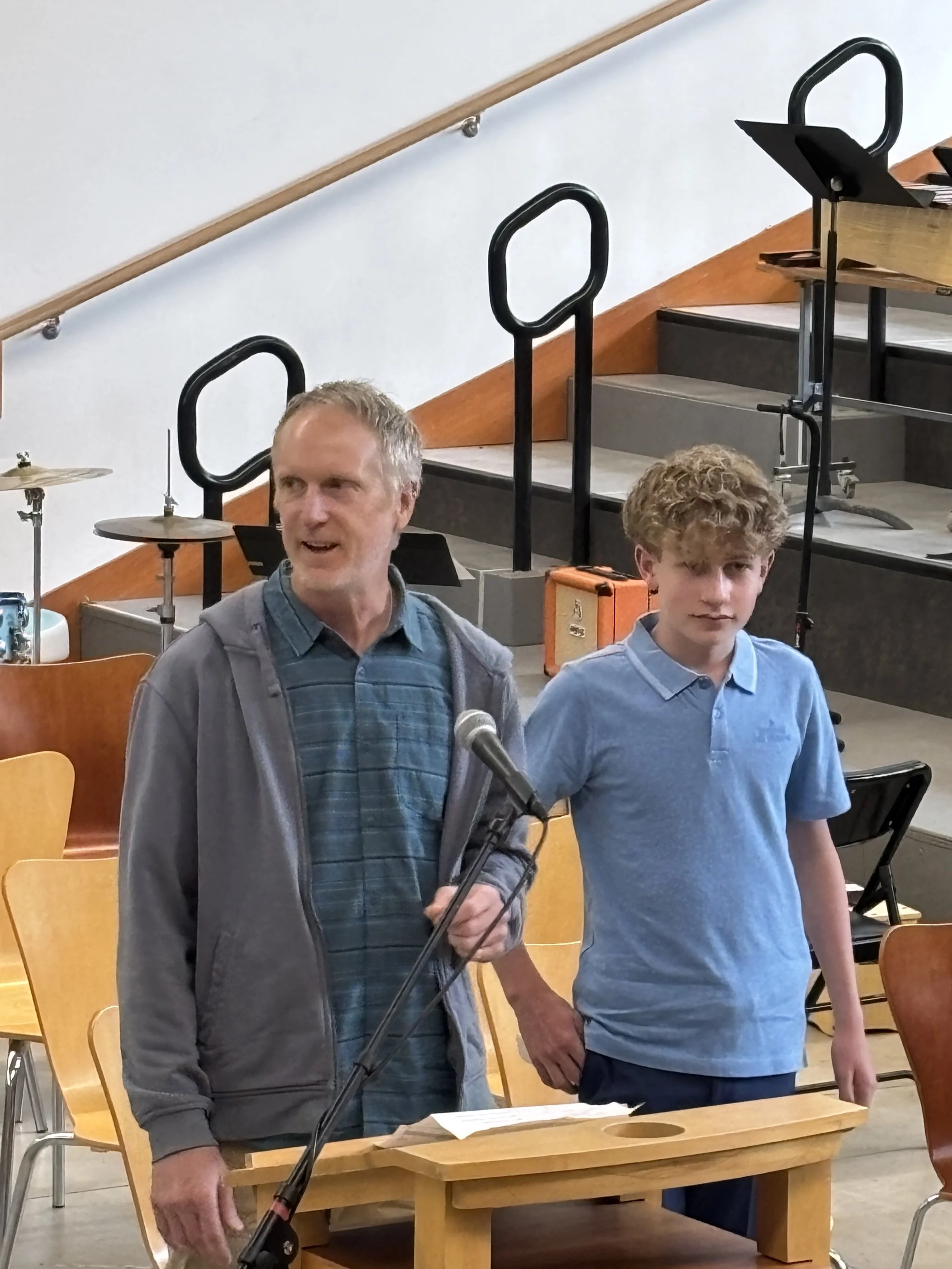
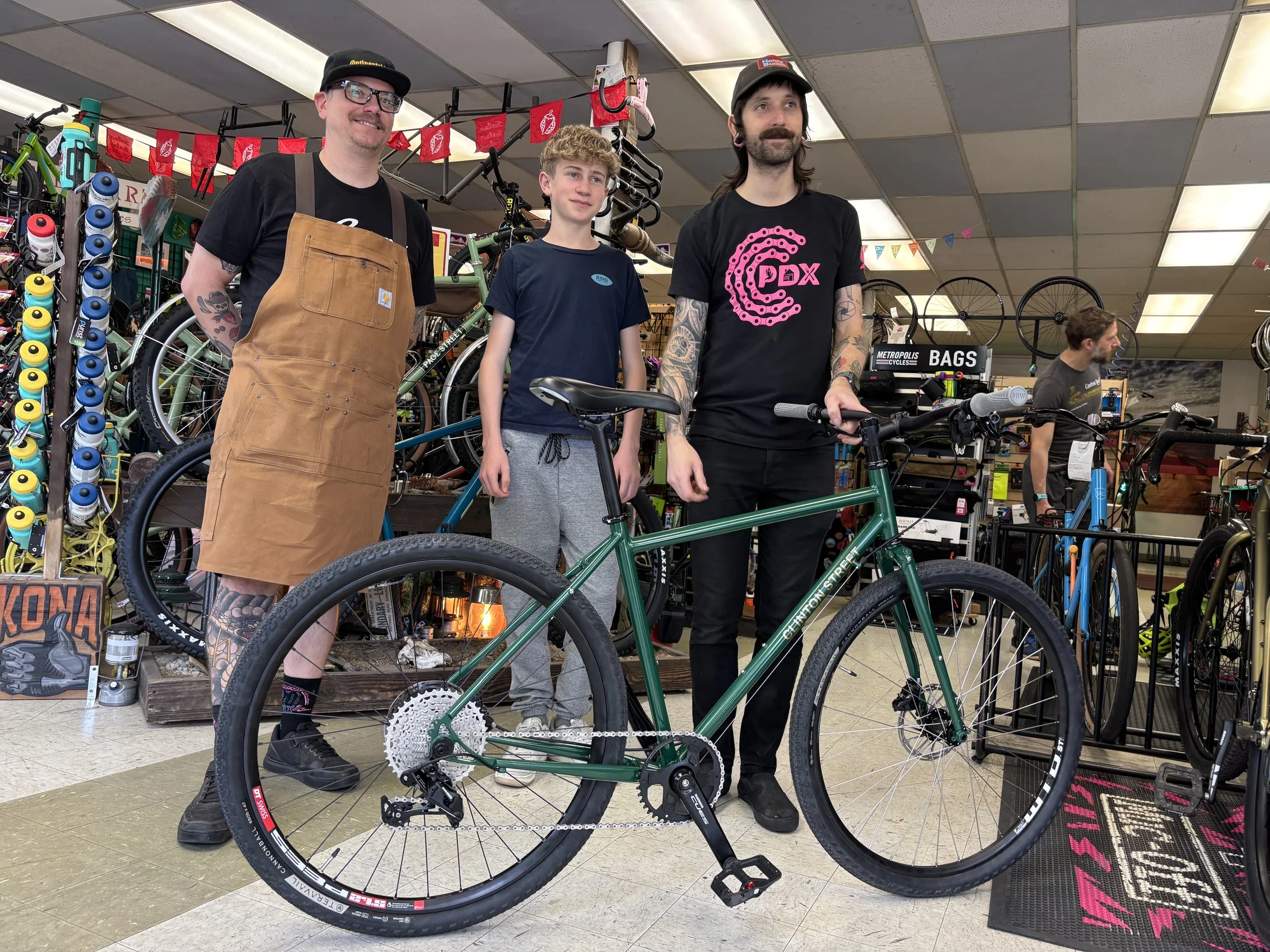
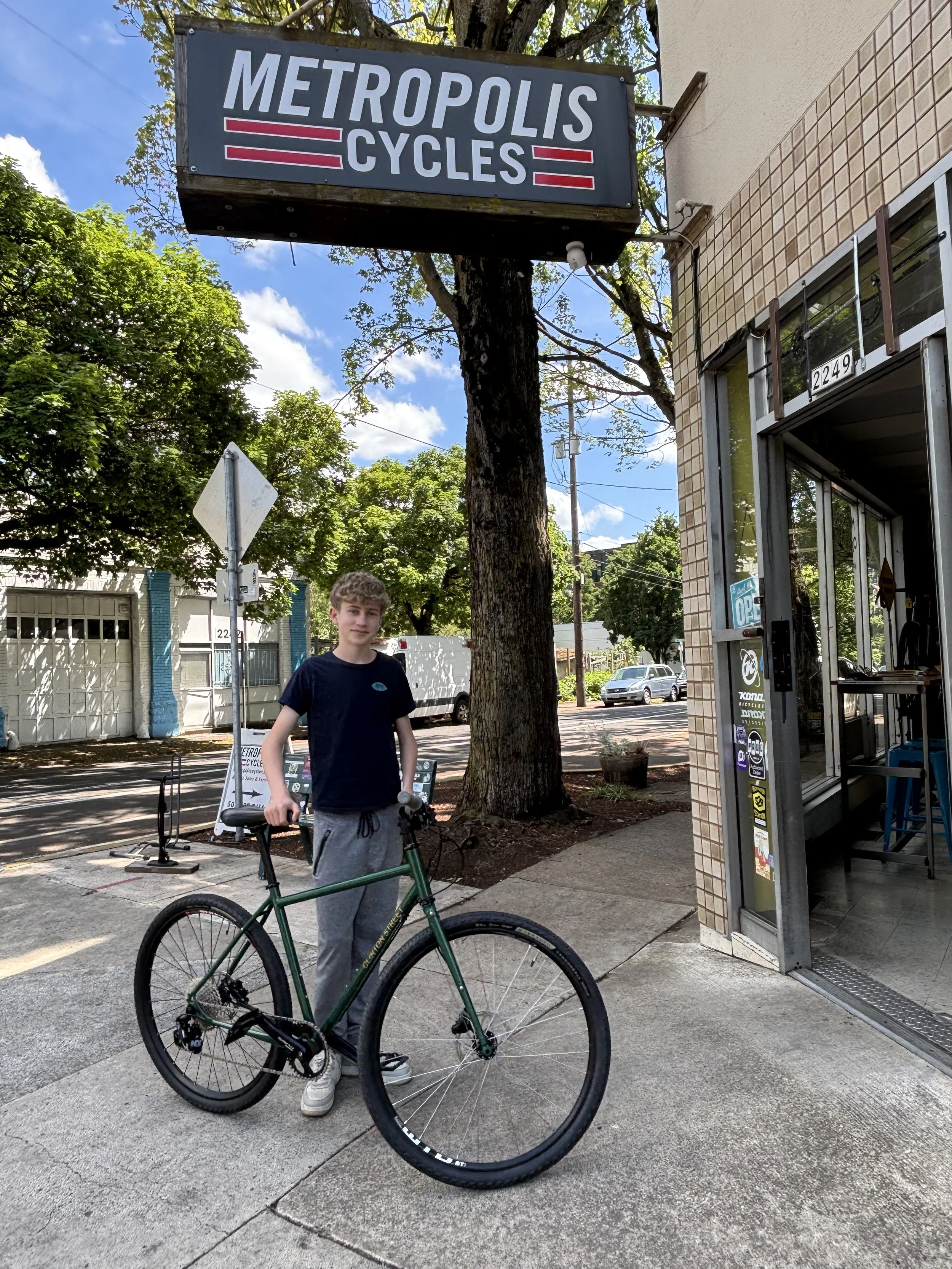
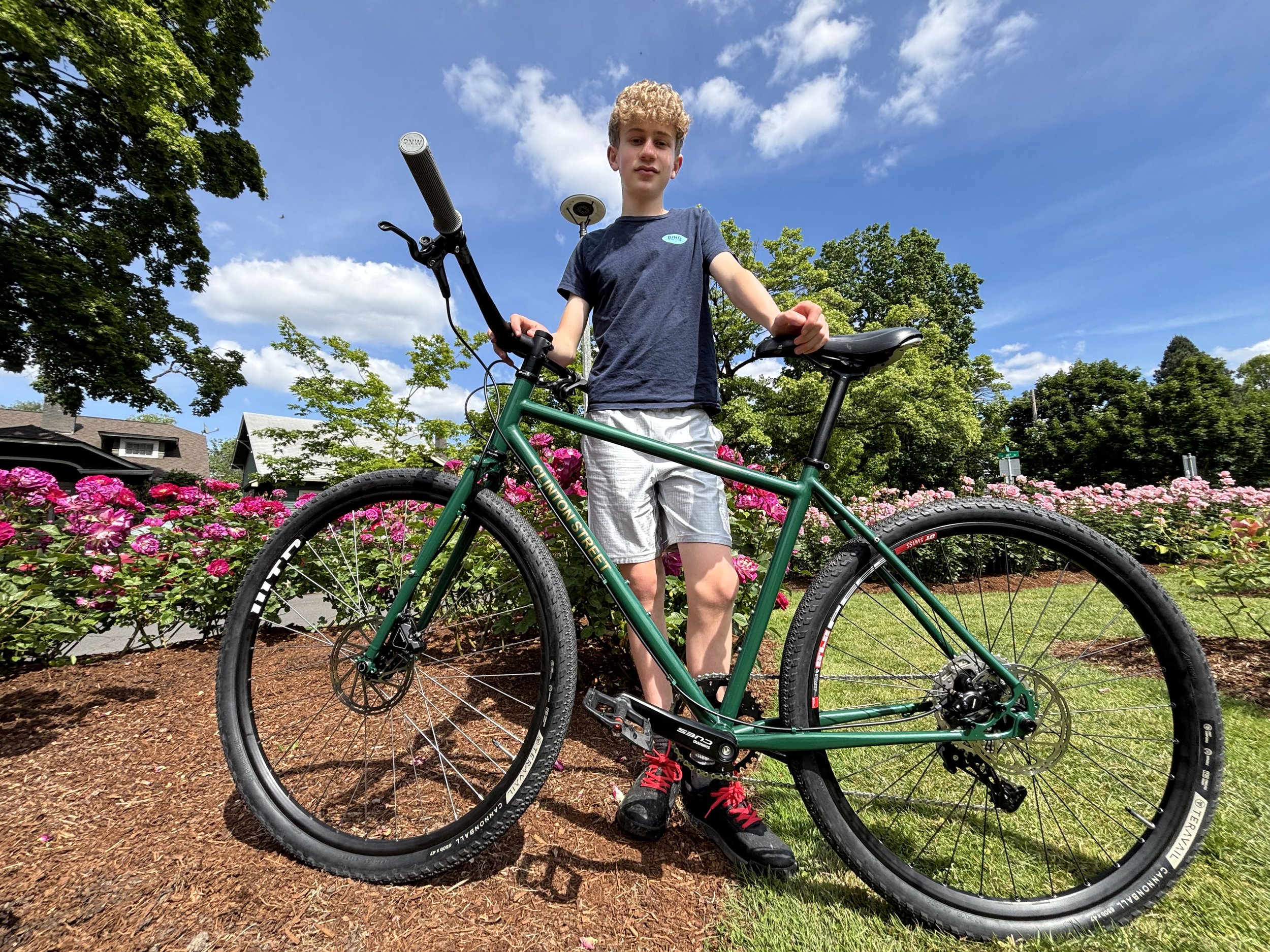
Building BicyclesThis past week I finished up teaching a class at UBI. It was a great group, and everyone took home a frame that they’d built. They all seemed pretty happy at the end. Happy and tired.
Usually on the last day of class we have a discussion about frame finishing and paint, equipment to buy if they want to keep building, lingering questions about the next step to take to set themselves up to build another bicycle frame on their own. If people have questions about the business of frame building I do my best to answer them.
“How do you make a business building bicycles?” That’s not an easy question, and there is a large range of possible answers based on the temperament of the builder, and what sort of business they want to have.
The craft of building bikes holds an image of one person in their shop, using the skills they’ve acquired over the years to hand make each unique frame. It’s a practice and an art, and each finished frame has the unique signature of the builder who constructed it. But this is only one way to do it.
Other business models work toward higher production, which limits the capacities for uniqueness in each bike, but allows the builder to focus on a particular style and repeat it, refining the design process and the efficiency of manufacturing. A different set of skills, it allows a builder to take what they feel to be a “good” bike design and offer it to more people.
But to a new builder, how do you even wrap your head around all this? How can you consider building bicycles as a business when really, you hardly know enough to build a frame from start to finish? All you really know is that it’s hard work, there are about a million steps to it, and at least that many tricks along the way.  Planning Your Bicycle
You probably need to consider the business side of things at the beginning for one main reason, which is that it takes a fairly substantial initial investment to build a bicycle frame. This investment is in time; it will take you months and years to learn the skills needed to build a great bike. And, you'll invest money in the equipment you're going to use. Most people who come to frame building don’t have a bottomless bank account from which to purchase a frame and fork fixture, a vice, files, torch, grinders, a mill, lathe, and the million and one other tools that will assist you in making a bike. What tooling you'll want and need is wide open for interpretation, and is another discussion entirely.
So, what's your plan? Are you investing in tools in the hope that down the road you’ll learn the craft and be able to make the money back? Or, are you saving your pennies and buying the equipment you can afford, knowing that eventually you’ll have accumulated what you need to build another bike, and you just want to have fun with it, build for yourself, for family and friends?
It’s good to have some ideas going into it. It’s also good to be adaptable. Learning to build bikes and making money at it takes a lot of time. Anyone can learn the craft, but not everyone is going to make money doing it. Nor is everyone is going to enjoy the hours spent alone in a shop working.
Another thing to consider: Like any activity that you may love, are you still going to love it when you’re trying to put a price tag on it and sell it to others? Are you still going to love it when you're totally immersed, sort of suffocating in poverty and it looks like there's no way out? I bet if you were to talk to a lot of established builders out there you'd be able to get them to admit that there is some element of ass-stubborn masochism that has kept them doing it for as long as they have. There is love, surely, but there is also something else. Something darker.
Maybe I’ll talk more about the business of building bikes later. But this past Friday, the last day of class, I saw people thinking about their future and all the great plans that were formulating. I didn’t feel like there was enough time to go into an answer in-depth.
 Frame Building ToolProbably the one, most important thing that I’ve learned about the business of bike building over the years is not so much the process of building bikes. That’s important, obviously, but that’s also the fun part, and so is easier to learn. The hardest part for me was learning the business itself.
You have to learn the numbers and how to use them in your favor. How to keep doing it and not starve. How to keep doing it in a way that is sane, sustainable, in a way that isn’t going to grind you into a blubbering pulp on your shop floor.
If you don’t know anything about business, it’s a really good idea to take a business class. Learn something about how to run a business, how to look at your business and see it for what it is. There is a lot of potential for fantasy, the most fatal of which could be: “I just need to work harder, longer hours, I need to make more bikes!” When you’re in the thick of it, there may be truth to this, but there may also be a whole lot of other things to think about, and if your business has a bunch of holes in it, like a colander, it’s never going to stay a-float.
 Happy New Frame BuildersI’m not trying to dissuade people from trying to build bikes for a living, I’m just saying, go into it with as many tools as you can get your hands on. I currently spend approximately half of my working hours making bikes. The other half is all about the business. The tools I need for that are knowledge. Knowledge about all the hidden costs of doing business; knowledge about marketing and shipping and the website and paint costs and branding and consumables and avoiding the millions of pit-falls along the way. Being realistic about what you have, what you need, and what you want, is probably going to be the best way to approach it. Knowledge is key.
Alright, enough said. Happy Monday. And best of luck to all you newly aspiring bicycle frame builders.