Ahearne Cycles

The Lesson: Remembering what's important in teaching and learning

Joseph Ahearne1 Comment

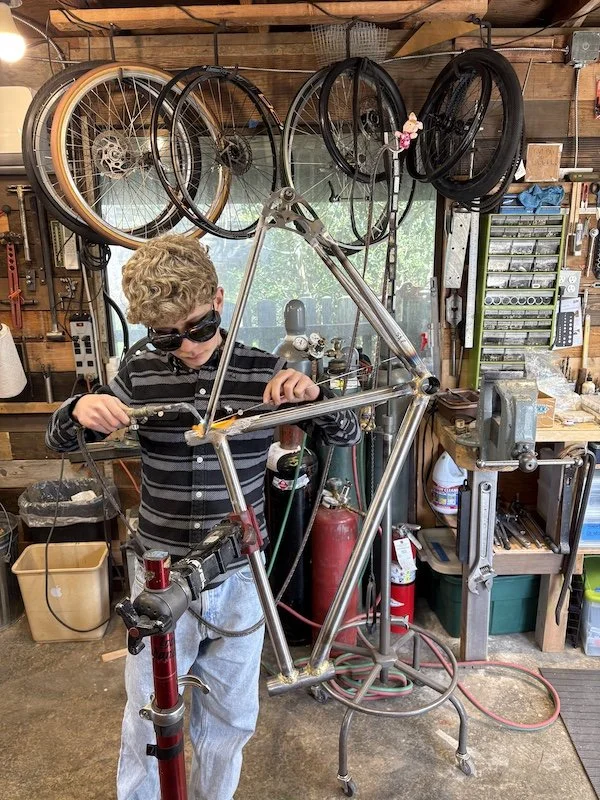
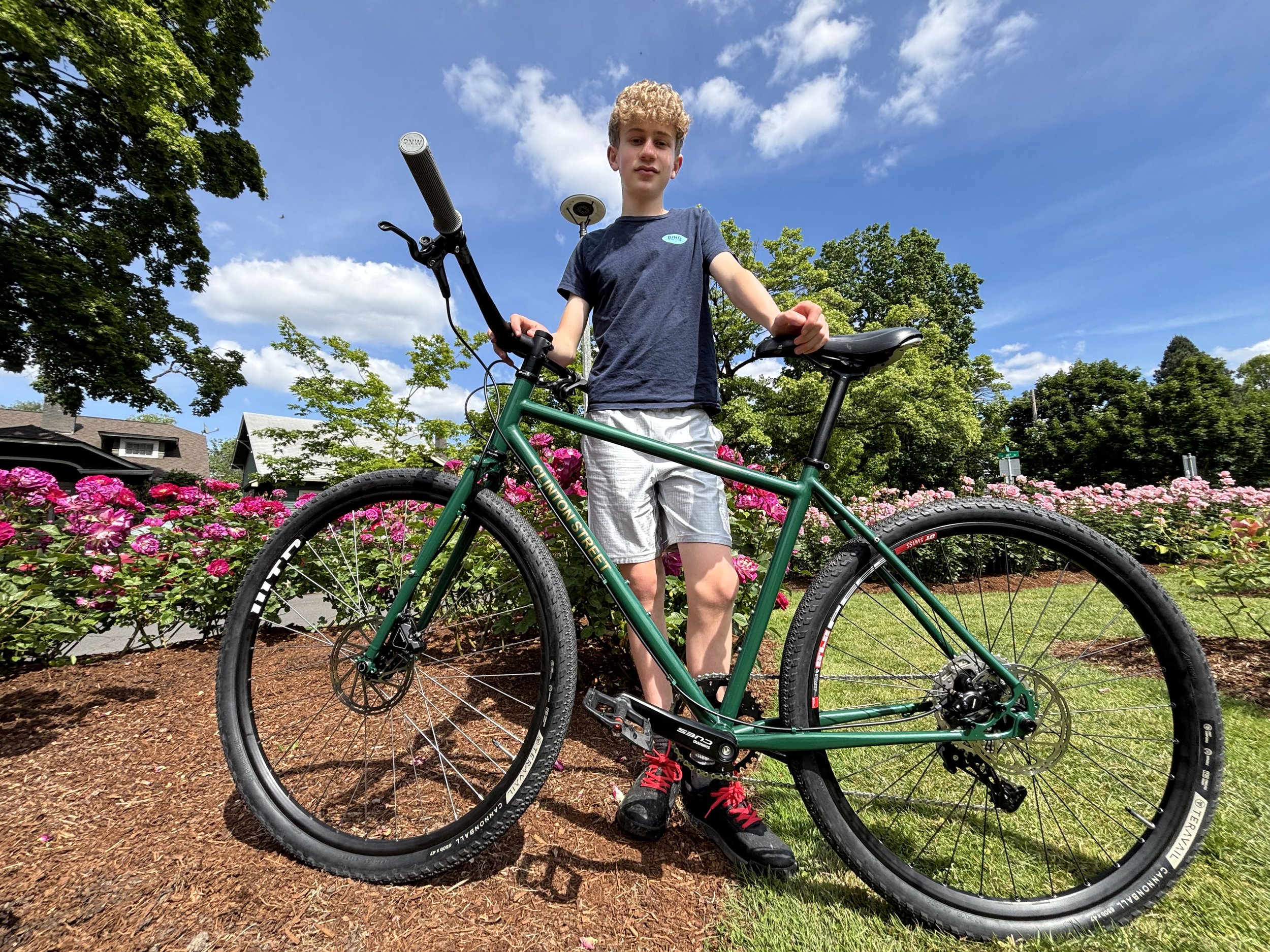
Isaac with the torch work

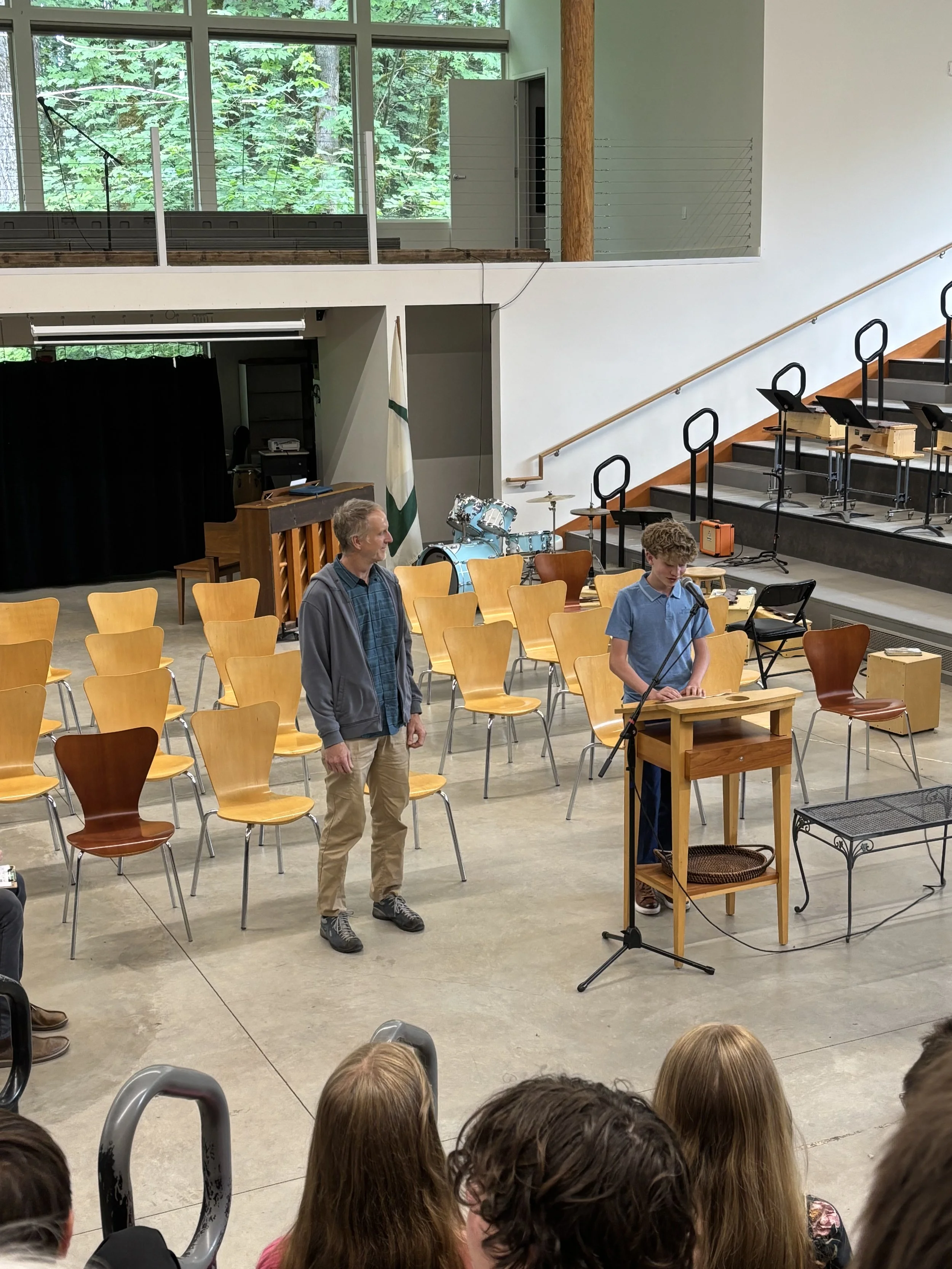
Over the past several months I had the honor of teaching/mentoring this young guy through the process of making a bicycle frame. It was a middle school project he had to complete in order to graduate.

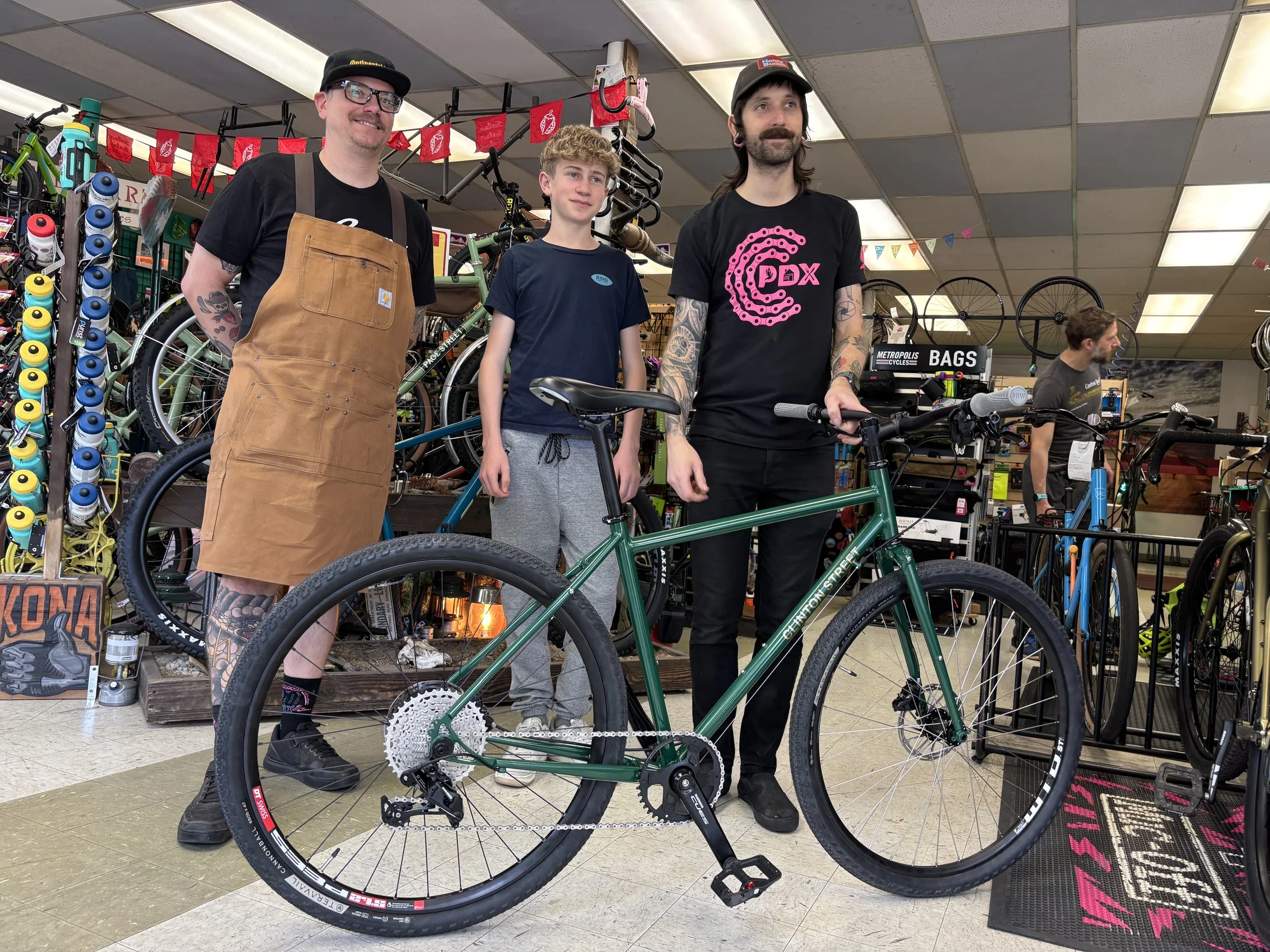
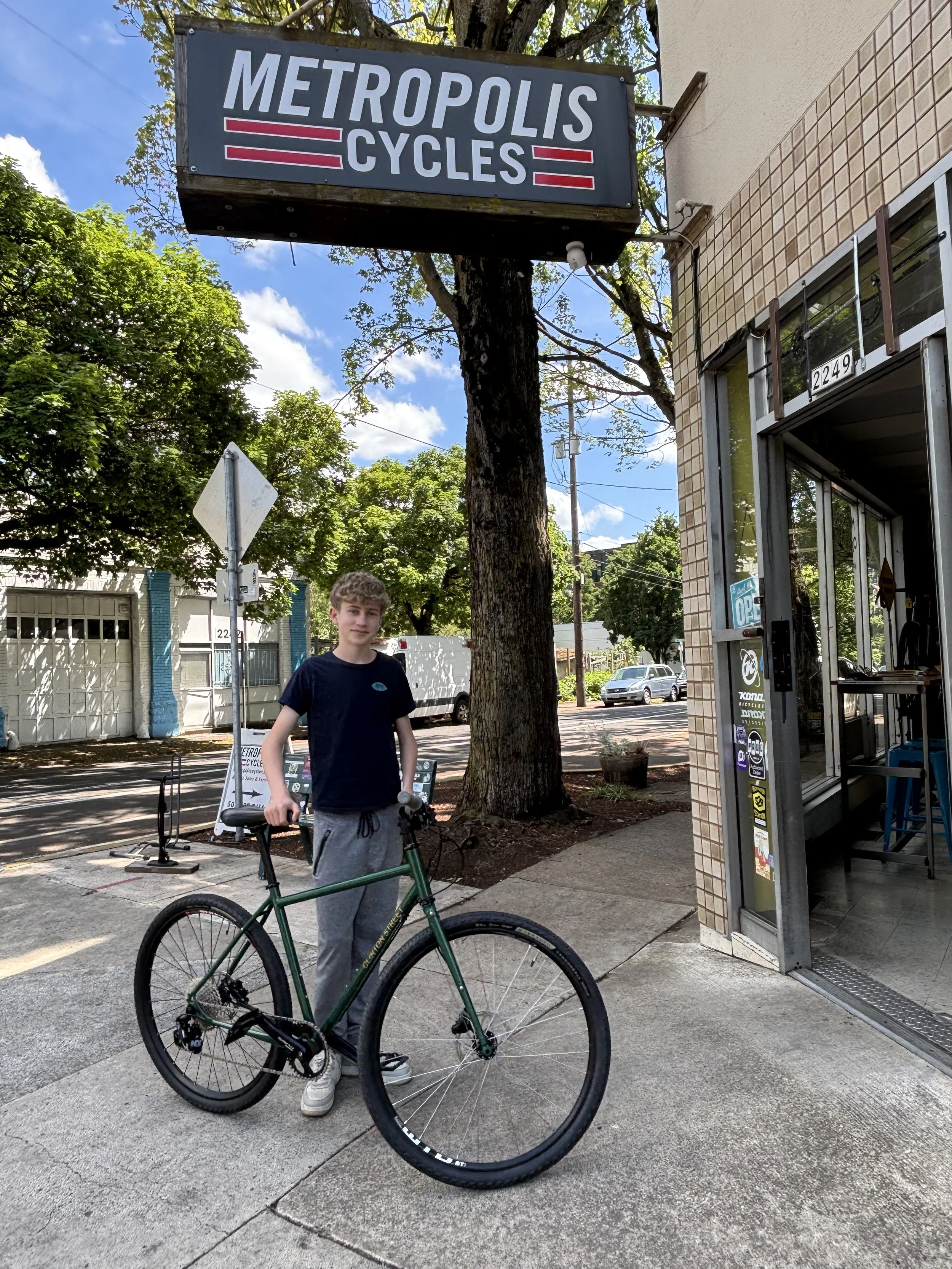
He rocked it, and this coming year he's heading on to high school. Hopefully not before taking the summer to put a bunch of miles on his new bike!

If you’d like to read more about the mentoring process, please click the link below. And if you’d like to hear other stories from me in the future, please subscribe to my Substack account.

The Lesson by Cycles by Joseph Ahearne

Remembering what's important in teaching and learning

Read on Substack

June 15, 2025
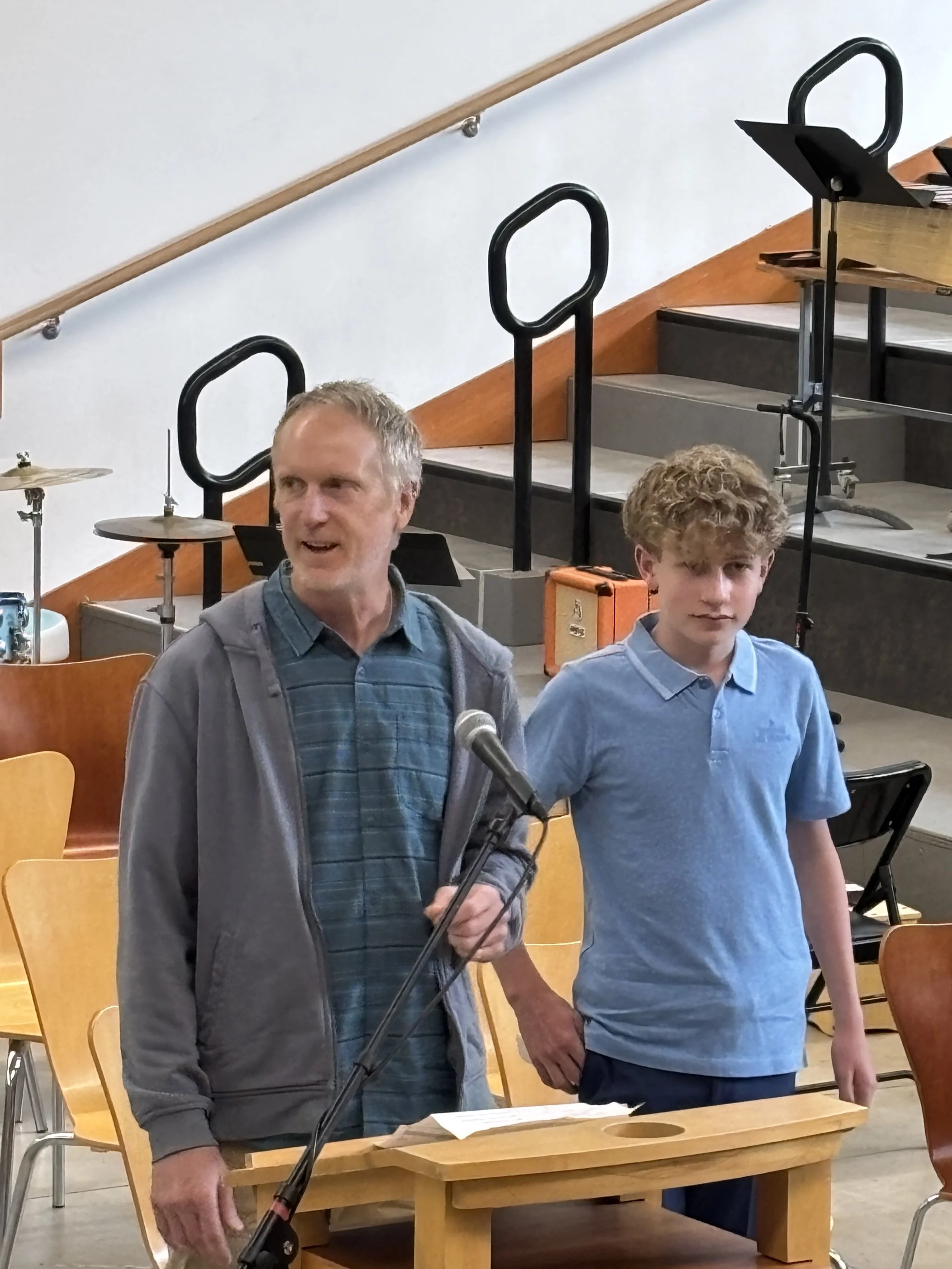
As an update, Isaac officially graduated yesterday. This past week all the students in his class had a presentation day to show off their projects and discuss what it was like, what they learned, and to thank their mentors. The mentors were invited to say a few words about it as well.
It was amazing seeing all the different projects these young people did. One young woman created, choreographed, and put on a dance performance; another wrote lyrics and guitar music which they performed and recorded. A young man sourced local wood and shaped a beautiful surfboard, and another built and wired a set of speakers. Each project was amazing, and the whole event gave me hope for the future. These young people are so inspiring.

A huge thanks to Metropolis Cycles for their help in finishing out the assembly and dialing in Isaac’s bike. You folks are the best.

As always, thank you for reading and supporting!

A job well done

Some Wins

Joseph Ahearne1 Comment

Writing on Life and Death

Note to readers: This writing is more personal than what I usually post here. I love to write and tell stories, and I’ve tended to post mostly bicycle-centric writing. They are personal in the sense that they’re my stories about bicycles, but there’s an invisible line I’ve drawn that delineates between what I’ve thought is appropriate for a bike-biz website and what’s personal. This is my problem, not yours; I understand that I am my business and my business is me; we are separate, but we’re also the same. Here I’m attempting to bring them closer together. If you’re only interested in reading about bikes you might want to skip this post and wait for the next.

This is an extended excerpt from a piece I recently posted on my Substack platform. Often, but not always, there’s a bicycle somewhere in my story, just like there’s usually something bike related in my life. But, you know, I lived a lot of different kinds of lives before I began making frames and racks and the rest, and some of these stories I think are worth telling. It’s up to you to decide if they’re worth reading.

If, by chance, you do, please head over and sign up on my Substack account and you’ll get the latest writing from me on bikes and life and all the rest.

Thank you for reading. Every shared story is an opportunity for connection, and here we are.


Some Wins

Sometimes when I sit down to write I become paralyzed by the number of possible things to write about. It’s a small existential crisis that can happen when I’m confronted with a blank page. Like, why would I write about one thing and not another? I could write about my new garage or the collapsable rear rack I’ve built for a travel bike. I could talk about the struggles of self-motivation in the winter when it’s cold and dark, or I could tell you about my friends who recently drove down from Seattle and nearly died in a car crash. I could explore the current political nightmare unfolding in this country, although I don’t want to bore you, or myself, nor do I want to make myself throw up.

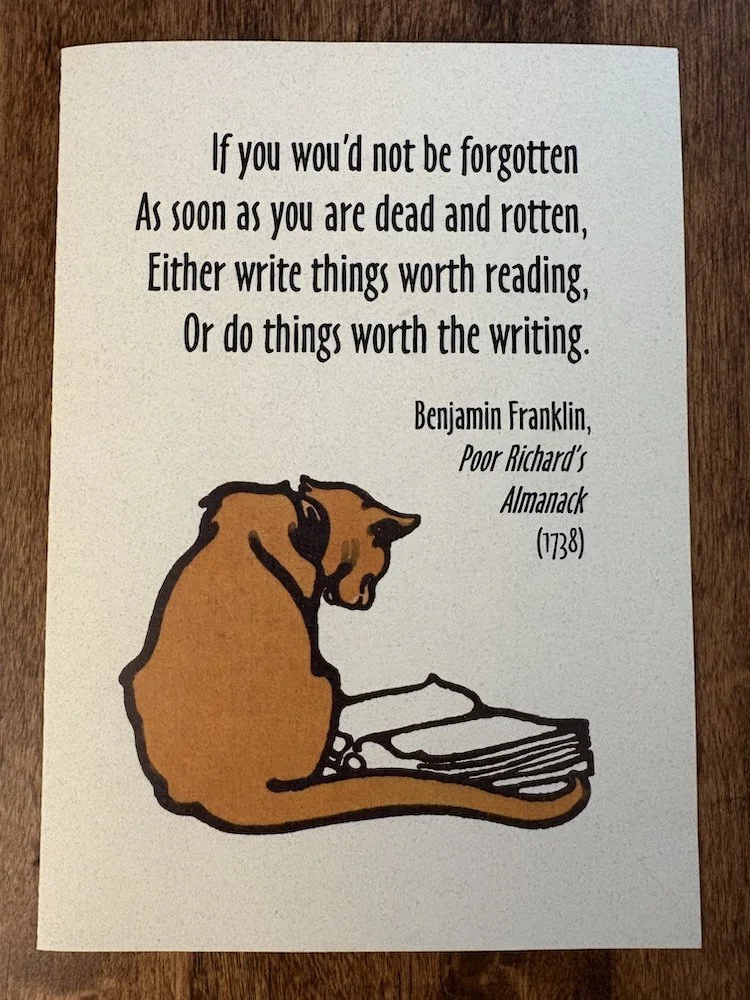
Ben Franklin said it well

Maybe you can imagine me sitting here in front of my computer at around 5 in the morning with a cup of coffee steaming beside me, hands poised over the keyboard, a brand new document open on the screen, all white space except for the little cursor blinking steadily like a timer telling me how much of my life is passing. I can sometimes sit frozen in this position for ten minutes, twenty minutes, my fingers not moving, my body leaned slightly forward as if into a swirl of ideas, waiting for the first words to materialize. All I need is a single word or phrase to flutter out of the fog and inspire my fingers to type.

When it’s the bleak period in the middle of winter and I feel stuck, lost, unmotivated, rather than getting hung up on what I’m not doing, a helpful practice is to recount wins. Big or small, it doesn’t matter. Just acknowledging that I have done a few things besides lay around mouth breathing, eating bonbons on the sofa or whatever. I’m an active person, I like having projects and problems to solve, questions to answer, things to make, ideas to explore.

Let me recount some wins.

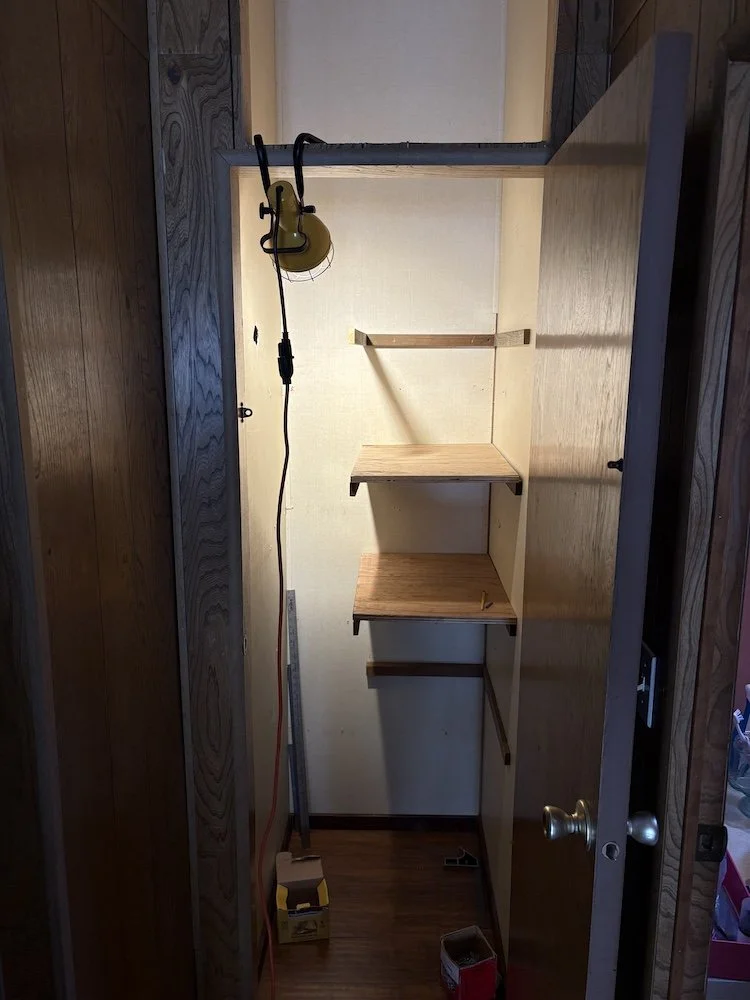
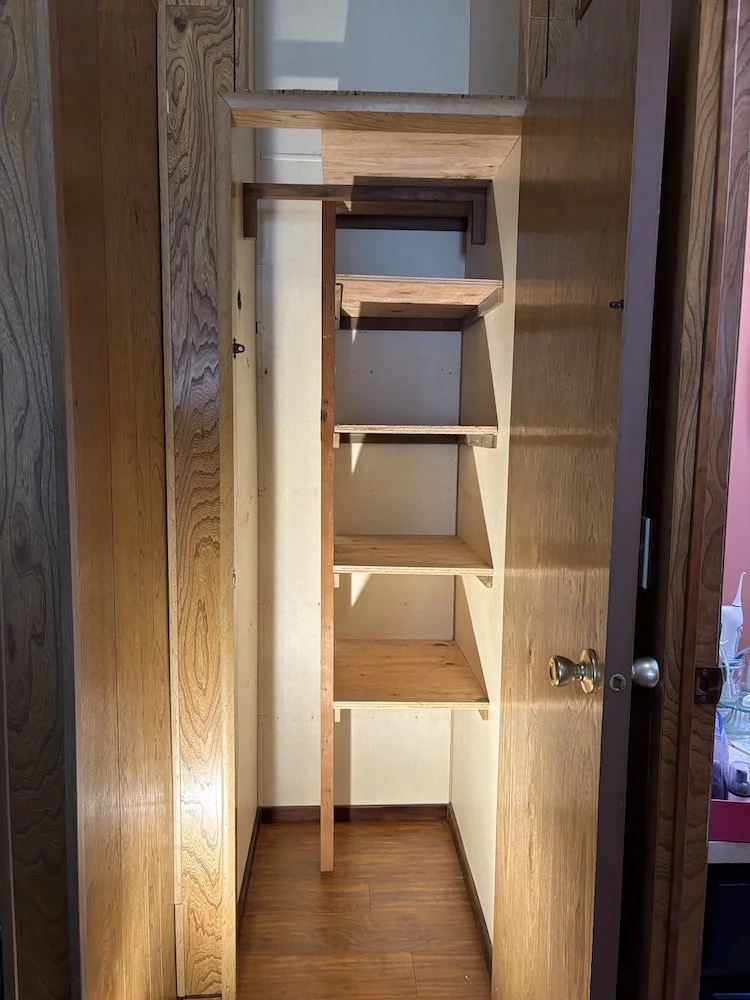
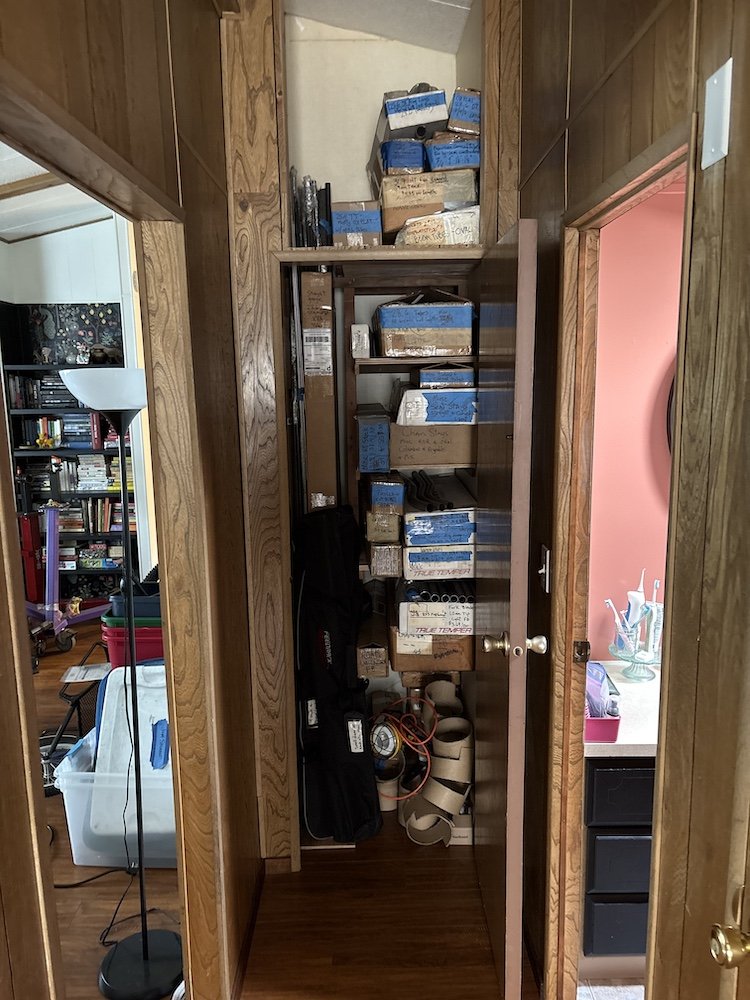
1) It took over a week, but I was able to organize and consolidate my steel tubing. I sorted everything by diameter and shape, marked each tube, gathered like with like and stowed them in boxes. Doing so allowed me to mostly clear out the back bedroom of my house, which has been a catch-all cluster-F since I moved in. I’ve been saving this one closet just for my steel, a dry space to help with rust prevention. I built sturdy shelves in it and can now easily see and access my inventory. Simply knowing what I have is amazing. Organization is definitely a win.

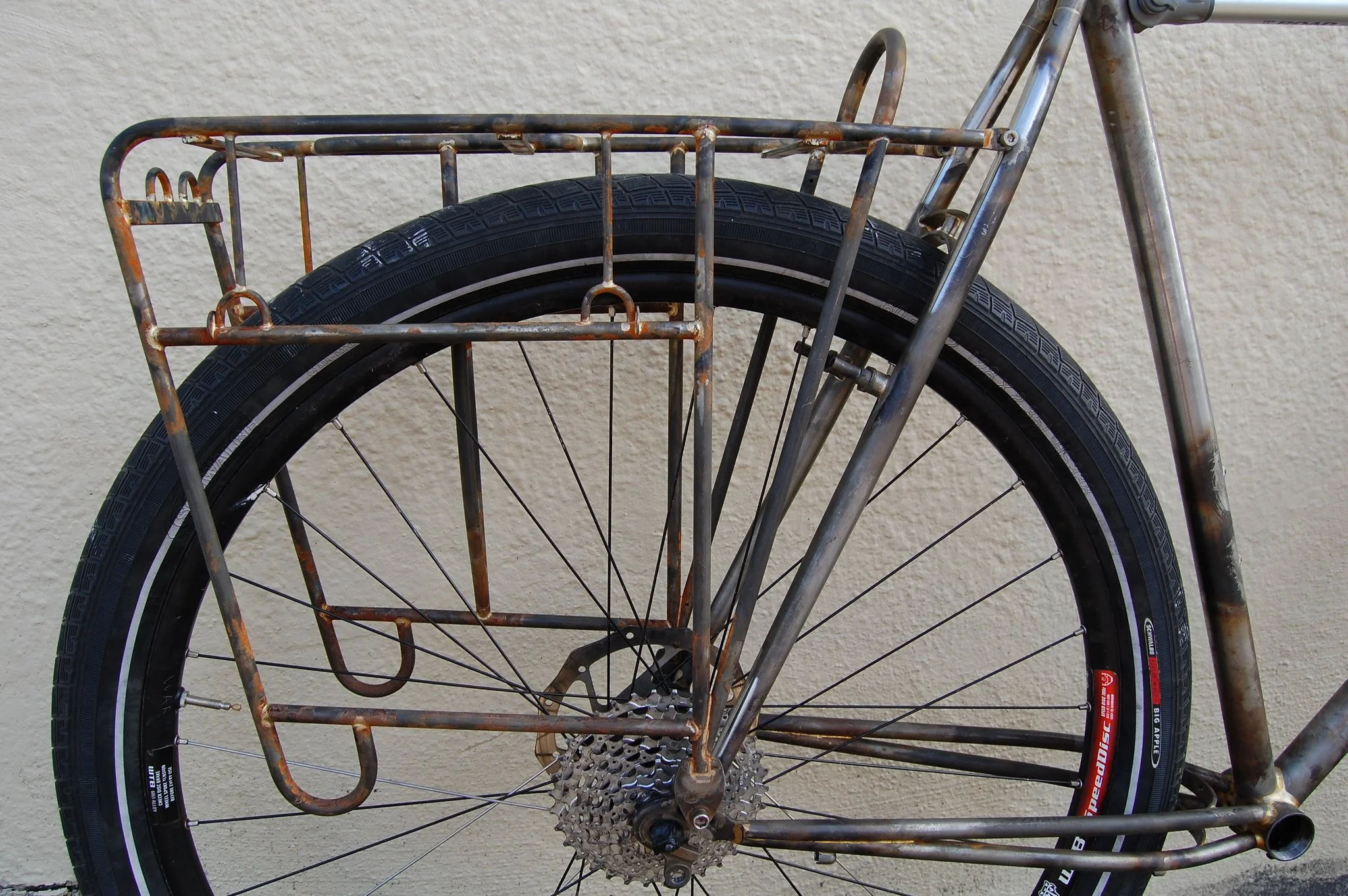
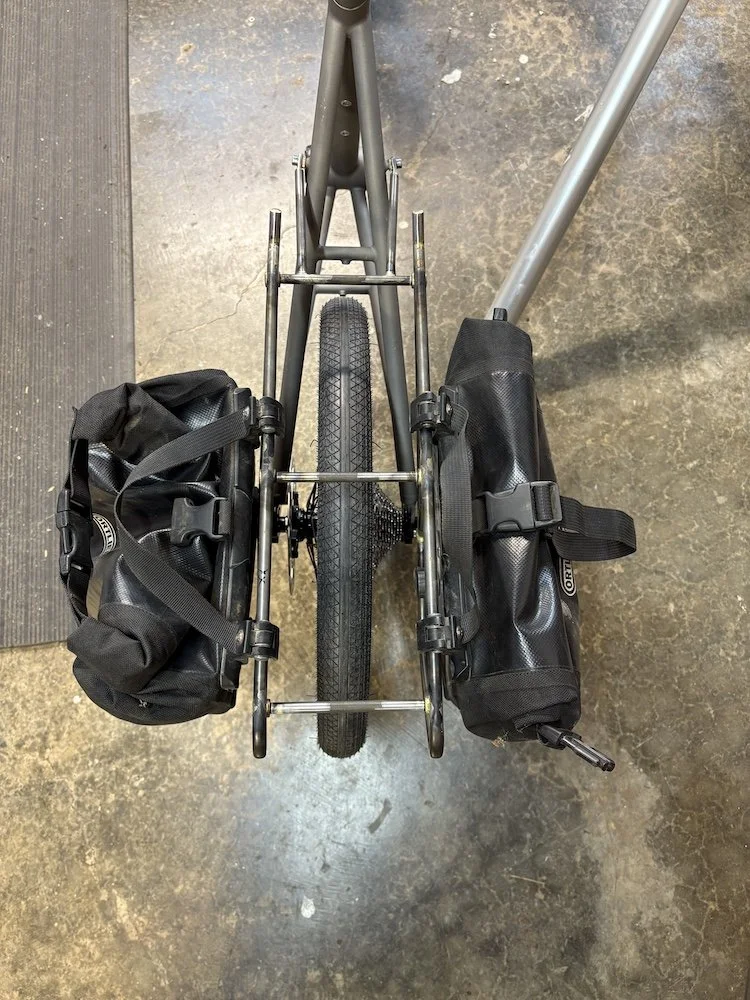
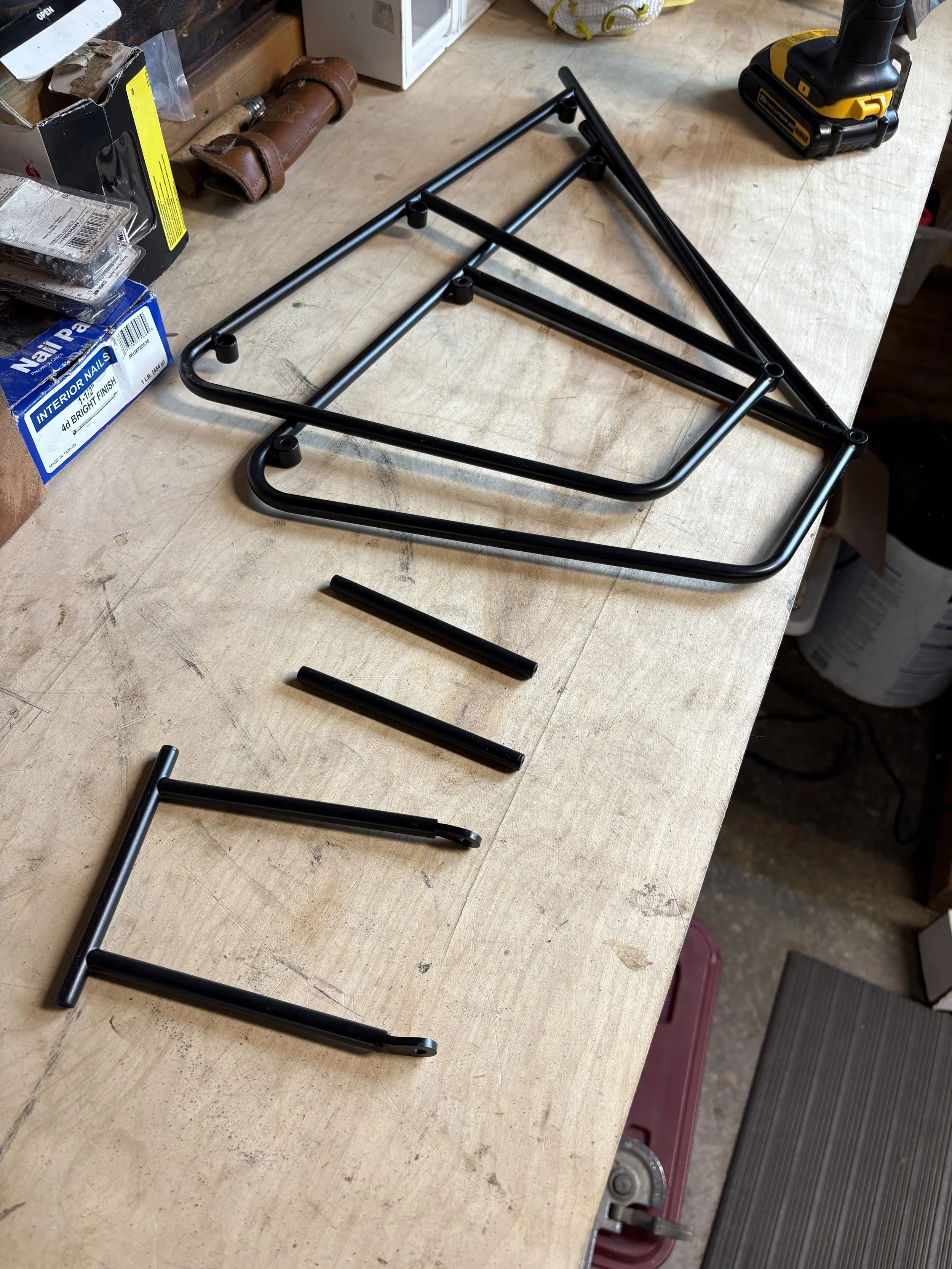
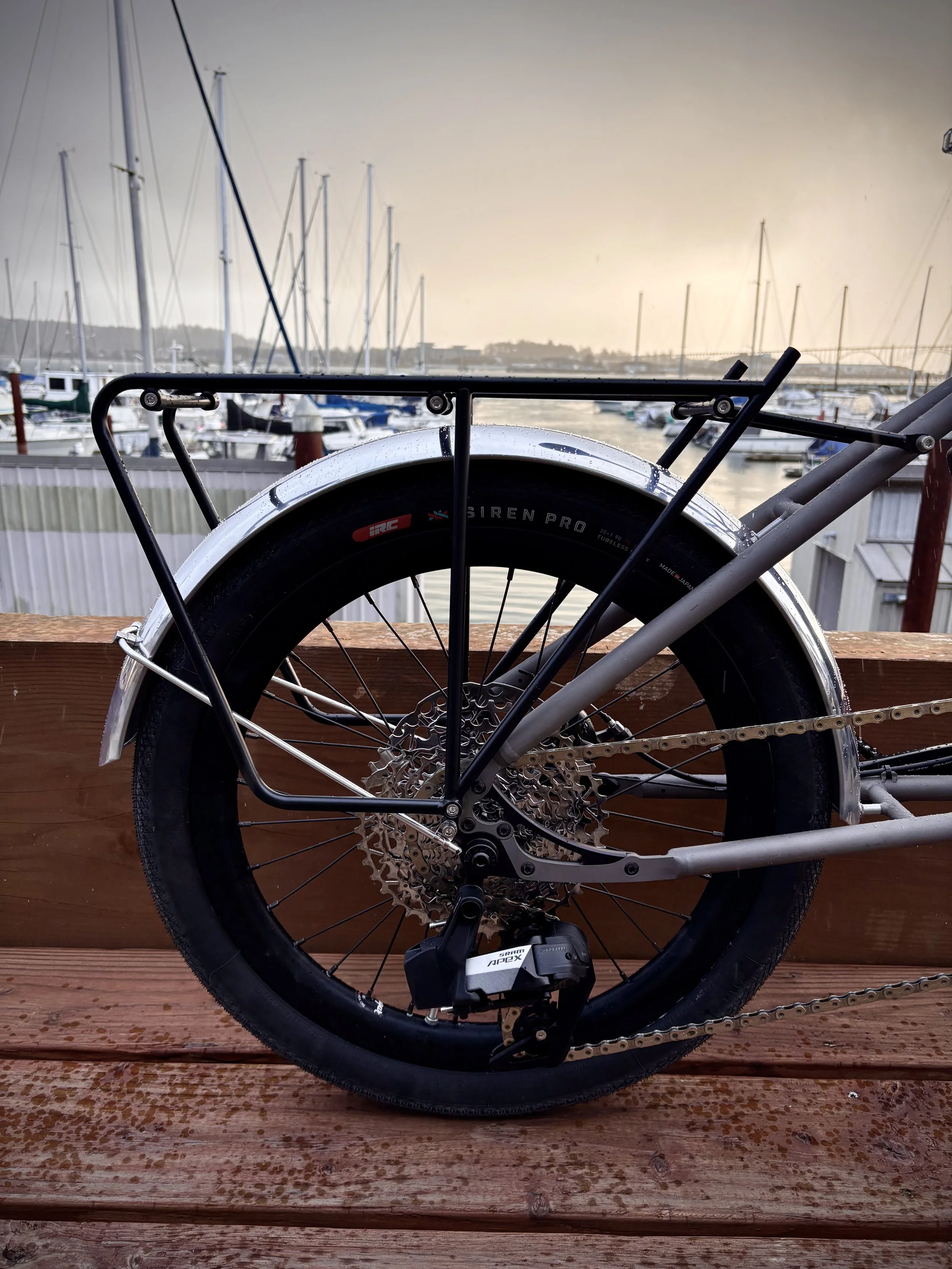
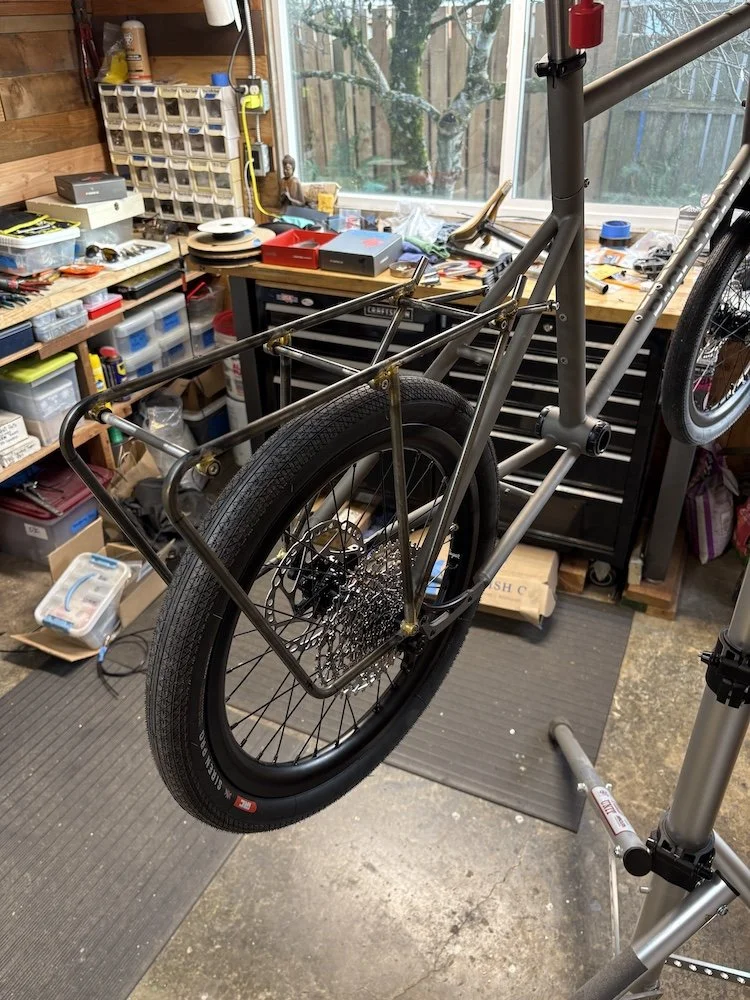
3) A few days ago I finished a rear rack for a travel bike. This is a prototype travel rack, the design has been floating in my ideas for months and I finally made it in steel. The rack breaks apart and packs flat, fits in the suitcase with the rest of the bike. It’ll hold small panniers, and better still — it’s the right size for the frame and the small wheels so it doesn’t look like a badly fitted add-on. And with this rack the travel bike suddenly becomes a viable touring rig. A simple, sensible rack for the win.

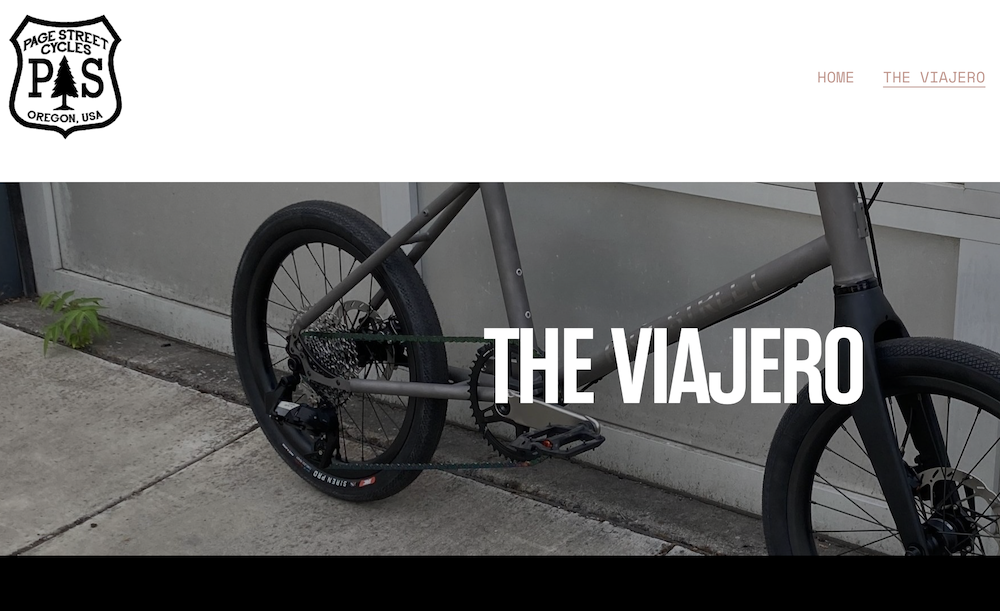
4) Speaking of travel racks, have you seen the newly updated Page Street website? The “Viajero” travel bike is the focus, and I’m taking orders now. There is a load of information on the site, please take a look and let it inspire you.

A newly renovated website, definitely a win.

The Viajero is the best travel bike in the world, in my humble opinion

6) Lastly, for now, the two biggest wins I can think of are my health and my life. I put these together because both have come up recently.

One, I got the flu. I don’t get sick very often. The last time was with Covid just at the beginning of lock down. Hard to believe that was almost 5 years ago. Being sick sucks, especially when I have so many things to do and people waiting for me to make their bikes. I was only laid up a few days, but the mental fall-out from being physically depleted takes longer to get past.

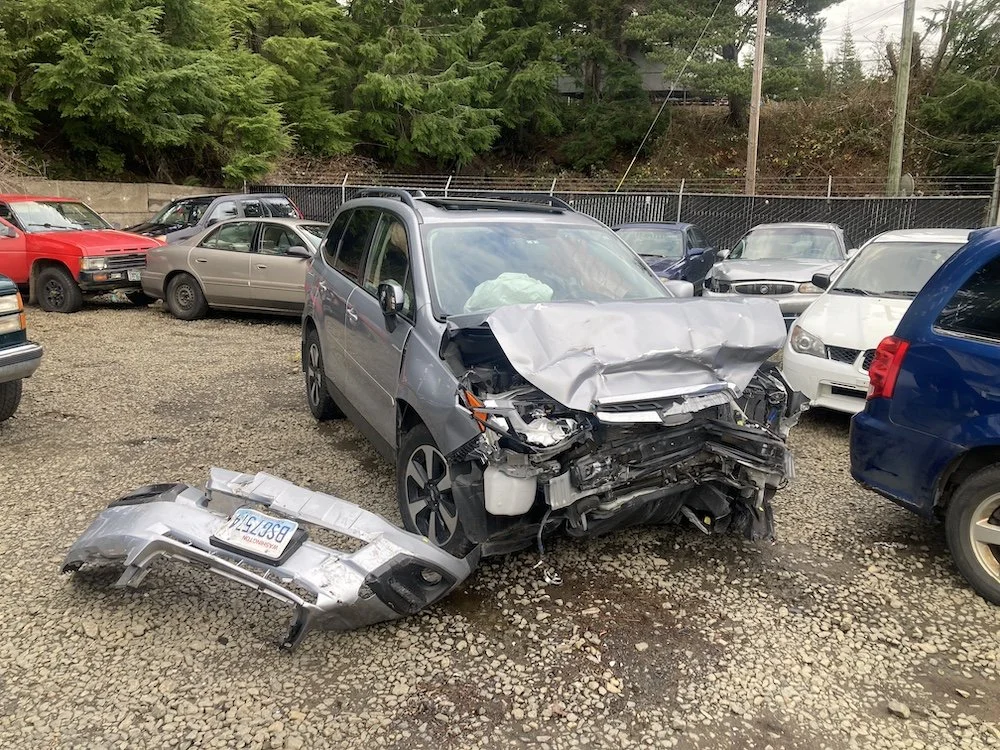
The simple reminder to be grateful for being alive is the last thing I’ll discuss here. Seems obvious, but I think we forget. I know I do. I mentioned earlier that my friends were in a car crash. This was the last Thursday before Xmas, they were driving down from Seattle, ostensibly to bring an old Raleigh road frame to me to see if I could fix a cracked chain stay.

Straight on

A young man working as a pizza delivery driver shot out of a parking lot at just the perfectly wrong moment. My friend Alex, who was driving, later said all he saw was a split-second flash of the kid’s minivan slicing across his vision. No time to brake, full t-bone impact at about 40 mph. It simultaneously set off all 8 airbags in the Subaru. It was like an 8-gun salute punctuating the massive crunch of metal and exploding glass. That’s how fast it can happen. The airbags saved their lives

.

When I arrived to pick them up, Alex and Laura looked houseless beside their pile of stuff. My car’s headlights lit them up and I saw their tears, their faces streaked, puffy and red. The wind slapped at them and they were barely out of the rain. It was the saddest looking couple I think I’ve ever seen. They had scrapes, sore spots, bumps and bruises, but the worst damage was to their sense of safety. Their world had just cracked and now appeared to be dangerous, terrifying.


If you’d like to continue reading, please head over to my Substack account where you’ll find the complete piece. While there, if would like to know when I post again, please sign up to receive email notifications. I swear I won’t spam you, sell your info, nothing nefarious. If in the future you feel like I’m posting too much you can always opt out, and no hard feelings.

Again, thanks for reading. The practice of living is the hardest thing we do, it’s so big, and we get better at it when we’re in it together.

Life Cycle of a Workshop

Joseph Ahearne6 Comments

The Page Street workshop has seen a lot of stuff.

Page Street

It was April 2006 when Jay and I moved onto Page Street. It was my 4th workshop since I’d begun building bicycle frames, and I was still relatively new at it, one of the youngsters. Of the shops that came before, this one was far and away the best space I’d worked in. I was cheap because I was poor, always after the lowest possible rent. This meant dealing with leaky roofs, killer drafts, dim lighting, too-friendly rodents, unstable time-frames. I avoided leases because I didn’t want to be tied down. I thought of myself as a traveler and didn’t want to impinge on the lifestyle, my freedom to move. And yet, I was beginning to realize that if I wanted to be in the business of building bikes I needed a stable place in which to make it happen.

Seat stays inspired by the St. Johns bridge (This photo was out the back door of our workshop. You can see the foundation for condos being poured in the foreground.)

The previous workshop Jay and I shared was a condemned warehouse in St. Johns, up in North Portland, just beside the bridge. Rent was $90/month — $45 each — and that winter was hard. The building was so full of holes I may as well have built frames out in the yard. I was tougher back then, though, or just dumber. You could say I had different priorities — I was more willing to suffer to save some cash. We were in the St. Johns shop for almost a year before the owners sold the building, and it got bulldozed to make way for condos. This was one more step in the arrival of what I call “New Portland.”
Jay found the ad for the Page Street shop on Craigslist. It wasn’t exactly paradise — like the previous place it was leaky, drafty and had no heat when we moved in. But the things it had going for it were it was spacious, centrally located, and, more than anything, it was stable. We had a lease, which meant I was committing to frame building, or at least pretending to. I still needed to figure out what my business was, exactly, and how I wanted to go about things. The Page Street shop would give me what I needed to do that. Although I had no idea I’d be here for this long.

From the beginning we called this space “the shop.” Nothing formal, no capital “s,” just a place name: I’m headed to the shop. Let’s meet at the shop. And now, over the past few weeks I’ve been saying something that feels very weird: I’m moving out of the shop.
The space is a 1200 square foot rectangle with a couple of big musty back rooms for ample storage. Jay and I split the rectangle long-ways down the middle and put up sheet plastic between the front and back storage spaces to cut down on the drafts. We tried every kind of heater until we settled on a pellet stove. We stuck the flue out a window to route the smoky exhaust outside. There were at least three offices in town that would have shit themselves and shut us down if they’d seen this. I put a platform on caster wheels to hold the stove, and like, whenever we got wind of a fire inspector coming we popped the flue out of the window, wheeled the stove into the storage room and kept a straight face until we passed inspection.

Jay and I had met while working at River City Bicycles — my last job before I started building bikes full time — and Jay had a side hustle wrenching on old Mercedes diesels. He took the half of the shop with the big roll-up door to move cars in and out, and I set up my meager tools on the other side.

The shop disguise

The business that’d been here before we arrived was a good-ol’ boy race car shop called Competition Motorsports. I never figured out what exactly they did. Sold some parts, maybe installed them, money laundering, who knows? This was Old Portland, where they did things a little bit different.

When we moved in we inherited the Competition Motorsports awning. I thought this was perfect irony — I was righteously, pretentiously, into human powered machines — not motors. And for me cycling had never been competitive. I was a commuter and into bike touring.

M & J and Sherman making mouths water with French fry exhaust on our way to a bike show

Jay’s cars obviously had motors, but in my book they got a pass because he converted them to run on old frier oil. A few years later, Maggie and I co-bought a car from Jay. It was a blue ’84 Mercedes wagon we lovingly called Sherman.

At this point in my life I hadn’t owned a car in over ten years. Remember, I was cheap, and I thought the cost of owning a car was ridiculous. Remember, too, I was willing to suffer inconvenience to keep cash in my wallet. Seeing things a new way was a slow evolution.
Anyway, I built Jay a bike frame as my part of the car purchase. There was something satisfying about trading a bicycle for a car.

Filling Sherman's auxiliary tank with filtered frier oil (back when I had more hair)

Maggie and I had Sherman for years. To fuel it we went around town to various restaurants, a couple of Thai places, a burger joint, collecting their used frier oil. At the shop I set up a gravity fed filtration system to clean the oil, turning it into usable fuel. It was a hacked-together system of buckets and hoses that regularly sprung leaks and we’d end up with veggie oil slicks on the shop floor. Seriously nasty stuff, it turned to a tacky sort of shellac if I didn’t get it cleaned up right away. But on the other hand nobody was killing anyone for it, and my oil slicks weren’t destroying any oceanic ecosystems, just my clothes and shoes.

Maggie and I drove that car all over the west, to go camping and to bike shows, from BC to Baja, Mexico, almost all of it fueled on veggie oil. This is a whole other story, though, for another time.

"Old" is the key word here

Symbol of the lotus flower

To move on… All these years later the awning is still up and you see it’s kind of nasty looking. Decades of wet weather, it changes colors with the seasons. The cloth absorbs pollen in the springtime that feeds lichen and moss that flourish like it’s a living organism. Most people wouldn’t consider it storefront material, but I loved it. My preference is to be in the background, and back then I didn’t mind being somewhat difficult to find. Besides, there’s a story in it — a filthy awning, a dilapidated building, the romantic vision of beauty coming out of the muck. Hence the lotus flower on my head badge (between the feet of the “A”).

Sometimes it's hard to see the human in the room

Despite having a somewhat repellant appearance we got regular visitors, people just walking in. But for the first years it wasn’t bike people who showed up. It started a few days after Jay and I got the keys, these old white men would fling open the shop door and barge in like they owned the place. They’d stop just inside, eyes squinched up and moving all around, overwhelmed with the barrage of stuff: Bike wheels hanging from hooks, benches, vices, hand tools, helter-skelter lights, machine tools, car parts, torches, pumps, partially assembled frames, art stuff and cranks and chain rings stashed floor to ceiling, all up and down the walls. If you ever visited the shop you know how much there was to see in every square inch of the place.

With the riot of visual stimulation it was sometimes hard for these old guys to locate Jay or I in the fray, but at some point they’d see one of us at work, either me standing at my vice holding a file or Jay rolling out from under a jacked-up Benz. If they registered both of us at the same time they always turned towards Jay first. Familiarity maybe — at least what he worked on was a car.

They’d tease out the question, bewildered, “Is Ron around?”

They meant Ron, the former owner of Competition Motorsports. Either Jay or I would have to break it to them.

“Ron quit the business. The race car shop closed.”

The old guy would stand there a few beats, gumming at the news, scowling like they weren’t sure if they believed us.

As it started to sink in they’d throw a thumb back over their shoulder and plead, “But the old awning’s still up.”

Like I said, this happened for years. I called them Codger Visitations. I thought about making a sandwich-board sign to set out on the sidewalk explaining things to ward them off. But I admit I kind of liked the intrusion. I could sense that this was what it looked like when a piece of history began to fade. Like I said, Competition Motorsports was a business I associated with Old Portland — the weird, one-off shops that were here in the 90s when I first arrived, most of them gone now — the UFO shop in SW Portland, the hippy kitchen shop, Magnolia, that used to be on SE 21st & Division; the Church of Elvis downtown, the Daily Grind with their amazing pies on Hawthorne, dozens of other gems that helped give Portland its unique flavor. Everything’s always changing, right? Things come and things go.

When these old guys walked in I felt like I was witnessing how a story, or a whole batch of stories, fall away, moving from the present into the past. Pieces of Old Portland fading, turning translucent as a ghost.

To a man these race car dudes were pushing eighty years old. They sported slick bomber jackets with brand patches on the sleeves, had droopy eye sacks and white wisps of hair poking out of their tall mesh ball caps. An early breed of motor head now gone quaky, liver-spotted, and a little bit frail.

All workshops have their own sense of order

I think I knew what these old guys wanted, or at least some of it. Their excuse was to buy a part or show off their car knowledge, or learn some tidbit about how to make combustion more efficient and more powerful. But this was just a pretext. I think the truth was they came in to immerse themselves in the familiar, comforting, oily stink of a workshop. Just being there was a way for them to be near something bigger than themselves, to pay their respects to a body of knowledge and a way of being.

If you go visit any working shop you’ll likely find a massive catalogue of stuff and tools and information that is only truly accessible to the ones who dwell in it and shape the space. There’s a certain kind of intelligence, a tool knowledge, a practical comprehension of systems, the way they function and interact. Some of the smartest people out there are those whose hands get dirty while at work. You don’t even know how to properly respect it unless you know enough to know how much you don’t know. Bow to the grungy wizards, right?

Visual Shop Tour

And to be clear, I’m not (so to speak) tooting my own horn here. I’ve got a bit of baseline knowledge, I know how to use some tools and to put together a decent bike, but my skillset is very limited compared to any number of other shop people out there. Whenever I talk with one of my machinist friends, like Kristina, Roger, Oscar, or Sean C., it’s so clear I’m a hack. These people are brilliant, the breadth of their skills and knowledge base makes me feel like a toddler in a tool room.

Anyway, I was talking about Codger Visitations. I enjoyed watching these old guys chewing at their dentures as they ran their eyes over the bike wheels and partial frames hanging overhead. Craft is craft, it has a certain nobility to it whether these old guys cared for the final product or not.

Underneath, too, a part of me felt righteous about showing these old dudes the facts of a changing tide: Once upon a time there were muscle cars here, but now an environmentally friendly Mercedes mechanic and bicycle fab shop had taken over. To my thinking the world was moving in a better direction.

Put your heart into it

Bless them, though. You could still see the spark of a motor revving in their eyes. These codgers just hadn’t yet gotten the memo that this race was over.

________________________________________

Change happens.

Jay and I were shop mates for a few years until he bought a house and moved his mechanic business into his garage. That was a dozen or more years ago. Afterwards, the shop became fully bicycle-centric. Mitch of MAP Bicycles got his start here and worked a few years before moving on to Chico, CA., and after him Christopher Igleheart was here for a decade until he retired. Now I’m moving my business into my own garage workshop — no more landlords, hopefully ever.

To repeat — and to be clear — I’m not quitting the business, I’m just moving out of this space. Ahearne Cycles and Page Street cycles will be up and running again in the next couple of months, as soon as I get my new shop built out and ready.

I’m going to miss this space, and I’m going to miss the people around it, connected to it. My friends. So many folks have come through over the years. The memories are rich. But I’m ready for this change.

I wonder what’s coming next for the Page Street workshop. Once I’m gone will there be scrappy old bike heads popping in, chewing at their dentures as they scowl at some youngster trying to eek out a living, asking about that old Ahearne bike builder?

Who and what business will be here to greet them?

It’s a funny feeling watching my own history here at the shop, the many years’ worth of stories, about to become the relic. It’s already happening. The first layer of new dust is beginning settle over the old world, my world, and I’m not going to be around to disturb it or clean it up. That’ll be someone else’s job.

Transitions are weird because you can’t know what’s on the other side. You can do your best to set yourself up, but the only way to find out what’s coming is to close one door, turn around, open the next and walk right on into the light.

Onward

Here we go.

I’ll see y’all on the other side.

A First and the Last

Joseph Ahearne2 Comments

This week is a landmark for me — I’ve finished work on the final frame I will make at the Page Street workshop. As I wrote in the last post, I’m going to be moving my workshop to the town of Newport, on the Oregon Coast. The move is coming September 1.

I have a couple of smaller projects to complete before packing my tools, and have a few parts assemblies to finish when frames return from paint. But it’s kind of wild to say it — No more frames will be built on Page Street.

This last one…

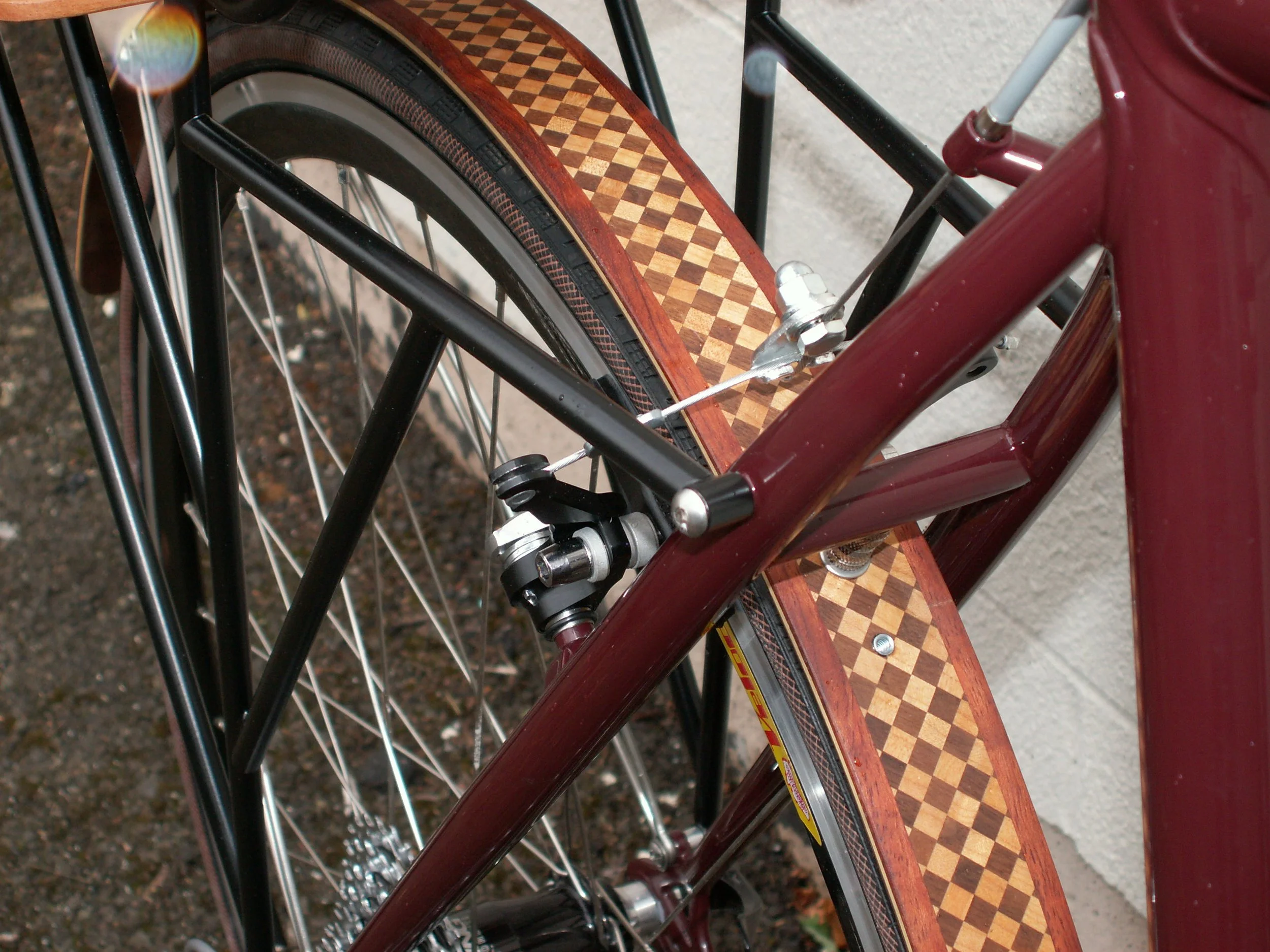
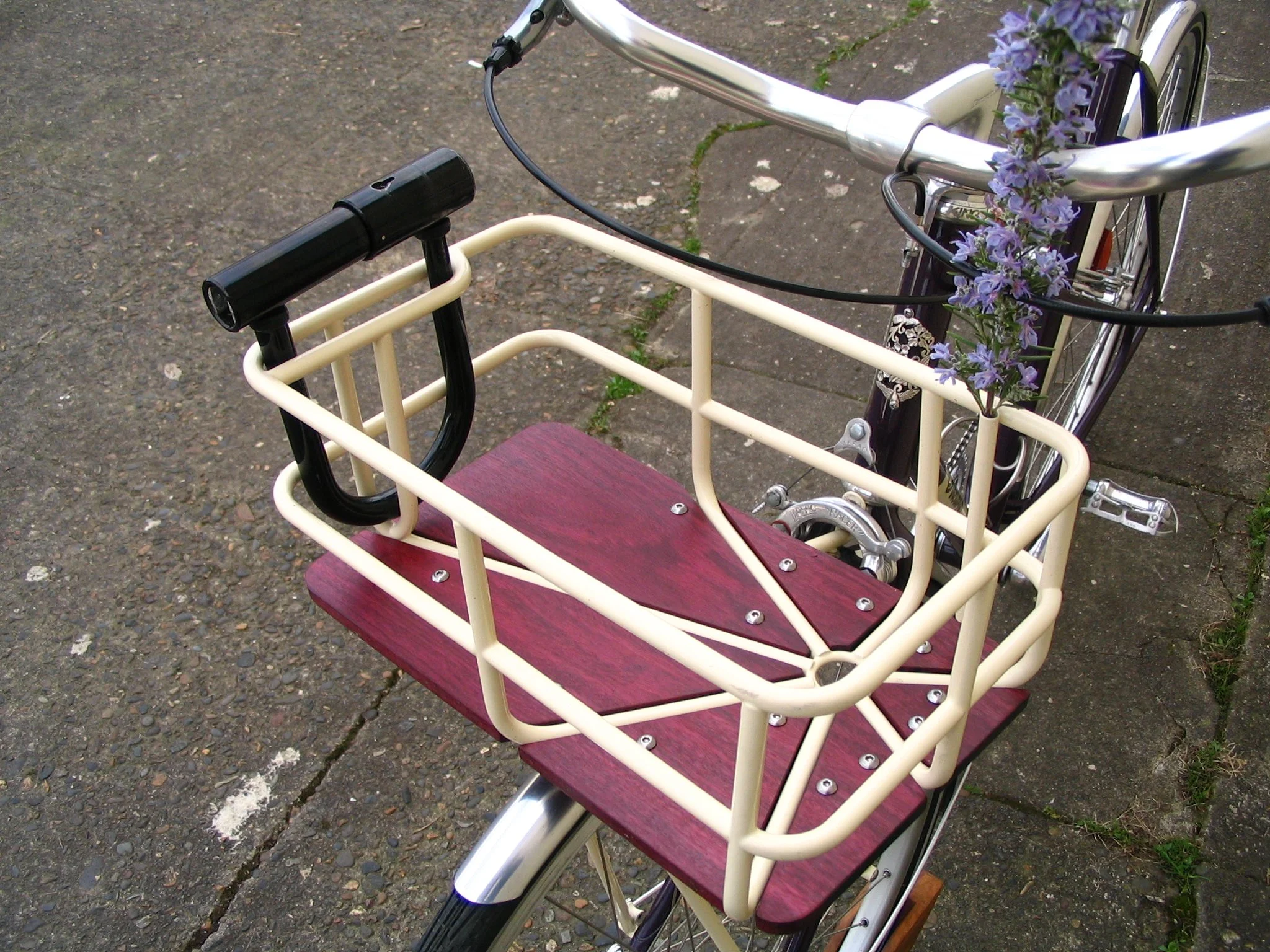
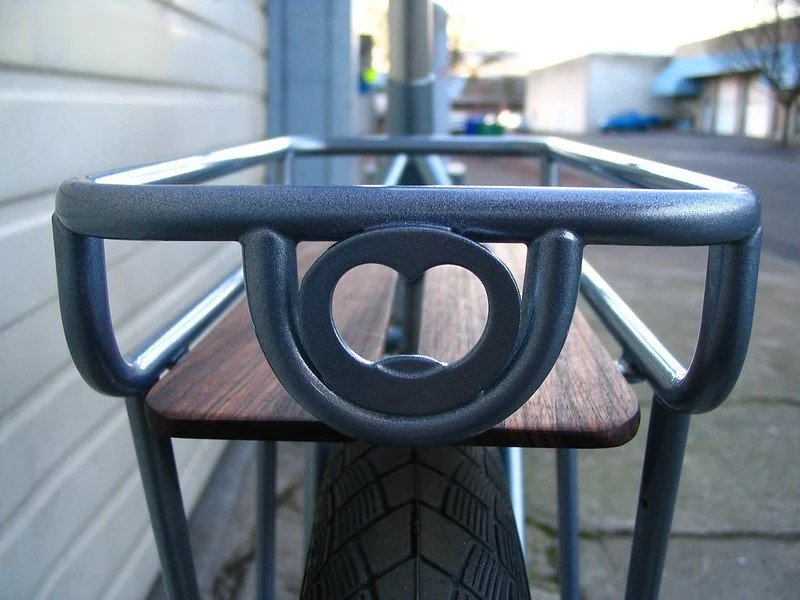
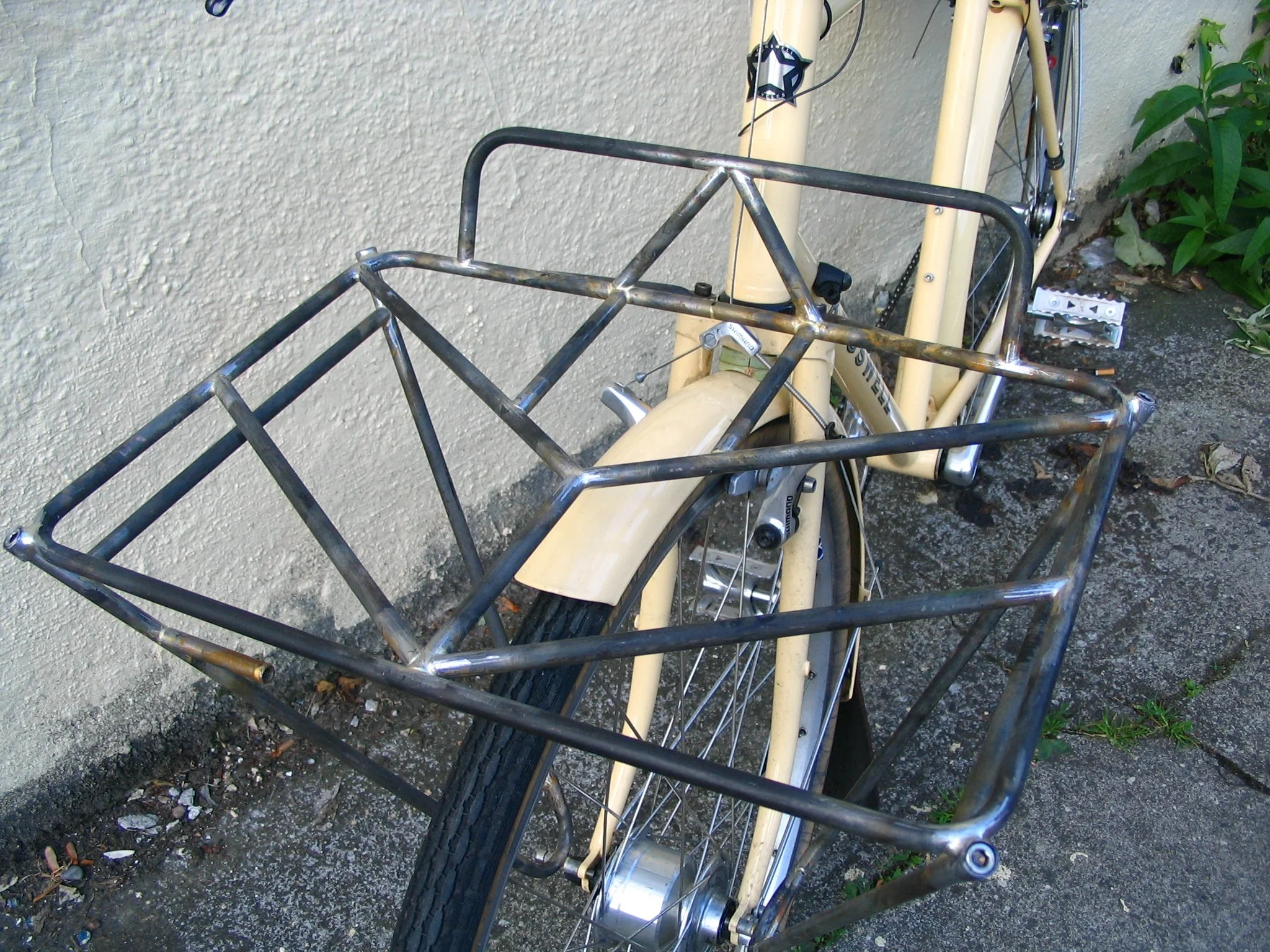
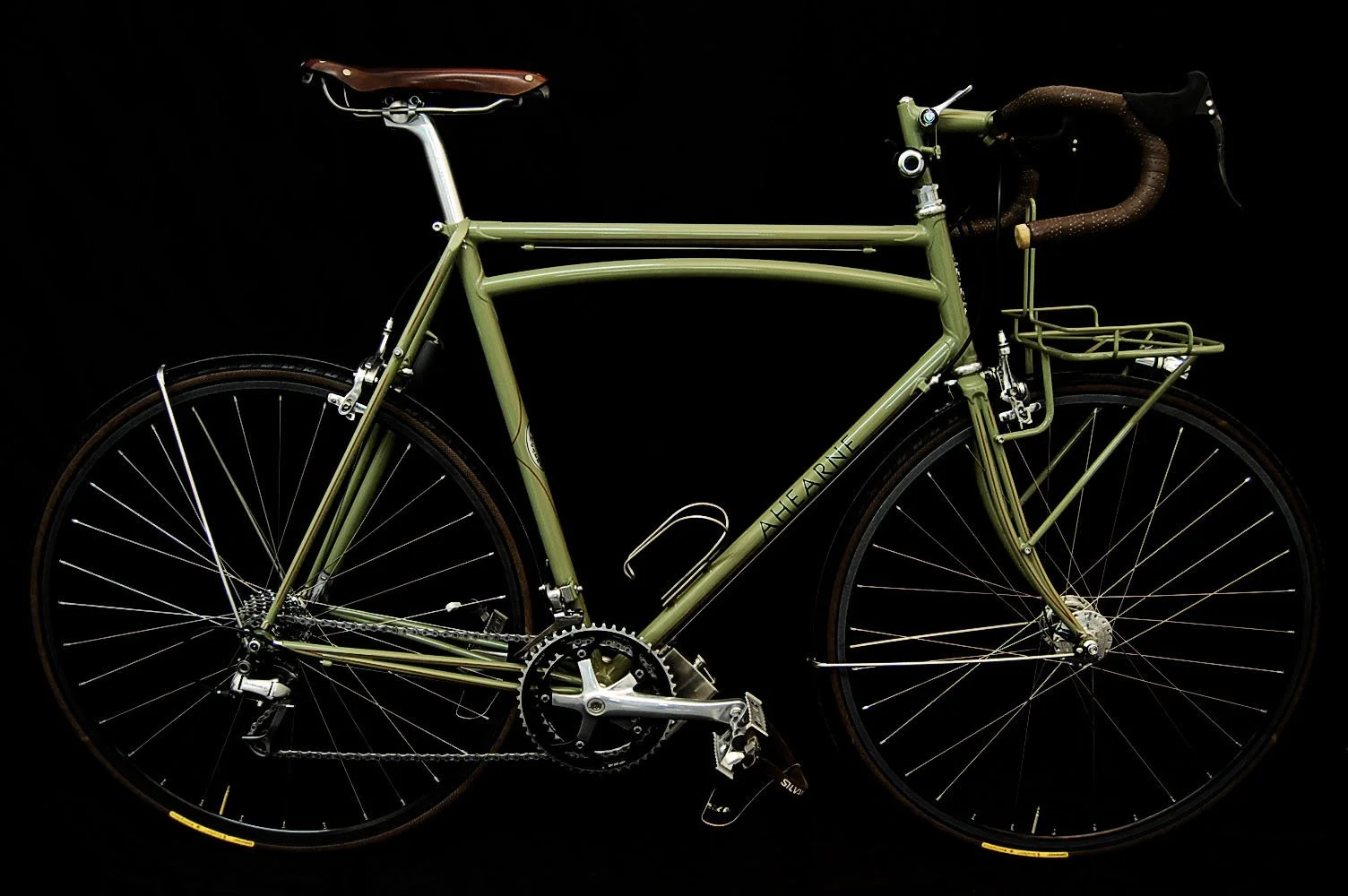
I’ll be bringing this frame to the Made PDX bike show in August. It’s going to be such a bad ass all-rounder, all-road bike, and yes, it will be for sale. It’s one of those projects that’s been brewing in my head for a while. I had some interesting tubes (Pegoretti tapered top tube, Reynolds shaped 853 down tube, True Temper unicrown fork legs) and wanted to make something that would fit 3” tires and fenders, that could go anywhere and do anything. And these racks! It’s always a bit of an experiment when I start an unconventional rack set and it’s so gratifying when I’m done and feel like I nailed it.

Last bike made on Page St. in a Field Unit Portable Work Stand

If you’ve been thinking about a bike for touring on roads and trails where cars don’t go, or something for year-round commuting, this bike is going to be top notch. Price TBD — it depends on what parts I finish it with. The frame is sized to fit someone between about 5’9 and 6’2 depending on your reach. Because of the sloped top tube it will be good for a wide range of leg lengths, even someone with a shorter inseam. For reference, the effective top tube length is 600 mm, and the standover height is about 760 mm (measurement taken with 2.8” tires, as shown in the photos).

If you’re seriously considering it, send me a message in the next week or so and we could talk about having it painted your favorite color. I currently have some color ideas but I’m happy to discuss it with you. Also, I have some parts I’m planning to use, but not all of them. We could talk about options for handlebars, brakes, cranks, saddle, pedals, and a few other things.


That’s the last, and here’s the first…

This bike is ready to ride and It’s for Sale!

This past week I finished assembling the first prototype small/medium-sized travel bike, the Page Street Viajero. Everything is the same as the large except the shorter top tube: 580 mm and a lower standover height: 705 mm.

I’m incredibly excited about this bike.

I love collaborating with others and a few of us have worked hard dialing in the design. I think this is a great option for anyone who wants to travel and have a bike with them.

I am now taking preorders for the Viajero.

The cost for a Viajero frame set is $3150.

The frame is designed and built here in Portland, Oregon. It includes a coupler system to break the frame down for packing into a standard size suitcase. The frame is made from top shelf bike tubing: Reynolds 853 heat treated chain stays and down tube (where it counts), Reynolds 631 air hardening tubes elsewhere. This also includes a single-color powder coat, and yes, a coupler wrench.

Deposit for a frame is $1000.

Message me to get on the list. Turnaround time for this first batch is going to be about 2-4 months for frame sets (no parts, or with wheels only), or 5-6 months for complete bikes ready to ride (this includes the time needed to move my workshop. After the move, lead times will hopefully shorten).

Sram AXS parts — no cables makes packing easier

For now the only complete parts package I’m offering includes Sram AXS with 1x12 drive train, electronic shifting (no cables, except for the rear brake), and Schmidt headlight and tail light. I’m not going to be very flexible with parts — I’ve figured out the kit that I believe works best for this bike and to some degree the bike is made around it. I don’t list a price here because the cost for the parts will fluctuate a bit depending on the market and component availability. Again, get in touch for details.

If you’d like to supply parts I’m happy to share all the relevant frame specs before you order.

Or, if you want a wheel set only, so you can build the rest of the bike up to your specs, I can do this, as well. The wheel set I sell has a front generator hub by Shutter Precision, a thru-axle sealed bearing rear hub, carbon rims, double-butted spokes, hand laced here in Portland.

Wheel set costs $950.  

These hubs work great, but there are hub upgrades available upon request.

Soon I will post something more comprehensive about the travel bikes, including drawings, specs, a parts list, and options. All this information will eventually be available on the Page Street website.

If you don’t want to wait for the next post, please send me a message and I will share all the information and answer any questions you may have.

Thank you for reading!

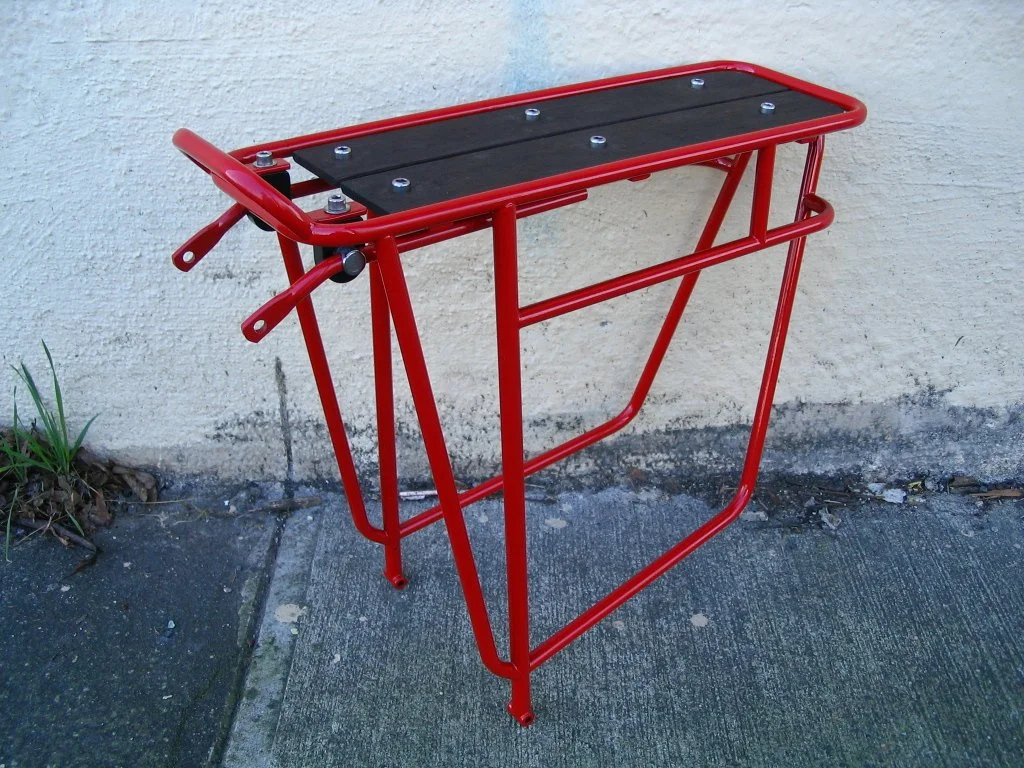
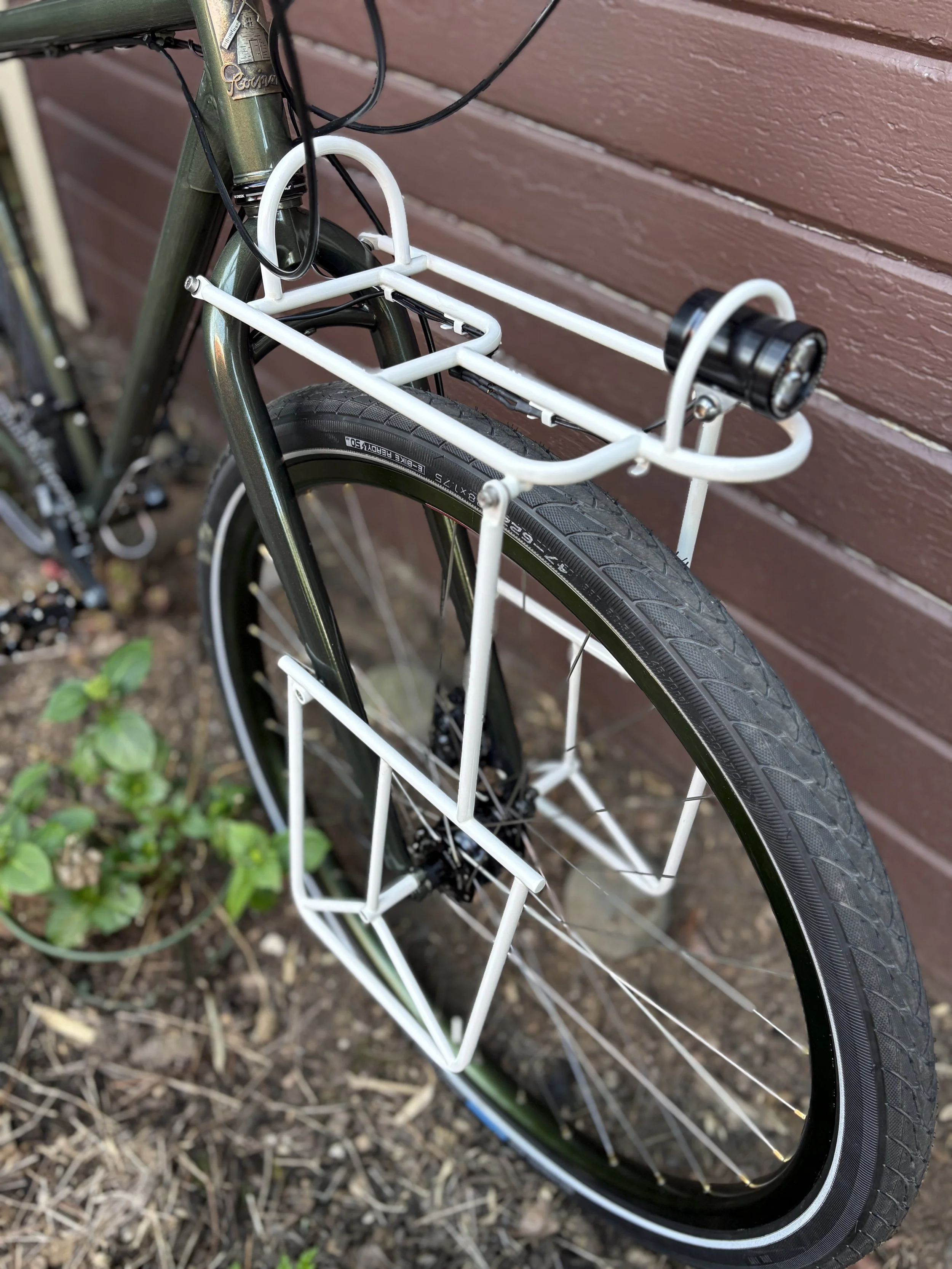
The Final Touring Rack Made on Page Street